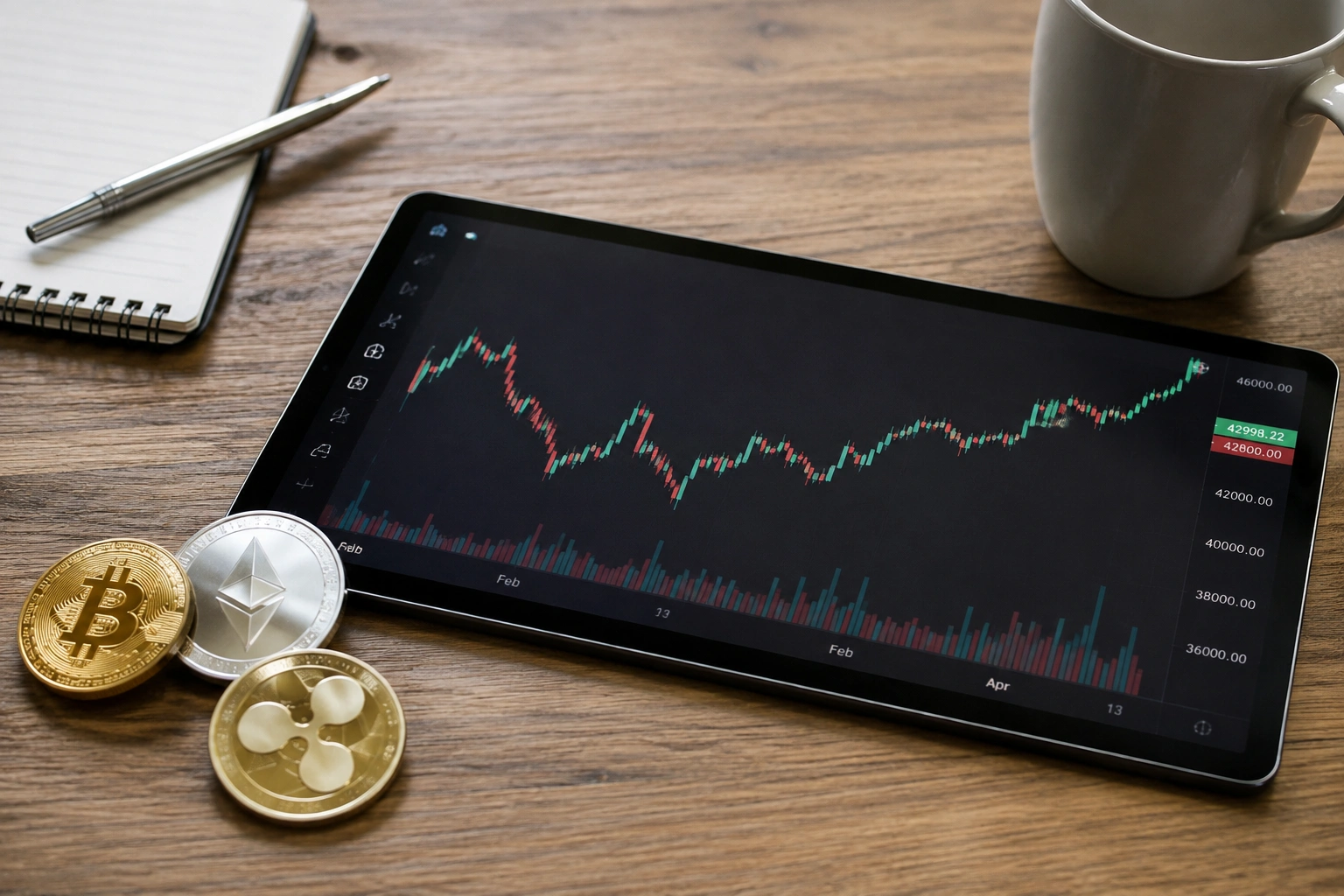
Many investors are asking, will crypto go back up after periods of sharp declines and uncertain market conditions? The answer depends on several factors, including interest rates, investor demand, regulation, liquidity, and overall economic conditions. Cryptocurrency prices can move quickly in both directions, so a short-term decline does not automatically mean a long-term recovery is impossible. At the same time, a temporary rally does not prove that a new bull market has started. As of late August 2026, Bitcoin has recently recovered above $80,000 after trading below $64,000 earlier in the month. This rebound has improved sentiment, but analysts still point to important resistance and macroeconomic risks.
The broader crypto market also remains mixed. Bitcoin has shown renewed strength, while Ethereum and several other major assets have participated in the recovery. Recent Bitcoin gains have received support from renewed ETF demand, a weaker dollar, and changing expectations around monetary policy. However, the Federal Reserve’s current stance remains a major uncertainty for risk assets. Recent hawkish comments have increased expectations of another U.S. rate hike in September. This means investors should look beyond daily price movements when considering whether crypto can recover further.
Why Is Crypto Going Back Up?
One reason for the recent improvement is renewed demand for Bitcoin. After a period of weakness, Bitcoin climbed above $80,000 in August. Reuters reported that Bitcoin gained about 28% during August at one point, helped by a weaker U.S. dollar and renewed investor interest. The rally also followed policy developments and concerns about currency debasement. These factors can increase demand for scarce assets when investors become concerned about the purchasing power of traditional currencies. However, price rallies can also attract short-term traders. Their activity can increase volatility and create sharp pullbacks.
Institutional demand can also influence the direction of the crypto market. Bitcoin exchange-traded funds have made it easier for traditional investors to gain exposure to Bitcoin. Recent reports showed strong ETF inflows during the August rebound. One report noted that BlackRock’s Bitcoin ETF recorded a significant inflow during the recent rally. Continued institutional buying could provide support if it remains strong. On the other hand, falling ETF inflows could weaken momentum. Investors should therefore monitor demand rather than assuming that every price increase represents the beginning of a long-term bull market.
Can Bitcoin Lead a Crypto Recovery?
Bitcoin often plays an important role in the broader cryptocurrency market. It has the largest market capitalization and receives significant attention from institutional investors. When Bitcoin rises strongly, investor confidence can spread into Ethereum and other digital assets. Recent market data showed Ethereum and XRP also reaching multi-month highs during Bitcoin’s August recovery. This does not mean every altcoin will follow Bitcoin. Smaller cryptocurrencies can behave very differently because they have lower liquidity, different use cases, and greater exposure to speculation. Investors should therefore assess each asset separately instead of assuming that a Bitcoin rally will lift the entire market.
Bitcoin’s recent recovery also needs to overcome important technical levels. The Block reported that analysts identified the $81,000 to $86,000 area as a significant hurdle for Bitcoin’s move toward earlier 2026 levels. If buyers push through major resistance and maintain momentum, market confidence could improve further. If price repeatedly fails around that area, sellers may regain control. This is why technical analysis can help investors understand market behavior without making a guaranteed prediction. Studying Bitcoin support and resistance levels can provide useful context when evaluating whether a recovery is gaining strength or losing momentum.
How Interest Rates Affect Crypto Prices
Interest rates can have a major influence on cryptocurrency prices. When central banks maintain high rates, investors often prefer assets that offer relatively predictable returns. Higher borrowing costs can also reduce the amount of money flowing into riskier investments. Crypto is generally considered a high-risk asset, so changes in monetary policy can affect investor demand. When markets expect lower interest rates, speculative assets can become more attractive. This relationship is not perfect, but it helps explain why crypto traders closely follow inflation data, employment reports, and central bank decisions. For more: Liquidity Sweep: A Complete Guide for Traders
The current interest-rate outlook creates an important risk for the crypto recovery. On August 31, 2026, Reuters reported that Barclays expected two additional Federal Reserve rate increases this year following hawkish comments from Fed Chair Kevin Warsh. Market pricing also showed increased expectations for a September hike. If monetary policy remains restrictive, crypto could face additional pressure. On the other hand, weaker economic data or changing inflation expectations could alter those expectations. Investors should therefore follow the Federal Reserve and crypto market relationship when assessing future price movements.
Could Regulation Help Crypto Go Back Up?
Regulation can influence cryptocurrency markets in both positive and negative ways. Clear rules may give businesses and institutional investors greater confidence to participate in the industry. Uncertainty can have the opposite effect because companies may delay investments or product launches when they cannot clearly understand their legal obligations. In 2026, regulatory developments remain an important part of the crypto market discussion. Recent reports have linked renewed Bitcoin optimism partly to political support for clearer cryptocurrency rules.
Clearer regulation could also benefit established crypto companies and financial institutions. If investors believe that digital assets have a more defined legal framework, market participation could increase. However, regulation does not automatically make cryptocurrency prices rise. Rules can also introduce restrictions that affect particular tokens, exchanges, or business models. Investors should therefore examine the details of major regulatory changes rather than relying on headlines. Reading about crypto regulation and institutional adoption can help investors understand why legal developments sometimes create strong market reactions.
Will Altcoins Go Back Up Too?
A Bitcoin recovery does not guarantee that every altcoin will recover at the same speed. Large cryptocurrencies such as Ethereum may attract institutional interest, while smaller projects depend more heavily on speculation, liquidity, and individual project fundamentals. During strong market rallies, capital sometimes moves from Bitcoin into larger altcoins and then into smaller assets. This process can create periods of strong altcoin performance. However, the reverse can happen during market stress. Investors may move money back toward Bitcoin or stablecoins when they become more cautious.
The quality of an individual cryptocurrency also matters. Investors should examine its technology, adoption, development activity, token supply, competition, and real-world use. A token that falls sharply may not automatically return to its previous price. Some projects lose relevance during long market downturns. Others continue developing and eventually attract new users. This makes altcoin research and crypto fundamentals important for anyone asking whether the market will recover. Instead of asking only whether an asset can return to its old price, investors should consider whether the project still has strong reasons to attract demand.
What Could Stop Crypto From Going Back Up?
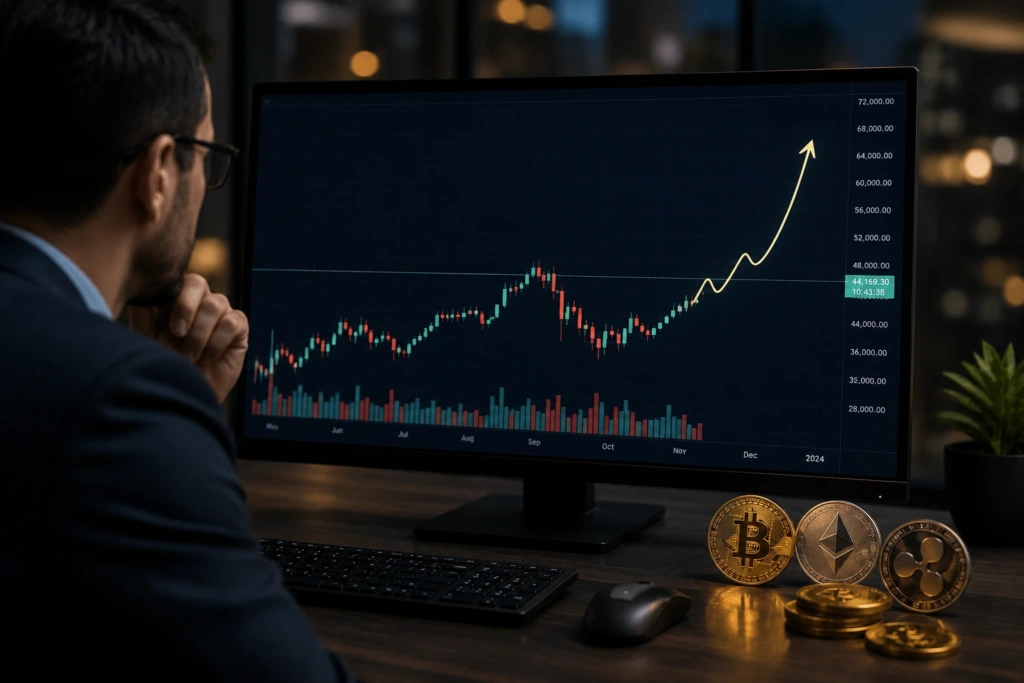
Several factors could prevent a sustained crypto recovery. The first is tighter monetary policy. If inflation remains elevated and central banks keep interest rates high, investors may reduce exposure to speculative assets. Another risk involves geopolitical uncertainty. Conflicts can increase energy prices and inflation expectations, which may complicate monetary policy. Recent global market reports have highlighted the connection between geopolitical developments, oil prices, inflation, and central bank decisions. These factors can create sudden changes in investor sentiment.
Another risk is excessive leverage. Crypto markets contain many leveraged traders, and sudden price movements can trigger liquidations. Recent Bitcoin gains were partly amplified by a large short squeeze, according to market reports. Such moves can push prices higher quickly, but they may not represent sustainable demand. If leveraged traders begin closing positions, prices can reverse rapidly. This is why investors should distinguish between organic buying and short-term trading activity. Understanding crypto market volatility and risk management can help investors prepare for both bullish and bearish scenarios.
What Should Investors Watch Next?
Investors trying to understand whether crypto can continue recovering should focus on several key indicators. Bitcoin’s ability to hold above important support levels can provide useful information about buyer strength. ETF inflows can show whether institutional demand remains active. Interest-rate expectations can reveal how attractive risk assets may become. Investors can also watch trading volume and market breadth. A rally supported by several major cryptocurrencies may look healthier than a rally concentrated in only one asset.
Economic data will remain important as well. Inflation, employment figures, Treasury yields, and Federal Reserve decisions can all influence broader market sentiment. Recent crypto analysis has highlighted the importance of macroeconomic conditions in determining Bitcoin’s direction. Investors should avoid relying on one indicator. Instead, they can combine fundamental information with technical analysis. This approach does not predict the future with certainty, but it provides a more balanced framework for evaluating whether a crypto recovery has enough support to continue.
Should You Buy Crypto During a Recovery?
Whether someone should buy crypto during a recovery depends on their financial situation, risk tolerance, investment horizon, and research. A rising market can create fear of missing out, especially when prices move quickly. However, buying solely because an asset has recently increased can expose investors to sharp corrections. Crypto remains highly volatile, and even major cryptocurrencies can experience substantial price changes within short periods. Investors should understand these risks before committing capital. They should also avoid investing money they cannot afford to lose.
A more disciplined approach involves creating a clear investment plan. Some investors prefer gradual purchases rather than putting all their money into the market at one price. Others wait for stronger confirmation from market conditions. There is no single strategy that works for everyone. Investors can also research crypto portfolio management and diversification before making decisions. The most important step is to avoid emotional decisions. A strong rally can continue, but it can also reverse quickly. Good risk management matters regardless of whether the market moves higher or lower.
What Does the Current Crypto Outlook Suggest?
The current outlook is mixed rather than clearly bullish or bearish. Bitcoin has shown significant recovery momentum after falling below $64,000 earlier in August and later moving above $80,000. That improvement shows that buyers remain active. However, Bitcoin faces a notable resistance area around $81,000 to $86,000, while monetary policy remains uncertain. These conditions suggest that the market still needs confirmation before investors can confidently describe the move as a sustained new bull run.
The broader market also needs stronger participation for a lasting recovery. Bitcoin strength is important, but healthy crypto markets usually involve broader demand across major assets. Current reports show that Ethereum and other large cryptocurrencies have also improved, although participation remains uneven. For investors, the best approach is to monitor evidence rather than rely on predictions. Price trends, ETF flows, regulation, liquidity, interest rates, and market breadth can all provide valuable clues. These factors can help answer the question of whether crypto is simply experiencing a temporary rebound or entering a stronger recovery phase.
FAQ
Will crypto go back up?
Crypto could recover further, but no one can guarantee future prices. Current conditions show renewed Bitcoin strength, while macroeconomic risks remain.
Will Bitcoin go back up?
Bitcoin has already recovered significantly from its August lows. Further gains will depend on demand, resistance levels, monetary policy, and broader market sentiment.
Can crypto reach new highs again?
Yes, new highs are possible, but they are not guaranteed. Strong demand, favorable liquidity, institutional investment, and supportive economic conditions could help.
Will altcoins recover with Bitcoin?
Some altcoins may recover, but performance will vary. Stronger projects with demand and useful applications may perform better than highly speculative tokens.
Is crypto still risky?
Yes. Cryptocurrency remains highly volatile. Investors should consider their risk tolerance and use a clear strategy before committing money.
Conclusion
So, will crypto go back up? Current market conditions show genuine signs of recovery, particularly in Bitcoin. Bitcoin recently moved above $80,000 after trading below $64,000 earlier in August. ETF demand, a weaker dollar, regulatory optimism, and changing liquidity conditions have supported the recent move. However, the recovery still faces important challenges, including resistance near $81,000 to $86,000 and uncertainty over Federal Reserve policy.
The safest conclusion is that crypto has the potential to recover further, but the path may remain volatile. Investors should watch Bitcoin’s price structure, ETF flows, interest rates, regulation, liquidity, and broader market participation. Instead of relying on a simple prediction, use these factors to build a balanced view of the market. If you are researching crypto opportunities, continue studying market fundamentals, risk management, and long-term adoption before making an investment decision.