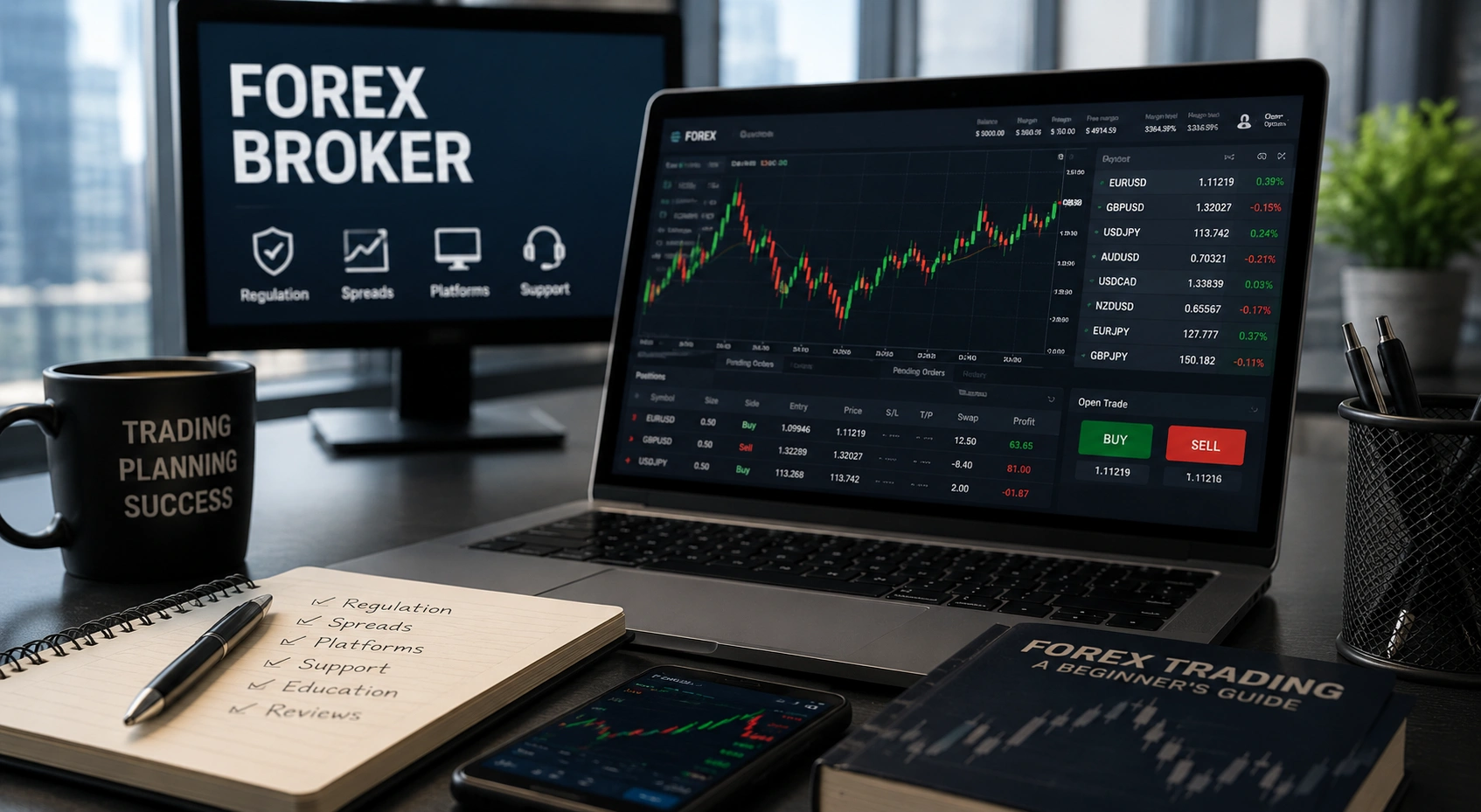
Finding the best forex broker is not simply about choosing the company with the lowest spread or the most attractive trading platform. A suitable broker should provide a reliable trading environment, clear pricing, appropriate regulation, useful tools, and strong account security. The right choice can also depend on your experience, trading style, preferred currency pairs, and location. Beginners may need simple platforms and educational resources, while experienced traders may care more about execution speed, advanced charting, and trading costs. Because forex trading involves financial risk, it is important to research a broker carefully instead of relying on advertising or promises of easy profits. This guide explains the key factors to consider when comparing forex brokers so you can make a more informed decision.
What Is a Forex Broker?
A forex broker is a company that provides access to the foreign exchange market and allows customers to trade currency pairs. Instead of directly participating in the global interbank market, most individual traders use a broker’s platform to place and manage trades. The broker typically provides prices, trading software, account services, market information, and other tools.
The quality of these services can vary significantly between brokers. Some focus on beginner-friendly platforms, while others are designed for active traders, professionals, or algorithmic strategies. When searching for the best forex broker, it is therefore important to look beyond branding. A broker that suits one trader may not be appropriate for another. Factors such as regulation, available markets, fees, execution, account requirements, and customer support should all be considered together.
Regulation and Broker Safety
Regulation is one of the most important factors when choosing a forex broker. A regulated broker is supervised by a financial authority and must generally follow specific rules concerning areas such as client funds, reporting, capital requirements, and business conduct. The exact protections depend on the regulator and the country where your account is held.
Before opening an account, verify the broker’s regulatory status directly with the relevant financial authority rather than relying only on a logo displayed on the broker’s website. Check the legal entity that will hold your account because a company may operate through different entities in different countries. If you are researching broker safety, reading a guide about how forex regulation works can help you understand why jurisdiction and licensing matter.
How to Compare Forex Trading Fees
Trading costs can have a major effect on your results, particularly if you trade frequently. Forex brokers commonly make money through spreads, commissions, or a combination of both. The spread is the difference between the bid and ask price, while a commission may be charged separately depending on the account type and trading product. For more: 8 Figures Is How Much? A Simple Money Guide
The cheapest-looking account is not necessarily the most economical option. A broker might advertise a very low spread but charge a separate commission, while another may offer a wider spread without a commission. To compare the best forex broker options fairly, consider the complete trading cost for the currency pairs and trading frequency you expect to use. Also check overnight financing, withdrawal charges, inactivity fees, currency conversion costs, and any other applicable account expenses.
Trading Platforms and Technology
A good trading platform should make it easy to monitor markets, analyze charts, place orders, and manage open positions. Popular platforms can offer different combinations of technical indicators, drawing tools, automated trading features, mobile access, and customization options. Some brokers also provide proprietary platforms designed around their own services.
The best platform depends on your experience and trading needs. A beginner may prefer a clean interface with straightforward order controls, while an experienced trader might require advanced charting and automation. Mobile trading can also be important if you need to monitor positions away from your computer. When comparing a best forex broker, test whether the platform feels stable, understandable, and responsive before committing significant funds.
Available Currency Pairs and Markets
Forex traders may have different interests, so the range of currency pairs offered by a broker matters. Major pairs such as EUR/USD, GBP/USD, USD/JPY, and USD/CHF are widely followed, while minor and exotic pairs can provide exposure to other currencies. However, additional currency pairs can also involve wider spreads, lower liquidity, or greater volatility.
Do not choose a broker simply because it advertises a large number of instruments. Instead, identify the currency pairs you actually plan to trade and check their typical trading conditions. If you are interested in currencies from a particular region, confirm that those pairs are available to clients in your jurisdiction. A broker offering fewer instruments but strong conditions on the markets you use may be more suitable than one offering hundreds of markets you never trade.
Execution Quality and Trading Conditions
Order execution is another important consideration when comparing forex brokers. When you place an order, the price you see can change before the transaction is completed, particularly during fast-moving markets. Factors such as liquidity, market volatility, technology, and the broker’s execution model can influence the final result.
No broker can guarantee that every trade will be executed at exactly the price you expect, especially during major economic announcements or sudden market movements. Instead, look for transparent information about execution practices and order handling. It can also be useful to understand concepts such as slippage, which occurs when an order is filled at a different price from the one initially requested. These details are especially important for active traders.
Account Types and Minimum Deposits
Forex brokers often provide several account types to meet different trading needs. A standard account may use a spread-based pricing structure, while another account may offer tighter spreads combined with a commission. Some brokers also provide demo accounts that allow users to practice with simulated funds before risking real money.
Minimum deposit requirements can differ considerably. A low minimum deposit may make an account more accessible, but it does not automatically indicate better trading conditions. Before depositing money, review the broker’s account terms, supported payment methods, withdrawal procedures, and applicable charges. Beginners can benefit from starting with a demo account to become familiar with the platform and order process before considering live trading.
Customer Support and Educational Resources
Reliable customer support can become particularly valuable when you encounter an account, platform, payment, or technical issue. Check whether support is available through channels such as live chat, email, or telephone and whether the stated hours match your trading schedule. Clear answers and accessible support are useful signs when evaluating a broker.
Educational resources can also help beginners understand the market before they start trading. Quality materials may explain currency pairs, leverage, risk management, technical analysis, fundamental analysis, and order types. However, education should not be confused with personalized financial advice. A broker that provides helpful learning resources can support your understanding, but you remain responsible for evaluating whether forex trading is appropriate for your circumstances.
Leverage and Risk Management
Leverage allows traders to control a larger position with a smaller amount of capital. While this can increase exposure to the market, it can also magnify losses. This makes leverage one of the most important features to understand before selecting a broker or opening a live account.
The maximum leverage available to retail traders can depend on the broker, product, and regulatory jurisdiction. Higher leverage is not automatically better. In fact, inexperienced traders can take on excessive exposure without realizing how quickly a small market movement can affect their account. A responsible approach includes understanding margin requirements, using appropriate position sizes, and considering stop-loss orders and other risk-management techniques.
Demo Accounts and Beginner-Friendly Features
A demo account can be a useful way to evaluate a broker without immediately risking real money. Demo platforms typically simulate trading conditions and allow you to practice placing orders, reading charts, adjusting positions, and learning the broker’s interface. This can help you determine whether the platform is comfortable for your needs.
However, demo trading may not perfectly reproduce the experience of live trading. Execution, liquidity, spreads, and emotions can differ when real money is involved. For beginners searching for the best forex broker, a demo account should be viewed as a testing and learning tool rather than proof that a broker will produce profitable results. Use it to understand the platform and develop disciplined trading habits.
Common Mistakes When Choosing a Forex Broker
One common mistake is selecting a broker based solely on promotional offers. Attractive bonuses, extremely low advertised spreads, or claims of superior performance should not replace careful research. A broker’s regulatory status, pricing structure, withdrawal rules, execution practices, and legal entity are more important factors to investigate.
Another mistake is ignoring the rules that apply in your country. Forex services and available products can vary by jurisdiction, and a broker that operates legally in one country may not be authorized to provide the same services elsewhere. Always verify the broker’s regulatory position for your location. If you are new to trading, reading a guide about forex trading risks before opening an account can help you make a more informed decision.
How to Choose the Best Forex Broker for Your Needs
There is no universally perfect broker for every trader. The best forex broker for you should match your goals, experience, preferred markets, trading frequency, and risk tolerance. Start by identifying the currency pairs you want to trade and then compare the brokers that legally serve customers in your jurisdiction.
Next, review regulation, total trading costs, platform quality, execution information, account requirements, payment methods, and customer support. If possible, use a demo account to explore the platform before depositing significant funds. This practical approach is more reliable than choosing a broker because it appears frequently in advertisements or online rankings.
FAQ
What is the best forex broker for beginners?
A suitable beginner broker should be properly regulated, transparent about costs, easy to use, and offer educational resources and a demo account.
How do I know if a forex broker is safe?
Check its regulatory authorization directly with the relevant financial regulator and verify the exact legal entity holding your account.
Is the lowest spread always best?
No. Compare the complete cost, including spreads, commissions, overnight charges, withdrawal fees, and other applicable expenses.
Should I use a forex demo account first?
Yes. A demo account can help you learn the platform and practice trading before risking real money.
Is forex trading risky?
Yes. Forex trading involves significant risk, and leverage can increase both potential gains and losses. Never trade money you cannot afford to lose.
Conclusion
Choosing the best forex broker requires more than comparing advertisements or looking for the lowest spread. Regulation, account security, total costs, execution, trading platforms, available currency pairs, customer support, and risk-management features all deserve careful attention. The right broker should fit your circumstances rather than simply being popular with other traders.
Take time to verify regulatory information, understand the fee structure, test the platform with a demo account, and learn how leverage and margin work before committing real funds. If you are ready to compare brokers, use these criteria as a practical checklist and make your decision based on transparency, suitability, and risk awareness rather than promises of easy profits.