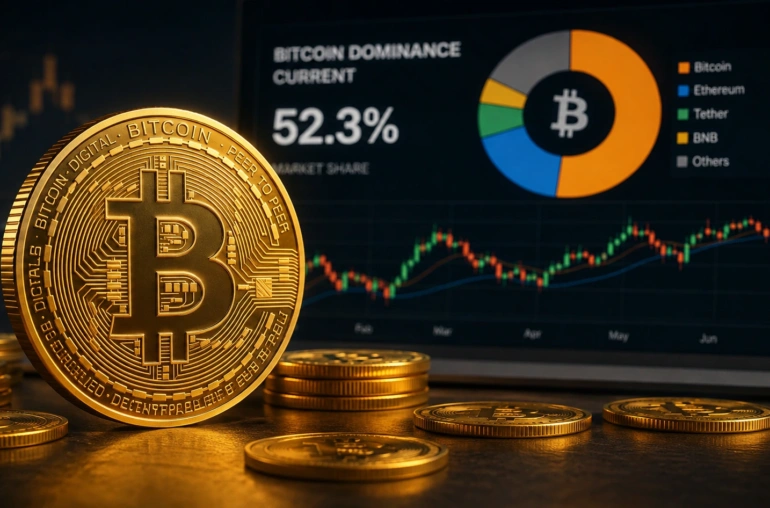
If you are new to cryptocurrency, you may wonder, what does bitcoin look like? The answer is a little different from what many people expect. Bitcoin is a digital currency, so it does not exist as physical coins or paper notes that you can hold in your hand. When people show pictures of Bitcoin, they often use a gold-colored coin with the familiar “₿” symbol, but that is only a visual representation. Real Bitcoin exists digitally on a public blockchain and is accessed through cryptocurrency wallets. Understanding this difference makes Bitcoin much easier to understand. In this guide, we will explain what Bitcoin looks like online, what physical Bitcoin coins represent, how Bitcoin balances and transactions appear, and how beginners can recognize genuine Bitcoin-related information.
What Does Bitcoin Look Like in Real Life?
When people ask what does bitcoin look like, they often imagine a physical gold coin. Many websites, advertisements, news articles, and cryptocurrency guides use a shiny gold coin featuring the Bitcoin symbol, ₿, to represent the currency. This image has become strongly associated with Bitcoin and is useful for visual communication. However, the pictured coin is generally not an actual Bitcoin. It is an artistic representation of a digital asset that exists electronically.
There have been physical objects called Bitcoin coins, including novelty coins and collectible items, but these should not be confused with Bitcoin itself. A physical coin with a Bitcoin logo does not automatically contain Bitcoin or give its owner access to cryptocurrency. If you want to understand what does bitcoin look like from a technical perspective, it is better to think of Bitcoin as information recorded on a decentralized blockchain rather than something with a particular physical shape. The digital nature of Bitcoin is one of its most important characteristics.
What Does Bitcoin Look Like Online?
So, what does bitcoin look like when you actually own or use it? Instead of seeing a physical object, you normally see information displayed inside a cryptocurrency wallet or exchange account. A wallet may show your Bitcoin balance using BTC, such as 0.005 BTC or 0.25 BTC. The amount can also be displayed in a traditional currency such as dollars, euros, or another local currency based on the current market price.
The exact appearance depends on the wallet or platform you use. Some interfaces show a large Bitcoin logo beside your balance, while others mainly display numbers, transaction details, addresses, and buttons for sending or receiving funds. This means there is no single screen that represents Bitcoin everywhere. If you are learning how to use cryptocurrency, reading a beginner’s guide to Bitcoin wallets can help you understand the difference between your displayed balance, wallet address, and private credentials.
What Does the Bitcoin Symbol Look Like?
Another common way to answer what does bitcoin look like is by looking at its symbol. Bitcoin is commonly represented by ₿, a capital letter B with two vertical strokes. You may also see the abbreviation BTC, which is the commonly used ticker symbol for Bitcoin. Both are widely used in cryptocurrency websites, financial discussions, applications, and news coverage.
The symbol is especially useful because it gives Bitcoin an easily recognizable visual identity. However, the ₿ symbol is not Bitcoin itself. It is simply a symbol used to identify the currency, much like other currencies have their own symbols or abbreviations. When you see ₿ next to a number, it usually indicates an amount denominated in Bitcoin. For example, ₿0.01 or 0.01 BTC refers to the same quantity. Learning these basic visual clues can make cryptocurrency apps and websites much easier for beginners to read.
What Does Bitcoin Look Like on a Wallet?
If you are using a Bitcoin wallet, you may notice that Bitcoin appears as a balance rather than an object. A wallet might show something like 0.01000000 BTC, along with an estimated value in your local currency. The wallet can also provide options such as “Send” and “Receive.” These features allow you to interact with Bitcoin without ever physically seeing a coin. For more: MXN to INR: Mexican Peso to Indian Rupee Rate
A Bitcoin wallet may also display a long string of letters and numbers when you choose to receive Bitcoin. This is your Bitcoin address, which is used to identify where funds should be sent. Different types of Bitcoin addresses can have different formats, so they do not all look identical. Modern addresses may begin with characters such as “bc1,” while older formats can begin with “1” or “3.” Understanding how wallet addresses look is more useful than memorizing the appearance of a physical Bitcoin image because addresses are part of real Bitcoin transactions.
What Does Bitcoin Look Like During a Transaction?
To understand what does bitcoin look like during a transaction, imagine sending money through a banking app, except the transaction is recorded on the Bitcoin blockchain. A wallet normally displays the amount being sent, the destination address, the transaction fee, and a transaction status. After the transaction is broadcast, it can be identified by a unique transaction ID, often called a transaction hash.
A transaction hash is a long sequence of letters and numbers. It may look confusing to someone seeing it for the first time, but it serves as an identifier for a particular blockchain transaction. Once a transaction is confirmed, blockchain explorers can display information such as the sending and receiving addresses, amount transferred, fees, and confirmations. This is one reason Bitcoin does not have a single visual appearance. Depending on what you are viewing, it can appear as a balance, address, transaction record, or blockchain data.
What Does a Physical Bitcoin Coin Represent?
Many online searches about what does bitcoin look like lead to photographs of gold-colored coins. These images usually show a circular design with the Bitcoin logo, decorative patterns, and sometimes words or numbers associated with cryptocurrency. Such coins can be attractive as collectibles or decorative objects, but they are not the Bitcoin network itself.
Some physical Bitcoin-themed products have been created as novelty items, while certain early physical Bitcoin-related objects were designed to represent stored digital value. However, ownership of a decorative Bitcoin coin should never be treated as proof that someone owns BTC. The real asset is recorded digitally on the Bitcoin blockchain. If someone gives you a physical coin claiming that it contains Bitcoin, you should verify exactly what it represents before assuming it has monetary value.
What Does Bitcoin Look Like on a Blockchain?
At the blockchain level, Bitcoin looks very different from the familiar gold coin image. The Bitcoin network records transactions in blocks, and these blocks are connected into a chronological chain. Instead of displaying a picture of a coin moving from one person to another, the system records data showing how Bitcoin ownership is transferred between addresses.
A blockchain explorer can make this information visible through a web interface. You might see a block number, transaction hashes, wallet addresses, Bitcoin amounts, fees, and confirmation information. The data can look technical because it is designed for a computer network rather than a physical payment system. This is the closest answer to what does bitcoin look like when you examine the technology itself: Bitcoin appears as digitally recorded transaction data maintained across a distributed network.

How Bitcoin Looks Different From Regular Money
Understanding what does bitcoin look like becomes easier when you compare it with traditional money. A dollar bill has a physical size, color, design, serial number, and printed security features. Coins have physical shapes and markings. Bitcoin has none of these physical characteristics because it is a digital monetary system.
Instead, Bitcoin is represented through digital balances and blockchain records. You can see an amount such as 0.002 BTC in a wallet, but you cannot take that amount out of the screen as a physical object. The Bitcoin symbol, logos, coin illustrations, and app interfaces are simply ways of presenting or identifying the digital currency. This distinction is important for beginners because online images can make Bitcoin appear like a traditional coin when it actually operates very differently from physical cash.
What Does Bitcoin Look Like in a Cryptocurrency Exchange?
On a cryptocurrency exchange, Bitcoin usually appears as a market listing. You might see “Bitcoin,” “BTC,” its current trading price, a price chart, trading volume, and buttons for buying or selling. The interface may also display your available Bitcoin balance if you hold BTC on that platform.
The visual design differs from one exchange to another, but the basic information is similar. A price chart can show Bitcoin’s value changing over minutes, hours, days, or years. Your account may show a numerical BTC balance alongside its estimated value in another currency. If you are researching cryptocurrency investing, it is useful to learn how to read a crypto price chart before making financial decisions. The appearance of Bitcoin on an exchange therefore focuses on market data rather than a physical representation of the asset.
What Does Bitcoin Look Like When You Receive It?
When you receive Bitcoin, you generally do not receive an object, package, or physical coin. Instead, you provide a Bitcoin receiving address or another supported payment method. The sender uses that information to create a transaction, and the network processes it. Your wallet can then show the incoming transaction and update your available balance after the relevant network conditions are met.
For example, imagine that someone sends you 0.01 BTC. Your wallet may display an incoming transaction showing the amount, the transaction status, and other technical details. Once the transaction is sufficiently confirmed, the balance becomes part of your wallet’s displayed Bitcoin holdings. This is another useful way to understand what does bitcoin look like in everyday use: it appears as numbers and transaction information rather than as something you can physically touch.
What Does Bitcoin Look Like in a Bitcoin ATM?
Bitcoin ATMs can make Bitcoin appear more like a traditional financial product because they have physical screens and machines. Depending on the machine and location, users may be able to buy Bitcoin by following on-screen instructions. The machine may ask for a wallet address, display the amount of Bitcoin involved, and provide a receipt or transaction reference.
Even though the machine is physical, the Bitcoin itself remains digital. The ATM is simply a way of interacting with the Bitcoin network or a service that facilitates cryptocurrency purchases. The screen may show the ₿ symbol, BTC amount, exchange rate, and transaction information. Therefore, if you see Bitcoin at an ATM, remember that the machine is only the interface. The actual Bitcoin is represented through digital records associated with blockchain addresses.
What Does Bitcoin Look Like Compared With Other Cryptocurrencies?
The question what does bitcoin look like can also be confusing because many other cryptocurrencies use similar visual designs. Digital currencies often have their own logos, symbols, ticker codes, and wallet interfaces. Bitcoin’s recognizable orange logo and ₿ symbol are among the most familiar cryptocurrency images, but seeing a coin logo alone is not enough to determine what asset you are dealing with.
The main identifier is usually the name and ticker symbol shown by the platform. Bitcoin is generally identified as Bitcoin or BTC. Other cryptocurrencies have different names and ticker symbols. This matters when sending or receiving digital assets because choosing the wrong network or asset can create serious problems. Beginners should always check the cryptocurrency name, ticker, network, and destination address carefully instead of relying only on a logo or image.
Why Bitcoin Does Not Have One Fixed Appearance
There is no single answer to what does bitcoin look like because Bitcoin can be represented in several ways depending on the context. A news website might show a gold coin, a wallet might show a BTC balance, and a blockchain explorer might display transaction hashes and addresses. An exchange may show a price chart, while a Bitcoin ATM may show transaction information on a physical screen.
These are different visual representations of the same underlying digital monetary network. The important point is that none of these pictures is the actual Bitcoin in a physical sense. The blockchain and the cryptographic system behind it are what make Bitcoin function. Once you understand this distinction, the common Bitcoin coin image becomes much easier to interpret. It is a symbol used to make an invisible digital asset easier for people to recognize.
How Beginners Can Recognize Real Bitcoin Information
If you are trying to identify Bitcoin online, look beyond the picture. Genuine Bitcoin-related information will normally use recognizable terms such as Bitcoin, BTC, blockchain, wallet address, transaction, or Bitcoin network. A Bitcoin amount is usually expressed in BTC, although smaller units such as satoshis may also be used.
Be careful with websites or messages that use the Bitcoin logo to create an appearance of legitimacy. A logo or picture does not prove that a service is connected to the Bitcoin network or that an investment opportunity is genuine. Before sending funds, verify the destination address, network, service, and transaction details independently. For additional context, you can also read a trusted Bitcoin security guide to learn why private keys, recovery phrases, and transaction verification are important.
FAQ
What does bitcoin look like physically?
Bitcoin itself has no physical form. Images of gold-colored Bitcoin coins are visual representations or physical collectibles, not the Bitcoin held on the blockchain.
What does a real Bitcoin look like?
A real Bitcoin does not look like a physical coin. It exists digitally as part of blockchain records and is represented through wallet balances and transactions.
What does the Bitcoin symbol look like?
The common Bitcoin symbol is ₿, while BTC is its widely used ticker abbreviation. Both are used to identify Bitcoin.
Can you hold a Bitcoin in your hand?
No. You can hold a physical Bitcoin-themed coin, but actual BTC is digital and is recorded on the Bitcoin blockchain.
What does Bitcoin look like in a wallet?
Bitcoin usually appears as a numerical balance such as 0.01 BTC, along with transaction history, receiving addresses, and other wallet information.
Conclusion
So, what does bitcoin look like? The simplest answer is that Bitcoin does not have a physical appearance like traditional money. The familiar gold coin with the ₿ symbol is mainly an illustration used to represent the digital currency. When you actually use Bitcoin, you see balances, wallet addresses, transaction records, blockchain data, and market information instead.
For beginners, understanding this difference is an important first step toward learning how cryptocurrency works. Bitcoin may look like a coin in photographs, but its real existence is digital and tied to the Bitcoin blockchain. If you want to explore the topic further, learning about Bitcoin wallets, blockchain transactions, and cryptocurrency security is a useful next step before using BTC yourself.