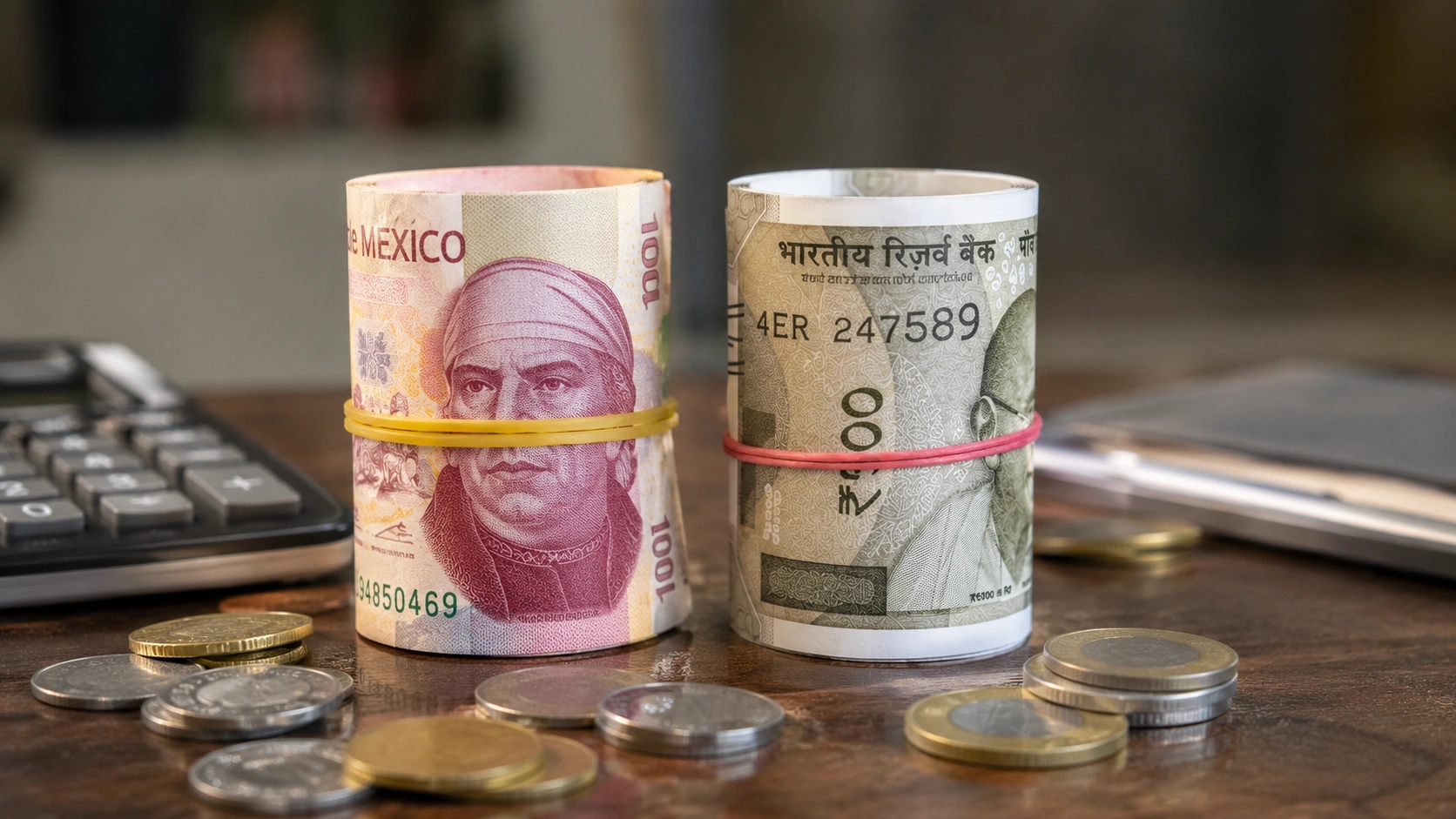
The MXN to INR exchange rate tells you how many Indian rupees you can receive for one Mexican peso. MXN is the currency code for the Mexican peso, while INR represents the Indian rupee. This currency pair matters for travelers, international shoppers, businesses, students, investors, and people sending money between Mexico and India. Exchange rates move throughout the day because currency markets respond to economic data, interest rates, inflation, trade conditions, and investor sentiment. A live rate can therefore differ from the rate you saw earlier. The mid-market rate provides a useful reference, but banks and money-transfer companies may add fees or markups when you exchange actual money. Always check the final amount before completing a transaction.
The MXN to INR rate also works in both directions. If you have Mexican pesos and want Indian rupees, you use MXN to INR. If you have Indian rupees and want Mexican pesos, you need the INR to MXN rate. These two rates are mathematical inverses, although fees can make the final transaction different. Current market data shows the pair around the mid-5-rupee range per Mexican peso. Wise and Investing.com both show recent rates close to 5.65 INR for 1 MXN. Because foreign exchange prices change constantly, readers should use a live converter when they need an exact amount for a payment, transfer, or purchase.
What Does MXN to INR Mean?
MXN to INR is a foreign exchange pair that compares the Mexican peso with the Indian rupee. MXN appears first because it is the base currency. INR appears second because it is the quote currency. If the rate is 5.65, one Mexican peso equals approximately 5.65 Indian rupees at that market rate. The same principle works for larger amounts. For example, 100 Mexican pesos would equal about 565 Indian rupees before any exchange fees or provider markups. The calculation is simple, but the amount you actually receive can differ. Your bank or transfer service may use its own customer exchange rate rather than the mid-market rate.
Understanding the currency pair becomes useful when comparing prices across countries. Imagine a traveler has 5,000 Mexican pesos and wants to know their approximate value in India. The traveler can multiply 5,000 by the current MXN to INR rate. If the market rate were 5.65, the calculation would produce approximately 28,250 Indian rupees. The final amount could be lower after fees. The same calculation helps businesses estimate invoices, travelers plan budgets, and families understand international transfers. For quick calculations, a live currency converter is usually more convenient than manually checking several exchange-rate websites.
How to Convert MXN to INR
Converting Mexican pesos into Indian rupees requires a simple multiplication when you know the current exchange rate. Suppose the rate is 5.65 INR for 1 MXN. You would multiply the number of pesos by 5.65. If you have 1,000 MXN, the estimated value would be 5,650 INR before fees. If you have 10,000 MXN, the estimated value would be 56,500 INR. These examples use a rounded rate for explanation. The actual result can change as the market moves. A live converter gives you a more accurate figure at the time you check it.
For practical transactions, the calculation involves more than the advertised rate. A bank may apply a spread between its buying and selling prices. A money-transfer service may also charge a fixed fee or percentage. Some providers advertise low fees but use a less favorable exchange rate. This is why comparing the final amount received can be more useful than comparing the headline fee. When checking MXN to INR, look at the rate, transfer fee, and final INR amount together. That approach gives you a clearer idea of the true cost of converting your money.
MXN to INR Exchange Rate Today
The current MXN to INR rate changes throughout the trading day. Recent market data places the pair around 5.65 INR per Mexican peso. Wise recently reported a mid-market rate of about 5.655 INR, while Investing.com showed a real-time rate near 5.653 INR. These figures can differ slightly because currency markets move continuously and different providers update their data at different times. A small difference may not matter for a small transaction. It can become more important when you exchange a large amount of money.
Recent performance also shows why checking the date matters. Wise’s historical data showed a 30-day high near 5.6546 and a 30-day low near 5.4853. Over 90 days, the reported range extended from about 5.3479 to 5.6546. These movements demonstrate that the value of a currency pair can change meaningfully over time. If you are planning a future payment, do not assume today’s rate will remain unchanged. A better approach involves checking the market regularly and comparing available transfer options before making a large conversion.
MXN to INR Conversion Examples
Conversion becomes easier when you understand how the multiplication works. If the market rate is 5.65 INR per MXN, then 10 MXN equals about 56.50 INR. Similarly, 100 MXN equals about 565 INR, while 1,000 MXN equals about 5,650 INR. For 5,000 MXN, the approximate value would be 28,250 INR. These figures represent simple market-rate examples rather than guaranteed transaction amounts. Your actual result can change when the provider applies a spread, service charge, or other cost. The exchange rate may also change between the moment you calculate the amount and the moment your transaction settles. For more: Anthony Scaramucci Net Worth: Wealth, Career & Investments
The reverse calculation works differently. To convert INR back into MXN, you divide the Indian rupee amount by the MXN to INR rate. For example, if the rate is 5.65 and you have 5,650 INR, dividing 5,650 by 5.65 gives approximately 1,000 MXN. This method helps travelers and businesses move between the two currencies. It also helps you check whether a conversion quote looks reasonable. If a provider’s quoted amount seems far below the expected result, examine the exchange rate and fees. A large difference can indicate a significant markup.
What Affects the MXN to INR Rate?
Several economic factors can influence MXN to INR. Interest rates are among the most important. When a country’s interest rates become more attractive, international investors may increase demand for its currency. Inflation also matters because persistent price increases can affect purchasing power and monetary policy. Economic growth, employment data, government policy, and trade conditions can influence investor expectations as well. Mexico and India each have different economic structures, so developments in either country can affect the exchange relationship. Central-bank decisions can also create rapid currency movements when investors change their expectations about future interest rates.
Global market sentiment can influence both currencies at the same time. The Mexican peso often responds to developments involving the United States because Mexico has strong economic and trade links with its northern neighbor. The Indian rupee can respond to oil prices, capital flows, domestic growth, and global risk sentiment. Changes in the U.S. dollar can also influence both currencies. This means MXN to INR does not move according to one simple rule. Investors usually consider several indicators before forming a view about the pair. For everyday users, the practical lesson is simple: exchange rates can change for many reasons, so current rates matter more than old conversion tables.
MXN to INR for Travel and Remittances
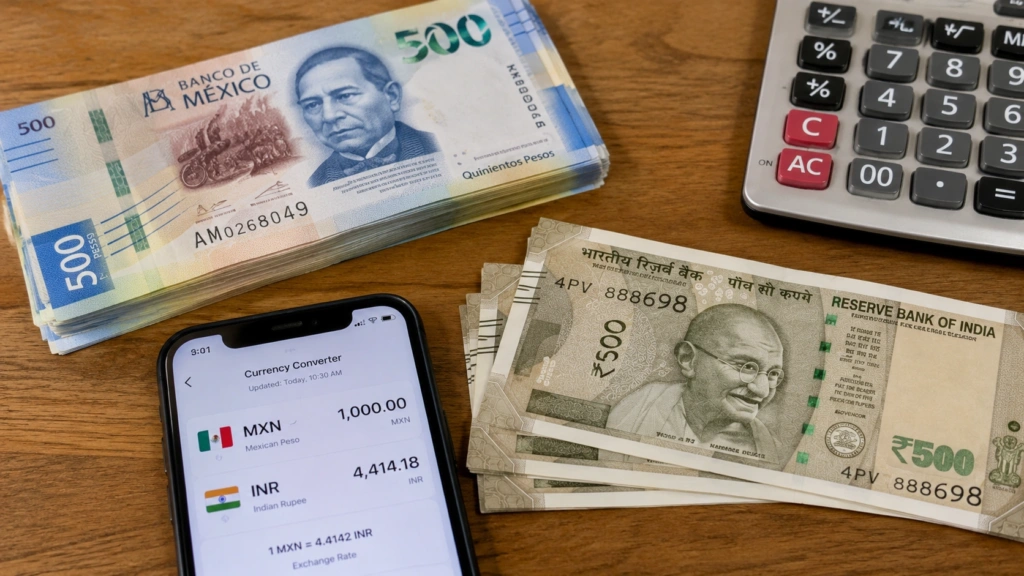
Travelers may search for MXN to INR when planning trips between Mexico and India. Knowing the approximate exchange rate can help create a realistic spending budget. However, travelers should remember that airport exchange counters, hotels, banks, and independent exchange offices can use different rates. Some may charge additional commissions. Card providers can also use their own exchange rates and fees. Checking several options before exchanging a large amount can reduce unnecessary costs. A small rate difference may have little impact on a short trip, but larger differences can become noticeable when exchanging substantial amounts.
International transfers require even more attention because fees and exchange-rate spreads can vary widely. A provider might advertise a low transfer fee while offering a less favorable exchange rate. Another provider may charge a higher visible fee but provide a better rate. The best comparison focuses on the final amount received in Indian rupees. If you regularly send money between Mexico and India, monitoring the MXN to INR exchange rate can help you understand when a quote looks competitive. You can also compare the transfer provider’s rate with the current mid-market rate to identify the size of its markup.
MXN to INR and the Mexican Economy
The Mexican peso is one of the most actively traded emerging-market currencies. Mexico’s close economic relationship with the United States plays an important role in the peso’s behavior. Manufacturing, exports, investment flows, tourism, and monetary policy can all affect demand for the currency. The peso has also attracted attention because Mexico has maintained periods of relatively high interest rates compared with several developed economies. Such conditions can influence international investment flows. However, higher rates do not guarantee a stronger currency. Investors also consider inflation, economic growth, political developments, and global risk conditions.
For someone watching MXN to INR, Mexican economic data matters because it can change the peso’s relative strength. A stronger Mexican economy can support the peso under certain conditions, while weaker growth can create pressure. The peso can also react to U.S. economic data and Federal Reserve decisions because of Mexico’s close connection to the U.S. economy. Historical research from the Federal Reserve Bank of Dallas found that the Mexican peso showed notable strength against the dollar during part of the Federal Reserve’s tightening cycle. Past performance does not guarantee future movements, but it shows why broader economic conditions matter.
MXN to INR and the Indian Economy
The Indian rupee also plays a major role in determining the currency pair. India’s economic growth, inflation, interest rates, imports, exports, and foreign investment can all affect the rupee’s value. Oil prices are particularly important because India imports large quantities of crude oil. Higher energy costs can increase demand for foreign currency and place pressure on the rupee under certain conditions. Capital flows can create another source of movement. When international investors increase investment in Indian assets, demand for rupees can rise. When investors withdraw capital, the currency can face pressure.
The Reserve Bank of India also plays an important role in India’s foreign exchange market. Monetary policy can influence interest-rate expectations and investor behavior. The central bank can also manage liquidity and intervene in currency markets when necessary. These factors mean that the INR side of the pair can change even when Mexico’s economy remains stable. For anyone tracking MXN to INR, it is therefore useful to follow both economies. Looking only at Mexican news or only at Indian news can provide an incomplete picture of the currency relationship.
MXN to INR Forecast: What Should You Expect?
Forecasting MXN to INR over a long period is difficult because currency markets respond to changing economic conditions. Analysts may study interest-rate differences, inflation trends, economic growth, trade balances, and historical price patterns. However, unexpected events can quickly change those assumptions. A central-bank decision, geopolitical event, commodity-price shock, or change in global risk sentiment can move a currency pair much faster than a long-term forecast suggests. This makes precise exchange-rate predictions unreliable. A forecast should therefore be treated as a scenario rather than a guaranteed future rate.
For everyday currency users, short-term forecasts may matter less than the rate available when the transaction occurs. If you need to exchange money soon, compare current quotes from several providers. If the transaction is large and flexible, you may also consider monitoring the rate over several days. Businesses can use hedging strategies when currency exposure creates significant financial risk. Individual users usually need a simpler approach. Track the market, compare the final amount received, and avoid assuming that one exchange-rate forecast will remain accurate.
How to Get a Better MXN to INR Rate
Getting a competitive MXN to INR conversion rate starts with comparison. Check the mid-market rate first so you know the approximate market value. Then compare the rates offered by banks, exchange offices, and money-transfer services. Look at the final INR amount rather than focusing only on the stated fee. Some providers add their costs through the exchange rate. Others show a separate fee. Comparing both elements gives you a better understanding of the real transaction cost.
Timing can also matter when you have flexibility. Currency markets operate continuously during business days, and rates can change after economic announcements or central-bank decisions. You cannot reliably predict the perfect moment to exchange money. However, you can avoid making decisions without checking the current market. For larger transfers, consider setting an exchange-rate alert or comparing several quotes before confirming the transaction. If you need to exchange money regularly, keeping records of previous rates can also help you recognize whether a new offer looks competitive.
Frequently Asked Questions
What is the current MXN to INR rate?
Recent market data places 1 Mexican peso at around 5.65 Indian rupees. The exact rate changes continuously, so check a live currency converter before making a transaction.
How much is 100 MXN in INR?
Using an example rate of 5.65 INR per Mexican peso, 100 MXN equals about 565 INR. Your actual amount may differ after fees and provider markups.
How do I convert MXN to INR?
Multiply the amount in Mexican pesos by the current MXN to INR exchange rate. For example, 1,000 MXN multiplied by 5.65 gives about 5,650 INR before transaction costs.
Why does the MXN to INR rate change?
The pair changes because of interest rates, inflation, economic growth, trade conditions, investment flows, commodity prices, and global market sentiment. Changes in either Mexico or India can affect the rate.
Is the bank’s MXN to INR rate the same as the market rate?
Usually not. Banks and transfer companies may add a spread or other charges. The mid-market rate provides a useful benchmark, but the final customer rate can differ.
Conclusion
The MXN to INR exchange rate shows the value of the Mexican peso against the Indian rupee. It matters for travelers, businesses, investors, international shoppers, and people transferring money between Mexico and India. Recent market data places the pair around 5.65 INR per MXN, but the rate can change throughout the day. The final amount you receive can also differ from the market rate because providers may add spreads and transaction fees.
For the most accurate conversion, check a live MXN to INR converter before exchanging money. Compare the rate and the final amount from several providers rather than choosing based only on advertised fees. If you follow this currency pair regularly, monitoring market movements and economic developments can help you understand why the rate changes. Use the latest exchange data when making important financial decisions.