

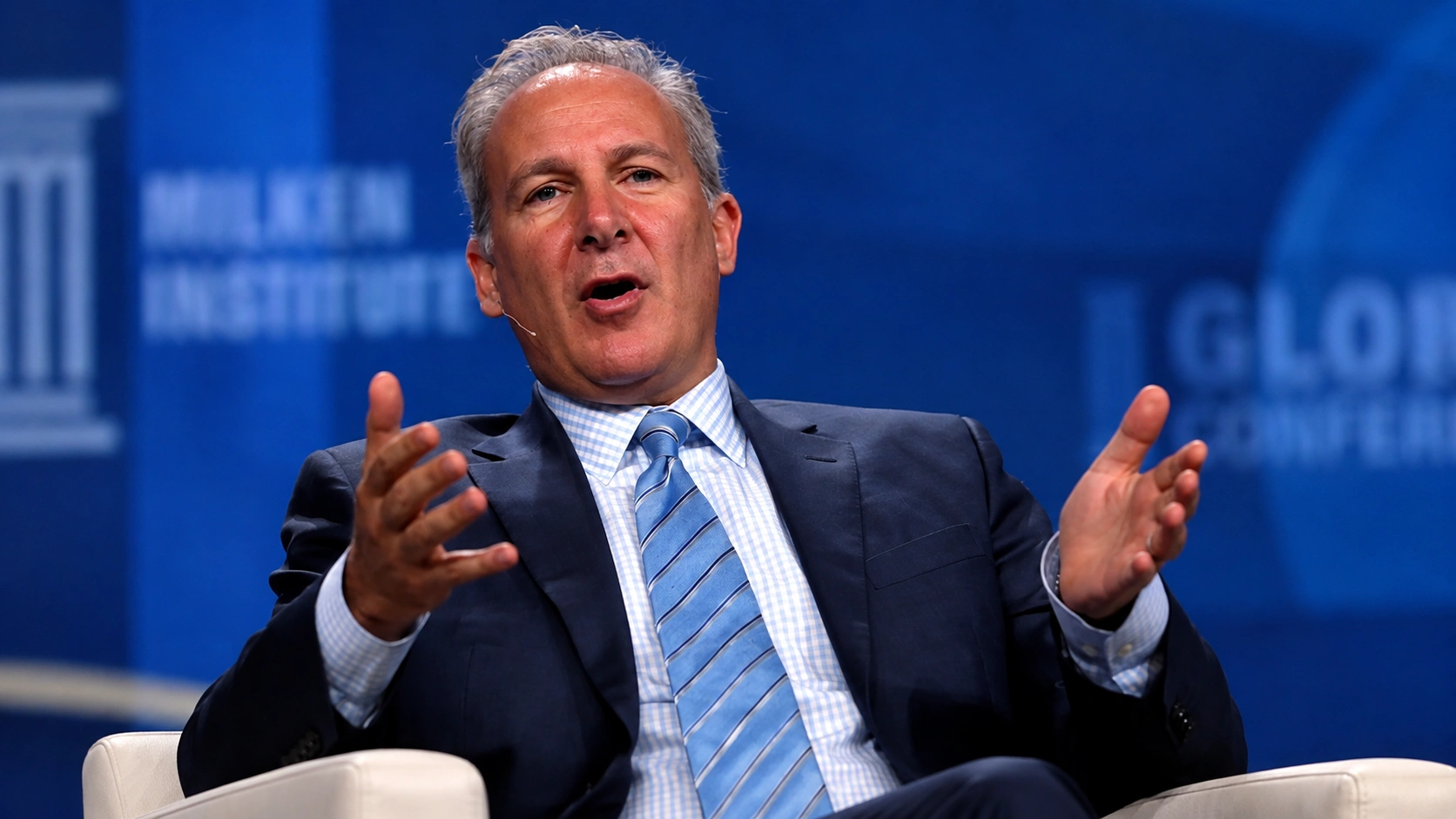
Peter Schiff is an American economist, investor, author, and financial commentator. He is best known for warning about the U.S. housing bubble before the 2008 financial crisis. He built his career around Austrian School economics, international investing, monetary policy, inflation, and precious metals. He is also associated with SchiffGold and Euro Pacific Asset Management. His views often attract attention because he strongly criticizes U.S. monetary and fiscal policy. He frequently discusses gold, silver, the dollar, interest rates, and government debt. This article explains Peter Schiff’s background, economic views, investment approach, books, and continued role in financial commentary.
Who is Peter Schiff ? A brief biography
| Biography Detail | Information |
|---|---|
| Full Name | Peter David Schiff |
| Date of Birth | March 23, 1963 |
| Place of Birth | New Haven, Connecticut, United States |
| Profession | Economist, author, investment advisor, and financial commentator |
| Education | Bachelor’s degree in Finance and Accounting, University of California, Berkeley, 1987 |
| Known For | Economic analysis, international investing, and warnings about the U.S. housing and financial crisis |
| Investment Career | Began his investment career as a financial consultant with Shearson Lehman Brothers in 1987. |
| Euro Pacific | Joined Euro Pacific Capital in 1996 and later served as its president. |
| Current Professional Role | Chief Economist and Global Strategist at Euro Pacific Asset Management. |
| Books | Crash Proof, Crash Proof 2.0, The Real Crash, and other books on economics and investing |
| Known Economic View | He is associated with the Austrian School of economics and frequently discusses inflation, monetary policy, debt, currencies, and precious metals. |
| Media Work | Has appeared on major financial and news networks and hosts The Peter Schiff Show. |
| Notable Recognition | Became widely known for warnings about the U.S. housing market and financial crisis before the 2008 crisis. |
Who Is Peter Schiff?
Peter Schiff was born on March 23, 1963, in New Haven, Connecticut. He earned a bachelor’s degree in finance and accounting from the University of California, Berkeley, in 1987. His investment career began with Shearson Lehman Brothers. He later joined Euro Pacific Capital in 1996. His career then expanded into international investing and economic commentary. He became known for his books, interviews, media appearances, and financial analysis. His work focuses heavily on markets outside the United States, monetary policy, precious metals, and long-term economic trends.
Peter Schiff became especially well known before the 2008 financial crisis. From 2004 to 2006, he repeatedly warned about problems in the U.S. housing market. He also discussed risks connected to mortgages and excessive borrowing. The housing market later collapsed, followed by a major financial crisis in 2008. His earlier warnings received significant attention after those events. This history became an important part of his public reputation. It also helped establish him as a prominent voice in debates about economic bubbles and financial risk.
Peter Schiff’s Economic Views
Peter Schiff’s economic philosophy draws heavily from the Austrian School of economics. This tradition places strong importance on savings, capital formation, market prices, and sound money. Schiff often argues that excessive credit expansion can create economic distortions. He also questions policies that keep interest rates artificially low. In his view, cheap credit can encourage excessive borrowing. It can also push investors toward higher-risk assets. These ideas form an important part of his criticism of modern monetary policy.
Inflation remains another major subject in Schiff’s commentary. He often connects inflation with government spending and monetary policy. He argues that rising prices can reduce people’s purchasing power. He also believes investors should consider the real value of their wealth. In June 2026 commentary, Schiff discussed the relationship between Washington’s fiscal policies and inflation. His arguments reflect his broader concern about government deficits, money creation, and long-term purchasing power. These views remain central to his economic analysis.
Why Is Peter Schiff Associated With Gold?
Gold has remained one of the strongest themes in Peter Schiff’s investment philosophy. He views physical precious metals as a potential protection against currency depreciation and inflation. He also discusses gold in the context of financial uncertainty and monetary instability. His investment philosophy includes international assets and commodities. These areas can offer alternatives to heavy exposure to U.S. financial assets. Gold therefore plays a major role in his broader approach to portfolio diversification.
Schiff does not discuss gold only as a short-term trading opportunity. He generally presents precious metals as long-term stores of value. His approach focuses on protecting purchasing power over long periods. However, gold prices can move sharply in either direction. Investors also face storage costs, market volatility, and opportunity costs. Anyone considering gold should therefore assess personal financial goals and risk tolerance. Schiff’s views can provide one perspective, but they do not replace individual financial planning.
Peter Schiff and the U.S. Dollar
The U.S. dollar is another important subject in Peter Schiff’s economic commentary. He has frequently expressed concerns about large government deficits and rising national debt. He also questions the long-term effects of monetary expansion. His argument centers on purchasing power and currency stability. Schiff believes persistent fiscal and monetary imbalances can weaken a currency over time. This helps explain his continued interest in gold, foreign markets, and other assets.
Schiff’s recent commentary continues to examine the dollar. He has discussed inflation, interest rates, government spending, and gold in relation to currency values. However, currency markets depend on many different factors. Interest-rate differences can influence capital flows between countries. Economic growth and global demand also affect currencies. Investor sentiment can change quickly as well. Therefore, Schiff’s long-term dollar concerns should be considered within the wider context of global financial markets.
Peter Schiff and the Federal Reserve
Peter Schiff frequently criticizes Federal Reserve monetary policy. He argues that very low interest rates can encourage excessive borrowing. Cheap money can also contribute to higher asset valuations. Schiff believes these policies can create problems that appear later in the economic cycle. His analysis often connects interest rates with inflation, asset prices, debt, and gold. The Federal Reserve therefore remains a regular subject in his interviews and financial commentary. For more: Palladium Price Today: Live Rate and Market Guide
In 2026, Schiff continued to criticize the Federal Reserve over interest-rate policy. He has argued that negative real interest rates could support gold prices. He also believes such conditions could place pressure on the dollar. These are his economic interpretations rather than guaranteed outcomes. Interest rates can change because of inflation, employment, economic growth, and financial conditions. Markets can also react before policymakers change their official decisions.
Peter Schiff’s Investment Approach
Peter Schiff generally promotes a long-term investment approach. His philosophy emphasizes international diversification, commodities, precious metals, and companies outside the United States. Euro Pacific Asset Management describes its approach as value-oriented and globally focused. Schiff’s investment views often challenge investors who concentrate heavily on U.S. stocks and bonds. He believes investors should consider opportunities and risks across different countries and asset classes.
Individual investors should still apply their own financial judgment. Schiff’s economic framework does not automatically fit every investor. People have different income levels, goals, time horizons, and risk tolerance. Taxes and investment costs can also affect results. Market prices may remain different from an analyst’s expectations for long periods. Readers can use Schiff’s ideas as research material. They should compare those ideas with other economic perspectives before making major financial decisions.
Peter Schiff’s Books
Peter Schiff has written several books about economics and investing. His better-known works include Crash Proof, Crash Proof 2.0, The Little Book of Bull Moves in Bear Markets, How an Economy Grows and Why It Crashes, and The Real Crash. These books explain many of the economic ideas that appear in his interviews and public commentary. They also provide more detail than short television appearances or social media posts.
For beginners, Schiff’s books can provide useful background on his economic framework. His writing covers economic cycles, debt, monetary policy, market bubbles, and international investing. Readers can also compare his arguments with other economic schools of thought. This approach provides more context than relying on individual predictions. It also helps readers understand the assumptions behind his views. Anyone researching Peter Schiff can use his books as a starting point for deeper study.
Peter Schiff’s Businesses and Media Work
Peter Schiff has been involved with several financial and media businesses. He is associated with Euro Pacific Asset Management and founded SchiffGold. His businesses reflect his long-standing focus on global investing and physical precious metals. He has also built a large media presence through podcasts, interviews, articles, and online videos. These platforms allow him to discuss economic developments with a broad audience.
His media commentary covers many financial topics. Common subjects include inflation, interest rates, government debt, gold, silver, stocks, bonds, cryptocurrencies, and the U.S. dollar. His direct style has helped make his commentary widely recognizable. Supporters and critics often debate his economic interpretations. For readers, reviewing the underlying data can provide more context than relying on a single commentary clip.
Peter Schiff’s Views on Gold in 2026
Gold remained a major topic in Peter Schiff’s 2026 commentary. He argued that the long-term gold market still had room for growth. He connected this view with monetary policy and concerns about the U.S. dollar. However, gold prices can experience major short-term movements. A long-term investment thesis does not guarantee gains during every market period. Investors should separate Schiff’s broader economic argument from short-term gold price forecasts.
Recent market movements show why this distinction matters. Gold experienced periods of volatility during 2026. Changes in Treasury yields, oil prices, interest-rate expectations, and the dollar affected precious metals. These factors can sometimes move gold in unexpected directions. Gold investors therefore need to consider both long-term fundamentals and short-term market conditions. This broader view provides a more balanced way to understand Schiff’s position on precious metals.
Frequently Asked Questions
Who is Peter Schiff?
Peter Schiff is an economist, investor, author, and financial commentator. He is known for his views on monetary policy, inflation, gold, debt, and international investing.
What did Peter Schiff predict about the 2008 crisis?
He warned about serious problems in the U.S. housing market before the 2008 financial crisis. His warnings gained attention after the housing market collapsed.
Is Peter Schiff a supporter of gold?
Yes. Gold and physical precious metals have played a major role in his investment philosophy for many years.
What is Peter Schiff known for?
He is known for his economic commentary on inflation, government debt, the Federal Reserve, gold, the dollar, and financial markets.
What books has Peter Schiff written?
His notable books include Crash Proof, Crash Proof 2.0, The Real Crash, and How an Economy Grows and Why It Crashes.
Conclusion
Peter Schiff has built a long career around economics, investing, monetary policy, and precious metals. His warnings about the U.S. housing market helped increase his public profile before the 2008 financial crisis. Since then, he has continued discussing inflation, government debt, the dollar, Federal Reserve policy, and gold. His views remain part of broader debates about monetary policy and financial markets.
Readers researching Peter Schiff can explore his books, interviews, and economic commentary for more detail. It is also useful to compare his arguments with other economic perspectives. Looking at multiple sources can help readers understand the assumptions behind different market views. This approach creates a clearer picture of the issues surrounding money, markets, inflation, and investment.

1 Comment