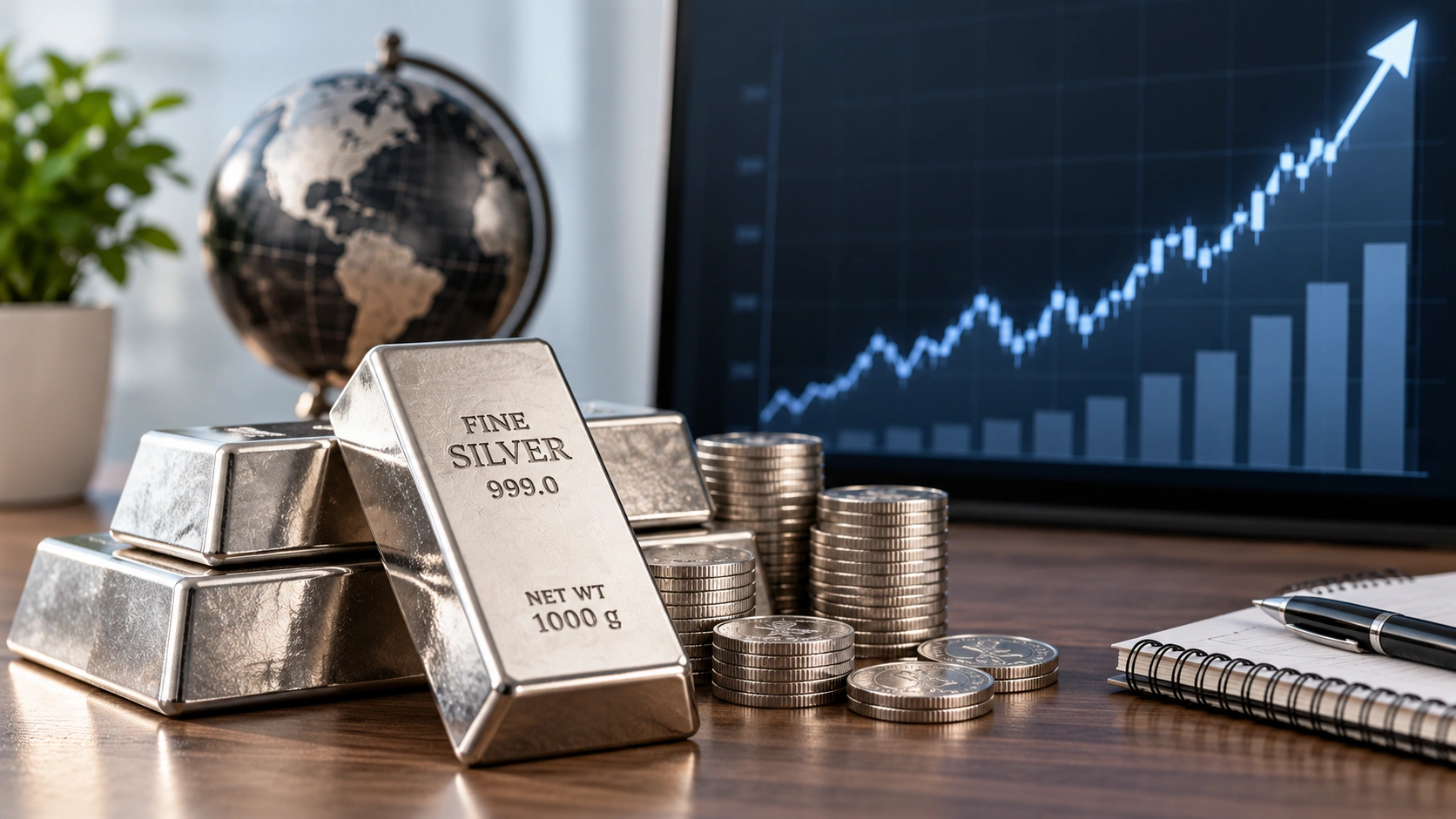
Investors searching for silver price predictions for next 5 years want to know where the precious metal could trade through 2030. Silver has an unusual position in the global economy. It acts as both an investment asset and an industrial metal. Solar panels, electronics, vehicles, power infrastructure, and data centers all use silver. At the same time, investors buy silver bars, coins, funds, and other products when they expect higher prices or want protection from economic uncertainty. These factors make long-term forecasting difficult. Silver can experience sharp rallies and equally sharp declines. Therefore, a useful five-year outlook should focus on several possible scenarios rather than promise one exact future price.
Silver Price Outlook for the Next Five Years
A five-year silver forecast should start with the market’s current position. Silver has experienced exceptional volatility recently. The Silver Institute reported that silver reached an all-time high above $121 per ounce on January 29, 2026, before falling sharply into the mid-$70s by early April. Reuters also reported silver around $66.24 per ounce on September 7, 2026. These large movements show why long-term price targets require caution. A forecast that looks reasonable today could become outdated after a major change in interest rates, industrial demand, currency markets, or investor sentiment.
Rather than treating one target as certain, investors can use a range of scenarios. A bullish scenario could develop if industrial demand remains strong, physical inventories stay tight, and investment demand grows. A moderate scenario could see silver rise gradually as supply and demand remain balanced but economic growth stays uneven. A bearish scenario could emerge if high interest rates persist, global manufacturing weakens, or investors move away from precious metals. This scenario-based approach gives readers a more realistic view of silver price predictions for next 5 years. It also avoids the common mistake of treating a long-term commodity forecast as a guaranteed outcome.
What Could Drive Silver Prices Higher?
Industrial demand is one of the strongest long-term arguments for silver. The metal has excellent electrical and thermal conductivity, which makes it useful in many technologies. The Silver Institute expects industrial demand to benefit from solar energy, electric vehicles, vehicle infrastructure, data centers, and artificial intelligence through 2030. These sectors could create additional demand as global investment in digital infrastructure and clean energy continues. Silver also plays a role in electronics and electrical equipment, giving the metal exposure to several different industries instead of relying on one source of demand.
The supply side adds another important consideration. Silver production often comes as a by-product of mining for metals such as lead, zinc, copper, and gold. That makes it harder for producers to increase silver output quickly when prices rise. The Silver Institute expects the global silver market to remain in deficit in 2026, with demand exceeding available supply. Persistent deficits do not automatically guarantee higher prices, because inventories can fill part of the gap. However, prolonged shortages can support prices when available stocks become tighter and investment demand increases. This supply-demand relationship will remain important throughout the next five years.
How Industrial Demand Could Affect Silver Through 2030
Solar energy represents one of the most closely watched sources of future silver demand. Solar manufacturers use silver in electrical contacts and other components. Global solar installations can therefore support silver consumption even when other parts of the economy slow down. However, investors should consider an important counterargument. Manufacturers continue to reduce the amount of silver used per solar unit and explore substitution. The Silver Institute expects photovoltaic demand to weaken in 2026 partly because of thrifting and substitution. This means rising solar installations do not necessarily produce an equal increase in silver consumption.
Other technologies could help offset that pressure. The Silver Institute expects data centers, artificial intelligence infrastructure, automotive applications, and power-grid investment to support industrial silver use. These areas could become increasingly important during the second half of the decade. For investors studying long-term precious metals, this makes industrial demand an important topic alongside gold and silver price trends. The key question is not simply whether technology use grows. Investors also need to watch how efficiently manufacturers use silver and whether alternative materials become commercially attractive.
The Role of Interest Rates and Inflation
Interest rates can have a major influence on silver because precious metals do not pay interest. When interest rates and bond yields rise, investors may find income-producing assets more attractive. That can reduce demand for precious metals. Lower rates can have the opposite effect by reducing the opportunity cost of holding metals. Central-bank policy therefore remains one of the major variables behind any five-year silver outlook. Reuters recently noted that changing expectations for U.S. Federal Reserve policy were affecting precious-metal prices. For more: How Much Is a Gold Bar Worth? Complete Guide
Inflation also matters, although its effect is not always straightforward. Investors sometimes purchase precious metals when they worry about declining purchasing power. Silver can benefit from this demand, particularly when inflation combines with economic or geopolitical uncertainty. However, inflation can also encourage central banks to keep rates higher for longer. That creates pressure on non-yielding assets. As a result, investors should watch inflation and interest rates together rather than assuming that higher inflation automatically means higher silver prices.
Silver Price Predictions for 2026 and 2027
For 2026, the market already demonstrates how quickly silver forecasts can change. The metal moved above $100 early in the year before suffering a significant correction. The Silver Institute reported that silver reached above $121 in January and later traded in the mid-$70s during April. By September, Reuters reported silver at about $66.24 per ounce. These movements make a single annual target unreliable. Instead, investors should focus on whether physical demand, industrial consumption, monetary policy, and investment flows support a recovery.
Looking toward 2027, supply constraints could remain relevant if mine production fails to keep pace with consumption. The Silver Institute’s 2026 outlook projected another market deficit and noted that the market would continue relying on above-ground inventories. At the same time, higher prices could encourage more recycling and reduce demand in price-sensitive sectors. This creates a natural balancing mechanism. If silver becomes expensive enough, consumers may recycle more metal while manufacturers search for ways to use less. A sustainable rally therefore requires more than strong investment demand. It needs a combination of durable industrial consumption and limited supply growth.
Silver Price Predictions for 2028 and 2029
By 2028 and 2029, technological demand could become an even more important part of the silver story. The Silver Institute expects industrial demand to expand across several technology sectors through 2030. Data centers, electric vehicles, power networks, electronics, and renewable-energy infrastructure could all contribute to long-term consumption. If these sectors expand faster than producers can increase supply, silver could receive significant structural support. However, the market could respond through greater recycling, mine investment, material efficiency, and substitution.
The economic environment will also shape these years. A period of falling interest rates, weaker currencies, strong investment flows, and healthy industrial growth could create a favorable environment for silver. On the other hand, a prolonged economic slowdown could reduce industrial consumption. Higher real interest rates could also pressure investment demand. Therefore, the most useful silver price predictions for next 5 years should not focus only on supply and demand. Investors should also monitor global economic growth, central-bank policy, the U.S. dollar, inflation, and geopolitical developments.
Silver Price Predictions for 2030
Predicting an exact silver price for 2030 is difficult because five-year commodity forecasts contain substantial uncertainty. A bullish 2030 scenario could involve continued industrial expansion, limited mine supply growth, persistent market deficits, and strong investment demand. In that environment, silver could remain structurally supported and potentially revisit or exceed previous highs. A more moderate scenario could involve steady industrial growth combined with stronger recycling and greater efficiency. Prices could then rise gradually without another extreme rally.
A bearish 2030 scenario also deserves attention. Manufacturers could accelerate substitution if silver becomes too expensive. Global economic growth could weaken, reducing industrial consumption. Higher interest rates could make bonds and other income-producing assets more attractive. Increased mine production and recycling could also reduce supply pressure. These factors could limit silver’s upside or cause extended periods of weakness. For this reason, investors should treat any published 2030 target as an estimate rather than a promise. A range of possible outcomes provides a much stronger foundation for long-term planning.
Key Risks to the Silver Price Forecast
Silver carries several risks that investors should understand before making a long-term decision. Its relatively small market can produce large price movements when investment flows change. Silver can also react strongly to movements in gold because investors often view the two metals as related precious-metal assets. At the same time, silver has a significant industrial component. A recession that reduces manufacturing activity can therefore hurt silver demand more directly than it might affect gold.
Supply responses create another risk. Higher prices can encourage recycling and improve the economics of some mining projects. The Silver Institute expects silver recycling to increase in 2026 as higher prices encourage more scrap recovery. Manufacturers can also reduce their silver consumption or replace it with other materials. These responses can limit price increases over time. Investors should therefore avoid assuming that a supply deficit will automatically produce continuous price growth. Markets constantly adjust to higher prices, and those adjustments can change the outlook.
What Investors Should Watch Through 2030
Investors who follow silver over the next five years should monitor a small group of important indicators. The first is physical supply and demand. Annual reports from organizations such as the Silver Institute provide useful information about mine production, recycling, industrial demand, and investment demand. The second is monetary policy. Federal Reserve decisions, inflation data, bond yields, and the U.S. dollar can all influence precious-metal sentiment. The third is industrial activity, especially in solar energy, electronics, automotive technology, data centers, and power infrastructure.
Investment flows deserve attention as well. Strong demand for physical bars, coins, and exchange-traded products can increase pressure on available metal. The Silver Institute reported stronger physical investment expectations for 2026, with investment forecast to rise 20% to 227 million ounces. Investors can combine these indicators with broader topics such as gold-to-silver ratio analysis, precious metals investing, and silver supply and demand. Using several indicators is more reliable than following one headline prediction or price target.
Frequently Asked Questions
Will silver go up over the next five years?
Silver could rise if industrial demand, investment demand, and supply constraints remain supportive. However, higher interest rates, economic weakness, and substitution could limit gains.
What could silver be worth in 2030?
No reliable source can guarantee an exact 2030 price. Silver could follow several paths depending on economic growth, industrial demand, monetary policy, supply, recycling, and investor sentiment.
Is silver a good long-term investment?
Silver may provide diversification and exposure to both precious-metal and industrial demand. However, it can experience significant volatility, so investors should consider their risk tolerance and investment goals.
What industries will drive silver demand?
Solar energy, electronics, electric vehicles, power infrastructure, data centers, and artificial intelligence are among the sectors expected to support industrial silver demand through 2030.
What could cause silver prices to fall?
Silver could decline if interest rates stay high, industrial demand weakens, investment flows decrease, recycling increases, or manufacturers reduce their use of silver through efficiency and substitution.
Conclusion
The outlook for silver through 2030 contains both significant opportunities and meaningful risks. Industrial demand could provide long-term support as technology, electrification, renewable energy, and digital infrastructure expand. Supply constraints could add further pressure if mine production fails to keep pace with demand. The Silver Institute expects the market to remain in deficit in 2026, while also highlighting continued growth opportunities across major technology sectors.
At the same time, silver remains highly volatile. Interest rates, economic conditions, the U.S. dollar, recycling, substitution, and investment flows can quickly change the market outlook. Therefore, silver price predictions for next 5 years are best viewed as scenarios rather than guaranteed targets. If you are researching silver as an investment, continue comparing supply-demand data, monetary policy, industrial trends, and long-term price history before making any decision.