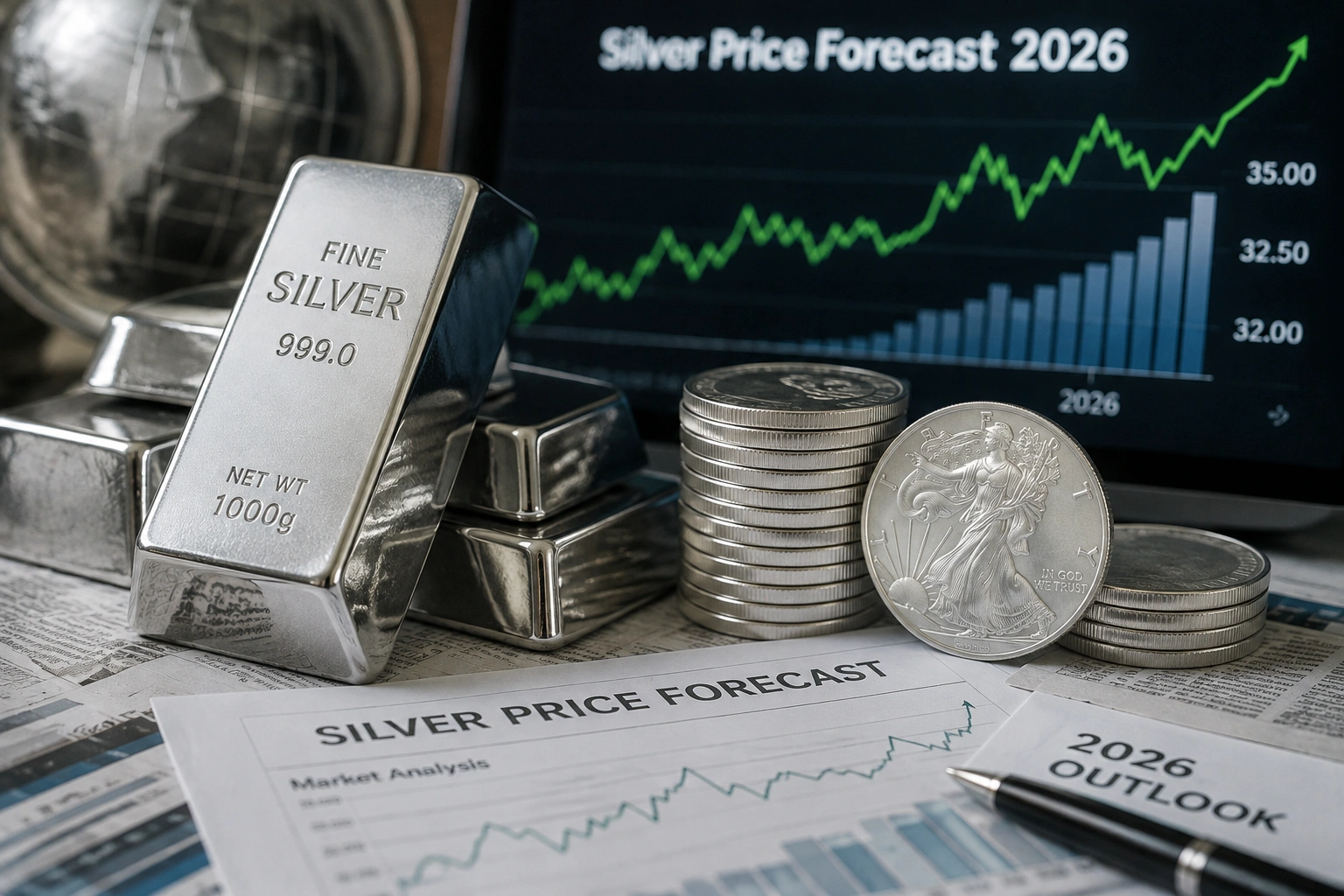
The silver price forecast 2026 analysts are discussing reflects a market shaped by industrial demand, investment flows, interest rates, and limited mine supply. Silver is different from gold because it has an important industrial role in addition to its use as a precious metal. That combination can create larger price swings when economic conditions change. Analysts therefore look at several indicators before forming a view on silver’s future price.
For investors and everyday readers, forecasts can provide useful context, but they should not be treated as guaranteed outcomes. Silver prices can change quickly when monetary policy, inflation expectations, currency movements, or global manufacturing conditions shift. Understanding the factors behind an analyst forecast is often more useful than focusing on a single price target.
Silver Price Forecast 2026 Analysts Are Watching
The silver price forecast 2026 analysts are developing depends heavily on the balance between supply and demand. Analysts typically study mine production, recycling, industrial consumption, investment demand, and inventories when assessing the market. Silver has a particularly interesting demand profile because it is widely used in electronics, solar technology, electrical equipment, and other industrial applications.
Investment demand can add another layer of volatility. When investors become concerned about inflation, currency weakness, or financial uncertainty, precious metals can attract additional interest. Silver can benefit from this trend, although its smaller and more volatile market can produce sharper movements than gold. Anyone reviewing a 2026 forecast should therefore look beyond the headline target and understand the assumptions supporting it.
Why Analysts Expect Silver to Remain Important
Silver’s industrial role is one of the main reasons analysts continue to monitor its long-term outlook. The metal is valued for its electrical conductivity, thermal properties, and ability to perform well in demanding applications. Growing investment in renewable energy and advanced electronics can support demand for silver over time.
Solar technology is particularly important to the broader silver story. Photovoltaic manufacturing uses silver in electrical contacts, while other technologies also require the metal for specialized components. Demand does not automatically translate into higher prices, because manufacturers can improve efficiency, substitute materials, or adjust production methods. Still, sustained industrial consumption can provide an important foundation for the silver market.
Interest Rates and the 2026 Silver Outlook
Interest rates can strongly influence precious metals. When rates are high, interest-bearing assets can become more attractive compared with metals that do not generate income. Expectations for lower rates can have the opposite effect by reducing the opportunity cost of holding precious metals. For more: Bitcoin Dominance Current: What It Means for Crypto
The relationship is not always straightforward. Silver also responds to industrial activity, currency movements, investor sentiment, and gold prices. A weaker U.S. dollar can support dollar-priced commodities because they become relatively cheaper for buyers using other currencies. Analysts therefore consider Federal Reserve policy and inflation expectations alongside physical silver demand when evaluating the 2026 outlook.
Silver Supply Could Shape Prices
Supply is another major factor in the silver price forecast. Silver production comes from both primary silver mines and mines where silver is produced as a by-product of metals such as copper, lead, and zinc. This structure makes supply less responsive to silver prices alone.
If silver prices rise sharply, miners cannot always increase production quickly. Developing a new mine can require years of exploration, permitting, construction, and investment. Existing mines also face geological and operational limitations. Recycling can provide additional supply, particularly when prices encourage holders to sell old jewelry, industrial scrap, or other silver-containing materials.
Industrial Demand and Silver Prices
Industrial demand gives silver a different market profile from many other precious metals. Manufacturers use silver in electronics, electrical applications, solar panels, medical equipment, and other products. Strong global manufacturing activity can therefore support physical demand.
Economic weakness can create a counterforce. A major slowdown in manufacturing could reduce demand from industrial users, potentially putting pressure on prices. However, some industries connected to energy transition and technological development may continue expanding even during periods of weaker economic growth. This mixture makes industrial demand an important variable in any serious silver market analysis.
Gold Prices and Silver’s 2026 Forecast
Gold can influence silver because the two metals are closely followed by precious-metals investors. When gold attracts strong investment demand, silver can sometimes benefit as investors look for a less expensive alternative with greater potential volatility. This relationship is one reason analysts often consider gold prices when evaluating silver.
The gold-silver ratio is another useful market measure. It compares the price of gold with the price of silver and can help investors assess their relative valuations. A high ratio may lead some market participants to view silver as relatively inexpensive compared with gold, while a lower ratio can suggest stronger relative silver performance. The ratio is useful for context, but it should not be used as a standalone prediction tool.
Inflation and Economic Uncertainty
Inflation expectations can influence silver investment demand. Precious metals are often viewed as stores of value during periods when investors are concerned about declining purchasing power. Silver can attract additional attention when inflation remains persistent or confidence in traditional financial assets weakens.
Economic uncertainty can have mixed effects. A financial shock may encourage safe-haven buying, supporting precious metals. At the same time, a severe economic downturn can weaken industrial demand for silver. This creates an important tension in the 2026 forecast. Investors need to consider whether investment demand is strong enough to offset any weakness in industrial consumption.
What Could Push Silver Higher in 2026?
Several developments could create a bullish environment for silver. Lower interest rates could improve precious-metal sentiment, while a weaker U.S. dollar could provide additional support. Strong industrial demand would add another positive factor, especially if solar and electronics production continues to expand.
A supply shortage could also amplify price movements. If mine production and recycling fail to keep pace with demand, available inventories could become tighter. In such a situation, investors may pay closer attention to physical supply conditions. Still, bullish scenarios depend on multiple factors working together. No forecast can eliminate the possibility of unexpected market events.
What Could Push Silver Lower in 2026?
Silver could face pressure if global economic growth weakens substantially. A manufacturing slowdown could reduce industrial demand, particularly from sectors that consume large quantities of silver. Higher interest rates could also reduce investment demand by making cash and bonds relatively more attractive.
A stronger U.S. dollar may create another challenge because silver is generally priced in dollars. If the dollar appreciates significantly, commodities can become more expensive for international buyers. Investor positioning can also change rapidly after large price increases. These risks explain why analysts usually present silver forecasts as ranges or scenarios rather than precise predictions.
How Investors Should Read Silver Forecasts
A forecast is most useful when readers understand what supports it. Instead of looking only at a predicted silver price, investors should ask why an analyst expects that outcome. Is the forecast based on stronger industrial demand, lower interest rates, limited supply, rising investment demand, or a combination of these factors?
Comparing several professional views can also provide better perspective. Analysts may reach different conclusions because they use different assumptions about economic growth, inflation, monetary policy, and commodity demand. A wide range of forecasts does not necessarily mean analysts lack expertise. It often shows how sensitive silver is to changing economic conditions.
Is Silver a Good Investment for 2026?
Whether silver is suitable for an investor depends on individual goals, risk tolerance, and investment strategy. Silver can offer exposure to both precious-metals demand and industrial growth, but its price can be highly volatile. Investors should be prepared for significant short-term movements.
Physical silver, exchange-traded products, mining companies, and other instruments can provide different forms of exposure. Each option has its own costs and risks. Readers researching the topic may also benefit from related internal guides covering precious metals investing, gold price forecasts, commodity market trends, and portfolio diversification before making decisions.
Frequently Asked Questions
What is the silver price forecast for 2026?
There is no single reliable price target for 2026. Analysts use different assumptions about interest rates, industrial demand, supply, inflation, and investment flows. A range of scenarios is generally more useful than one fixed prediction.
Why could silver rise in 2026?
Silver could benefit from strong industrial demand, increased investment interest, lower interest rates, a weaker dollar, or tighter physical supply. Several positive factors occurring together could strengthen the bullish case.
Could silver prices fall in 2026?
Yes. Higher interest rates, a stronger dollar, weaker industrial demand, or reduced investor interest could pressure silver. Commodity markets can also experience sharp corrections after strong rallies.
Is silver more volatile than gold?
Silver is generally more volatile than gold. Its smaller market and significant industrial exposure can contribute to larger percentage moves in both directions.
Should I trust silver price forecasts?
Forecasts are useful research tools, but they are not guarantees. It is better to compare multiple analyst views and examine the economic assumptions behind each prediction before making an investment decision.
Conclusion
The silver price forecast 2026 analysts are examining reflects a complex mix of industrial demand, mine supply, investment activity, interest rates, inflation, and currency movements. Silver has a unique position because it functions as both an industrial material and a precious metal. That dual role can create opportunities while also increasing volatility.
The most useful approach is to treat forecasts as scenarios rather than promises. Watch the major drivers throughout 2026 and compare fresh market data with professional expectations. If you are researching precious metals, exploring related guides on silver investing, gold prices, and commodity market trends can help you build a broader understanding before making any investment decision.