A forex demo account gives beginners a practical way to learn currency trading without putting real money at risk. Most demo accounts use virtual funds and simulate many features found on live trading platforms. Traders can practice placing orders, testing strategies, reading charts, and managing positions before moving to a real account. This makes demo trading useful for people who are still learning how the foreign exchange market works. However, a demo environment cannot perfectly reproduce live-market conditions. Prices, execution, spreads, and emotions may differ when real money becomes involved. Understanding how a demo account works can help new traders build better habits and gain experience before considering live forex trading.
What Is a Forex Demo Account?
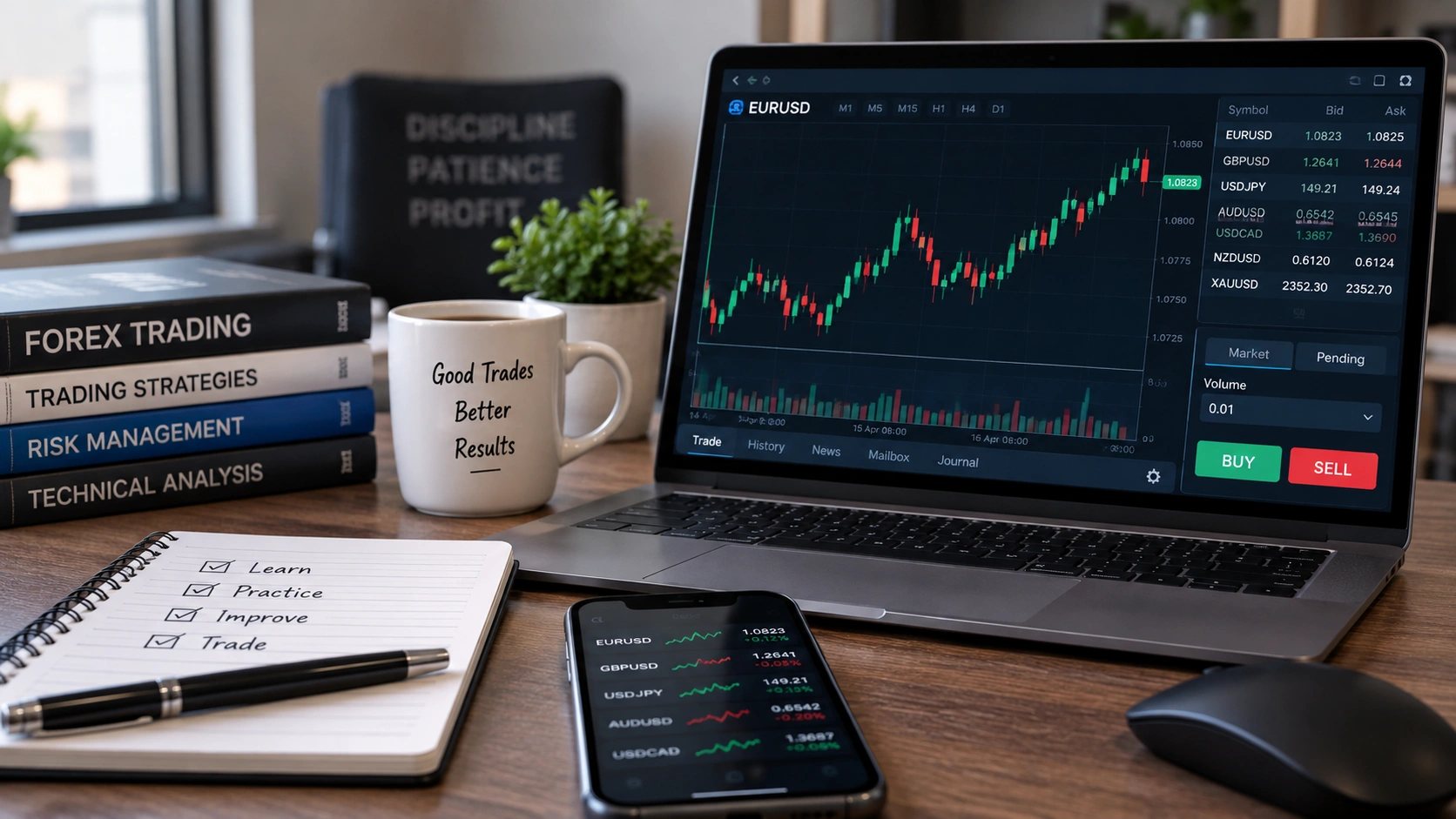
A forex demo account is a practice trading account that uses virtual money instead of real funds. Brokers commonly provide these accounts through their trading platforms. The account can allow users to view currency pairs, analyze charts, place buy and sell orders, and manage open positions. Since the funds are virtual, users can experiment without directly losing their own money.
For example, a beginner might receive $10,000 in virtual funds after opening a demo account. The trader could then practice trading EUR/USD, GBP/USD, or USD/JPY. They could test different position sizes and observe how price movements affect their virtual balance. This approach can make unfamiliar trading concepts easier to understand. It also gives beginners an opportunity to become comfortable with trading software before making financial decisions with real capital.
How Does a Forex Demo Account Work?
A demo account generally operates through the same type of trading platform used for live forex trading. After registration, the user receives virtual funds and access to market charts. Depending on the broker, the account may provide features such as technical indicators, order types, price alerts, and trading history. The exact conditions can vary between providers.
The trader can then place simulated trades based on market prices. Suppose EUR/USD is trading at 1.1000 and a trader expects the pair to rise. They might open a virtual buy position and monitor what happens next. If the price rises, the demo account records a simulated gain. If it falls, the account records a simulated loss. This process helps users understand how currency trades behave over time.
Benefits of Using a Forex Demo Account
One major benefit of a forex demo account is the ability to practice without risking personal savings. Beginners can make mistakes and learn from them without experiencing an actual financial loss. This can be especially valuable when learning about leverage, stop-loss orders, take-profit orders, spreads, and position sizing. Practical experience often makes these concepts easier to understand than reading definitions alone.
Demo trading can also help users test a trading strategy. A trader might want to compare a trend-following approach with a range-based strategy. They can record their trades and evaluate the results over time. Keeping a simple trading journal can make this process more useful. Instead of judging a strategy from a few successful trades, traders can examine a larger sample and identify patterns in their decisions.
Limitations of a Forex Demo Account
Although demo trading offers valuable practice, it has important limitations. A simulated account does not fully reproduce the psychological pressure of risking real money. Losing $500 in virtual funds may feel very different from losing $500 from your savings. This emotional difference can affect decision-making, discipline, and risk tolerance when a trader eventually moves to a live account. For more: What Is APY in Banking? A Simple Guide
Execution conditions can also differ between demo and live trading environments. Spreads, slippage, liquidity, order execution, and available instruments may vary depending on the broker and market conditions. Some demo accounts may also operate with virtual balances that are much larger than what the trader would realistically use. For this reason, strong demo performance does not guarantee similar results in a live account.
How Beginners Should Use a Demo Account
The best way to use a forex demo account is to treat it as a serious training environment. Start with an amount of virtual capital that resembles the amount you could realistically afford to trade. This creates a more realistic experience. Learn the platform first, then practice basic order types before experimenting with more complicated strategies.
Beginners should also create clear trading rules. Decide how much virtual capital to risk on one trade and where to place stop-loss orders. Record the reason for every trade in a journal. Review both winning and losing positions regularly. This process can reveal common mistakes, such as entering trades too frequently or increasing position sizes after a loss. Good habits developed during practice can become useful when trading conditions become more demanding.
Forex Demo Account vs. Live Account
The main difference between a demo account and a live account is the use of real money. A demo account uses simulated funds, while a live account involves actual financial gains and losses. The trading platform may look similar in both environments, but the trader’s experience can be very different. Real-money trading introduces emotional factors that are difficult to reproduce during practice.
A comparison can help clarify the difference:
- Demo account: Uses virtual funds and focuses on practice.
- Live account: Uses real funds and creates actual financial consequences.
- Demo trading: Suitable for testing strategies and learning platforms.
- Live trading: Requires real risk management and emotional discipline.
- Demo results: Can provide useful evidence about a strategy but do not guarantee future performance.
- Live results: Depend on market conditions, execution, costs, strategy, and trader behavior.
How to Choose a Forex Demo Account
When selecting a demo account, beginners should examine the trading platform, available currency pairs, educational resources, and account features. A user-friendly platform can make learning easier, especially for someone who has never placed a forex order. It can also help to choose a demo environment that offers tools similar to those available in the provider’s live account.
Trading costs and conditions deserve attention as well. Check how the broker represents spreads, leverage, margin requirements, and order execution in the demo environment. Also research the broker’s regulatory status and reputation before opening a live account. A demo account may be free, but that does not mean every provider offers the same level of service or protection. Learning how to choose a forex broker can therefore be a useful next step.
Practicing Risk Management
Risk management should become part of demo trading from the beginning. New traders sometimes make the mistake of using extremely large positions because virtual money feels unlimited. This can create unrealistic results. A better approach is to use sensible position sizes and practice controlling potential losses on every trade.
For example, a trader might decide to risk only a small percentage of their practice balance on one position. They can then use stop-loss orders to define the maximum planned loss. The exact percentage depends on the trader’s circumstances and strategy. The important lesson is consistency. Learning forex risk management during practice can help traders understand that protecting capital matters just as much as finding potential trading opportunities.
When Should You Move From Demo to Live Trading?
There is no universal period that determines when someone should leave a demo account. Trading for a certain number of days does not automatically make a person ready. A better measure is whether the trader understands the platform, follows a consistent strategy, manages risk, and can evaluate results objectively. The quality of practice matters more than simply counting practice hours.
A trader should also consider personal finances before opening a live account. Money needed for rent, food, bills, emergency savings, or other essential expenses should not be placed at unnecessary risk. When someone eventually moves to live trading, starting with a smaller position size can make the transition more manageable. The goal should be to carry disciplined habits from the demo environment into real-market conditions.
Common Forex Demo Account Mistakes
One common mistake is treating demo trading like a video game. Traders may open oversized positions because losses do not affect their finances. Although this can produce exciting results, it teaches habits that may become dangerous in a live account. A more realistic virtual balance and sensible position sizing can provide better preparation.
Another mistake is changing strategies after every losing trade. No strategy wins every time, and a small number of trades cannot reliably demonstrate whether an approach works. Traders should collect enough information before judging their method. A trading journal can help track entries, exits, risk levels, market conditions, and results. This creates a clearer record for reviewing performance and improving decision-making.
Frequently Asked Questions
Is a forex demo account free?
Many brokers offer demo accounts without charging an account-opening fee. However, availability, features, and conditions vary between providers. Always check the broker’s current terms before registering.
Can I make real money with a demo account?
No. Demo accounts normally use virtual funds. Any profits shown in the account are simulated and cannot usually be withdrawn as real money.
How long should I use a forex demo account?
There is no fixed period. Continue practicing until you understand the platform, can follow a consistent strategy, and can manage risk without repeatedly breaking your own trading rules.
Are demo trading results accurate?
Demo results can provide useful practice information, but they may not perfectly match live trading. Execution, spreads, liquidity, slippage, and emotional pressure can differ when real money is involved.
Can beginners use a forex demo account?
Yes. Demo accounts are designed to help people learn trading platforms and practice forex strategies. Beginners can use them to understand order types, charts, risk management, and currency-market movements.
Conclusion
A forex demo account can be a useful training tool for anyone learning how currency trading works. It allows beginners to practice with virtual funds while learning about charts, orders, strategies, leverage, and risk management. The experience can help new traders become more familiar with the trading platform and identify weaknesses in their approach.
However, demo trading has limits. Virtual losses do not create the same emotions as real financial losses, and market execution may differ between simulated and live environments. Treat your practice account seriously, use realistic position sizes, keep a trading journal, and focus on consistent risk management. Once you understand the risks and your financial situation allows it, you can make a more informed decision about whether live trading is appropriate for you.