

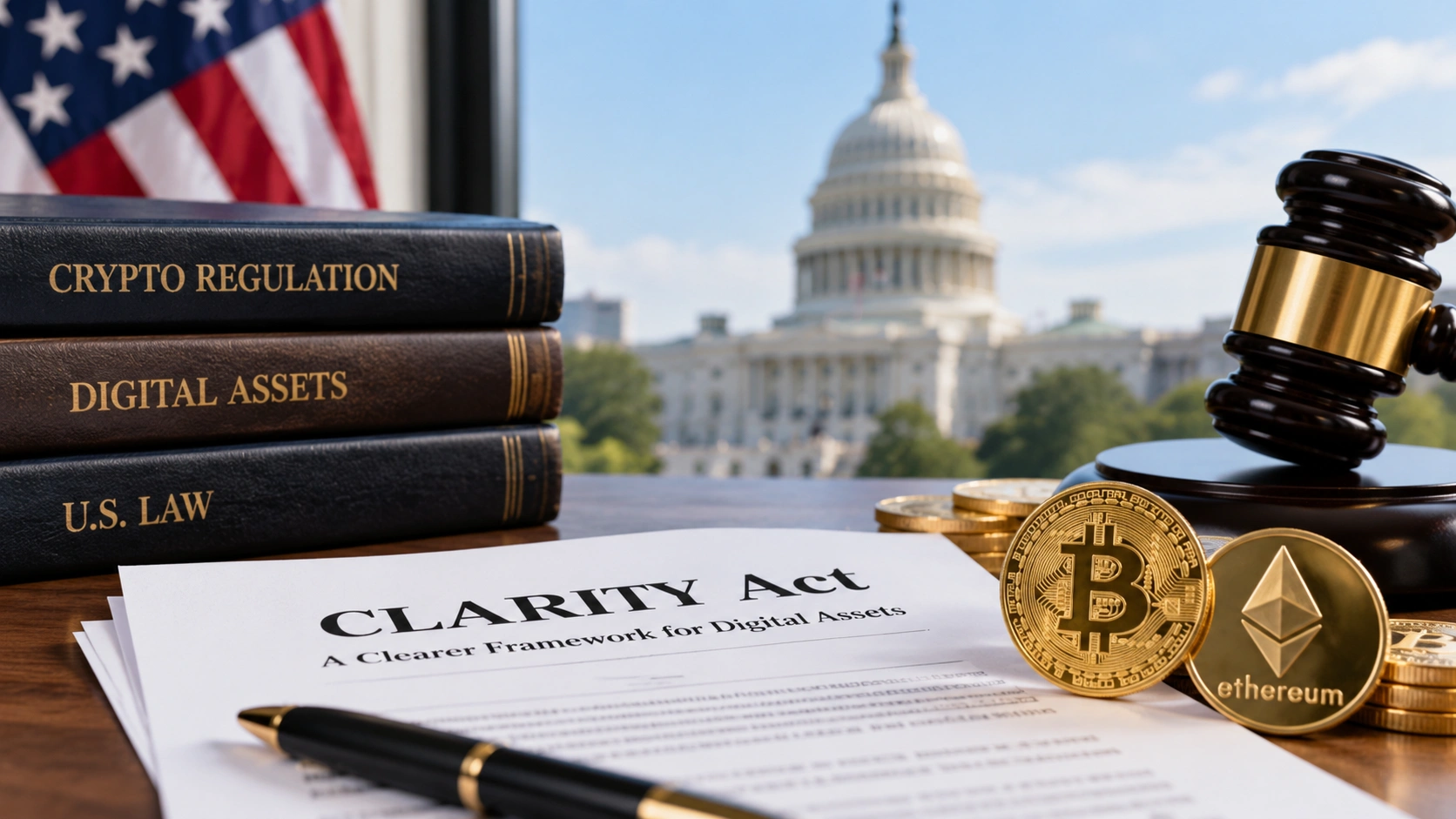
The latest clarity act update today brings an important development for the cryptocurrency industry. On September 15, 2026, the US Senate failed to advance the Digital Asset Market Clarity Act, a major proposal designed to establish clearer rules for digital assets. The procedural vote ended 49–50, falling short of the 60 votes needed to move forward. The setback has raised questions about the future of crypto regulation, market confidence, and the timing of new rules for digital asset businesses. This article explains what happened, why lawmakers disagreed, and what investors and crypto users should understand about the next stage of the legislation.
Clarity Act Update Today: What Happened in the Senate?
The main development in the clarity act update today is the Senate’s failure to advance the bill. The vote was a procedural step rather than a final vote on whether the entire legislation should become law. It received 49 votes in favor and 50 against, while 60 votes were required to proceed. Four Republican senators joined Democrats in opposing the measure. The result stopped the legislation from moving forward at that stage, although it does not formally eliminate every possibility of future consideration.
The outcome followed months of negotiations over how the cryptocurrency market should be regulated. Senate Republicans released a revised version on September 14, saying it included 126 substantive changes requested by Democrats. The updated proposal addressed ethics, enforcement, and concerns about the effects of payment stablecoins on banks. Despite these revisions, disagreements remained unresolved before the vote. The failed procedural motion means lawmakers would need to find further agreement before the bill could advance through the Senate.
What Is the Digital Asset Market Clarity Act?
The Digital Asset Market Clarity Act is a proposed US cryptocurrency market-structure law. Its purpose is to establish a clearer federal framework for digital assets, including rules for trading, issuing, and overseeing different types of cryptocurrencies. The legislation seeks to reduce uncertainty about whether particular digital assets fall under securities or commodities regulation. It also aims to clarify the responsibilities of federal financial regulators. These issues matter because businesses and investors currently operate under a combination of existing laws, agency actions, and court decisions.
The bill is important because regulatory uncertainty can affect how crypto companies develop products and services in the United States. A more defined framework could help businesses understand which rules apply to their activities. However, the legislation also raises questions about investor protection, regulatory authority, and the balance between innovation and financial safeguards. The Senate’s recent vote shows that lawmakers have not reached agreement on these issues. The clarity act update today therefore concerns both the bill’s immediate progress and the broader debate about cryptocurrency regulation.
Why Did the Clarity Act Vote Fail?
One major disagreement involved ethics requirements for public officials and their families. Democrats argued that the legislation needed stronger safeguards concerning President Donald Trump’s cryptocurrency interests. The bill’s supporters had attempted to address these concerns through revised ethics provisions, including restrictions on certain crypto-related dealings and a role for state attorneys general in enforcement. However, the changes did not resolve all objections before the vote. The debate shows how financial conflicts and regulatory decisions became connected during consideration of the bill.
Banking concerns also contributed to the disagreement. Some financial institutions and lawmakers worried that certain stablecoin arrangements could compete with traditional bank deposits. If customers moved substantial funds from banks into digital assets, critics argued that it could affect the funds available for lending. The revised Senate proposal included new Treasury authority intended to address deposit-flight risks connected to payment stablecoins. These concerns were part of the wider negotiation over how to regulate crypto without creating unintended effects for the banking system.
What Happens After the Failed Senate Vote?
The failed vote does not automatically mean the Clarity Act can never become law. However, the legislation now faces a difficult path because it did not receive enough support to move forward. The Senate’s procedural failure means further negotiations would be needed before lawmakers could consider advancing the bill. Reuters reported that the measure’s supporters intend to continue working on the legislation, while other reporting indicated that a new Senate consideration before the midterm elections is unlikely. The exact timing of any future action remains uncertain.
The next steps could involve additional negotiations over ethics provisions, stablecoin rules, and the responsibilities of federal regulators. The outcome may also depend on the political environment after the midterm elections. Until Congress passes a new law, cryptocurrency businesses will continue operating under the existing regulatory framework and any new agency rules that take effect. The recent clarity act update today therefore marks a pause in the legislative process rather than the immediate introduction of a new nationwide crypto rulebook.
How Did the Clarity Act Setback Affect Crypto Markets?
The Senate vote affected cryptocurrency markets and shares of crypto-related companies. Bitcoin traded near $75,000 after the legislation failed to advance, while some digital asset stocks also declined. Market reports attributed part of the movement to disappointment over the bill and uncertainty about future regulation. Investors had been watching the legislation because a federal market-structure framework could influence how cryptocurrency businesses operate and how financial institutions participate in the sector. For more: Is Day Trading Worth It? A Realistic Guide for Beginners
However, the market reaction should not be treated as proof that the Clarity Act alone determines cryptocurrency prices. Bitcoin and other digital assets can also respond to interest rates, economic data, liquidity, investor sentiment, and developments in individual companies. The Federal Reserve’s monetary policy was another major factor in the market during the same period. For readers following the clarity act update today, the key point is that regulatory news can influence prices, but it is only one part of a broader market environment.
What Does the Clarity Act Mean for Crypto Investors?
For investors, the proposed law matters because regulatory decisions can influence the businesses that issue, trade, and provide services for digital assets. A clearer framework could affect exchange operations, token offerings, and the responsibilities of financial institutions. However, the Senate’s failed vote does not itself change the ownership or legal status of every cryptocurrency. Investors should avoid assuming that the bill’s setback automatically makes a particular token more or less valuable. The effects depend on the asset, the applicable rules, and the future actions of regulators.
A practical approach is to separate confirmed legislative developments from market predictions. The confirmed fact is that the Senate did not advance the bill on September 15. The uncertain questions include whether lawmakers will reach a new agreement, when another vote might occur, and how future rules could affect different parts of the crypto industry. Investors can follow official legislative announcements, understand the risks of digital assets, and avoid making decisions based only on headlines. A review of crypto market basics can also help readers understand how regulatory developments fit into wider investment risks.
Why the Clarity Act Matters for the Future of Crypto Regulation
The Clarity Act debate reflects a larger question about how the United States should regulate digital assets. Supporters of the proposal have argued that a defined market structure could reduce uncertainty and support business development. Critics have raised concerns about investor protections, ethics, and the effects of some digital asset products on traditional financial institutions. These differences remain important because regulation affects not only cryptocurrency companies but also investors, banks, developers, and consumers.
The future of crypto regulation may involve both congressional legislation and actions by federal agencies. Reporting after the failed vote indicated that regulators such as the Securities and Exchange Commission and the Commodity Futures Trading Commission could continue working within their existing authority. Agency rules and guidance may influence the industry even while Congress considers broader legislation. Readers following the clarity act update today should therefore watch both legislative announcements and official regulatory developments rather than relying on a single vote to understand the entire market.
FAQ
What is the latest Clarity Act update today?
The Senate failed to advance the bill on September 15, 2026, in a 49–50 procedural vote.
Is the Clarity Act dead?
No. The failed vote stopped the bill from advancing at that stage, but it does not permanently eliminate the possibility of future consideration.
Why did Democrats oppose the bill?
Key concerns included ethics safeguards involving cryptocurrency interests and the bill’s treatment of regulatory oversight.
Will the Clarity Act affect Bitcoin prices?
Regulatory news can influence market sentiment, but Bitcoin prices also depend on many other economic and market factors.
What should crypto investors do next?
Follow official updates, understand the risks of digital assets, and avoid making investment decisions based only on a single legislative headline.
Conclusion
The latest clarity act update today shows that the US Senate has not reached agreement on a major cryptocurrency market-structure bill. The September 15 procedural vote failed 49–50, leaving the legislation stalled and its future uncertain. The debate has focused on regulatory clarity, ethics requirements, stablecoin risks, and the role of federal financial regulators.
For crypto users and investors, the important next step is to follow reliable legislative and regulatory information. The Clarity Act remains a significant part of the wider discussion about digital asset rules, but its future will depend on further negotiations and congressional action. Check back for additional updates as lawmakers consider what comes next.


1 Comment