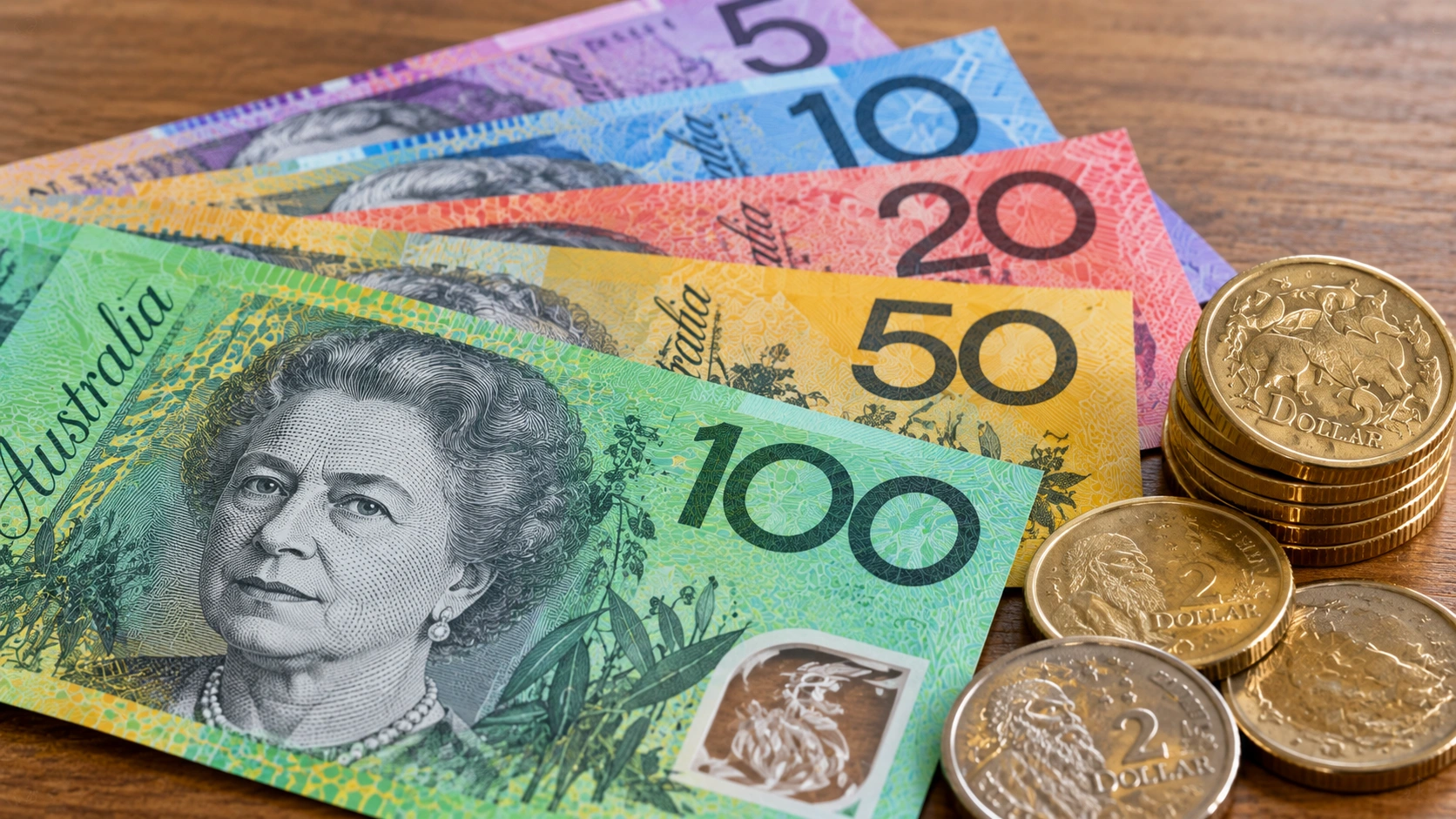
AUD is the official currency code for the Australian dollar, one of the world’s actively traded currencies. You may see AUD when checking exchange rates, international payments, travel costs, forex markets, or currency conversion tools. The Australian dollar is commonly written as A$, AU$, or simply $, depending on the context. Its value changes continuously in the foreign exchange market as buyers and sellers respond to economic and financial developments. Understanding AUD can help travelers, businesses, investors, and anyone sending money internationally make better currency decisions. This guide explains what AUD means, how it works, what influences its value, and why the currency matters in global markets.
What Does AUD Mean?
AUD stands for the Australian dollar and serves as its three-letter ISO 4217 currency code. Australia uses the currency for everyday purchases, salaries, savings, taxes, and business transactions. The Australian dollar is also used in several Australian territories and has strong connections with nearby Pacific economies. When you see AUD on a banking app or currency converter, it identifies Australian dollars rather than another dollar-based currency.
The Australian dollar is divided into 100 cents. Australian banknotes and coins come in different denominations, making the currency convenient for everyday transactions. AUD is also widely used in international financial markets. Forex traders pair it with currencies such as the U.S. dollar, Japanese yen, and New Zealand dollar. For example, AUD/USD shows how many U.S. dollars are needed to buy one Australian dollar.
Why Is AUD Important in Global Markets?
AUD has an important position in the global foreign exchange market. Australia has a large, developed economy and significant exports of commodities such as iron ore, coal, and natural gas. Because commodity prices can influence Australia’s export income, changes in global demand can affect the Australian dollar. This connection makes AUD particularly interesting to currency traders and international investors.
The currency is also considered sensitive to changes in global economic sentiment. During periods of stronger economic confidence, investors may show greater interest in currencies linked to global growth and commodities. During periods of market stress, demand can shift toward currencies viewed as safer. These patterns are not guaranteed, but they help explain why AUD often responds to developments outside Australia.
What Determines the Value of AUD?
The value of AUD changes according to supply and demand in the foreign exchange market. If demand for Australian dollars increases relative to supply, AUD can strengthen against another currency. If demand falls, it can weaken. These changes happen continuously as banks, companies, investors, traders, and other market participants exchange currencies for different reasons.
Interest rates are another major influence. The Reserve Bank of Australia sets Australia’s cash rate and uses monetary policy to support economic and inflation objectives. Changes in interest-rate expectations can affect currency demand because investors compare potential returns across different countries. However, exchange rates depend on many factors, so no single indicator can reliably predict the next AUD movement.
How the Australian Economy Affects AUD
Australia’s economic performance can influence the Australian dollar. Strong employment, healthy consumer spending, stable business activity, and improving economic growth can support confidence in the Australian economy. Weak economic conditions may create the opposite effect. Traders therefore watch Australian economic reports when assessing the potential direction of AUD. For more: Gold Price News Today: Latest Gold Market Guide
Inflation is particularly important because it influences monetary policy decisions. If inflation remains high, the Reserve Bank of Australia may maintain restrictive policy for longer. If inflation falls toward the central bank’s target, policymakers may have more room to adjust interest rates. Anyone researching AUD should therefore understand the connection between inflation, interest rates, economic growth, and currency demand.
AUD and Commodity Prices
Australia is a major commodity exporter, which creates an important relationship between commodity markets and AUD. Iron ore is especially significant because China remains a major destination for Australian exports. When demand for Australian commodities remains strong, export revenues can support economic activity and potentially strengthen the currency.
However, commodity prices do not always determine AUD’s direction. Interest rates, global risk sentiment, China’s economic performance, and movements in other major currencies can sometimes have a stronger influence. For example, rising commodity prices may support AUD, but a major global market shock could still push the currency lower. Understanding several factors together gives a more realistic view of currency movements.
AUD/USD and Forex Trading
AUD/USD is one of the most closely followed currency pairs involving the Australian dollar. It compares the value of AUD with the U.S. dollar. If AUD/USD rises, the Australian dollar has strengthened against the U.S. dollar. If the pair falls, AUD has weakened relative to USD. This simple relationship makes the pair useful for understanding currency market movements.
Forex traders monitor AUD/USD for several reasons. The pair responds to Australian economic data, U.S. monetary policy, commodity prices, and global market sentiment. A trader might also study technical indicators, support and resistance levels, and price trends. Beginners can learn more through an internal guide on how forex currency pairs work before considering any trading activity.
AUD Exchange Rates and Currency Conversion
An AUD exchange rate tells you how much another currency is worth compared with the Australian dollar. For example, an AUD/USD rate shows the U.S. dollar value of one Australian dollar. Exchange rates can change throughout the day, so the rate shown by a bank or currency platform may differ from another provider’s rate.
The final amount you receive during a currency conversion can also differ from the quoted market rate. Banks, payment providers, and currency exchanges may include fees or a margin within their exchange rate. Suppose you convert AUD into another currency for travel. Comparing the total amount received after all fees can be more useful than comparing the advertised exchange rate alone.
AUD for International Travel and Payments
Travelers may encounter AUD when visiting Australia or paying Australian businesses from overseas. Understanding the currency can help with budgeting for accommodation, transport, food, shopping, and other expenses. Travelers should check whether their card provider charges foreign transaction fees because these costs can increase the final expense.
Businesses also use AUD for international invoices, imports, exports, salaries, and supplier payments. Exchange-rate changes can affect the amount a company ultimately pays or receives. A business that regularly handles Australian dollars may use currency management strategies to reduce unwanted exchange-rate exposure. Learning about international currency payments can provide useful background for anyone managing cross-border transactions.
What Causes AUD to Rise or Fall?
Several events can influence AUD at the same time. A change in Australian interest rates may affect currency demand, while commodity prices can influence expectations for export income. Developments in China can also matter because of Australia’s strong trade relationship with the country. Meanwhile, U.S. economic data can move the U.S. dollar and indirectly affect AUD/USD.
Global investor sentiment is another important factor. When investors feel confident, currencies associated with global growth may attract more attention. During periods of uncertainty, investors may reduce exposure to risk-sensitive assets. AUD can therefore experience pressure even when Australia’s domestic economy remains relatively stable. This is why currency analysis requires both local and international economic context.
AUD Compared With Other Dollar Currencies
AUD is one of several major currencies that use the word “dollar.” The U.S. dollar uses USD, the Canadian dollar uses CAD, and the New Zealand dollar uses NZD. These codes prevent confusion in international banking and financial markets. The three-letter system becomes especially useful when people exchange currencies across borders.
The Australian dollar has its own economic characteristics. Its connection with commodity exports and Asia-Pacific trade gives it different market drivers from currencies such as USD. The U.S. dollar, for example, plays a much larger role as a global reserve and settlement currency. Comparing currencies through their economies and market drivers can help explain why exchange rates change differently.
Tips for Checking AUD Rates
Anyone checking AUD exchange rates should look beyond the headline number. Currency rates can vary between providers because of spreads, transaction fees, and timing. A rate from a currency converter may represent a mid-market rate rather than the rate available to a consumer. Always check the actual amount you will receive before completing a conversion.
It is also useful to check the date and time of a quoted rate. Foreign exchange markets operate across global financial centers, so prices can change rapidly. If you are planning a large transfer, compare several reputable providers and review their complete costs. An internal guide on how currency exchange rates work can also help you understand the difference between market rates and consumer rates.
FAQ
What is AUD?
AUD is the international currency code for the Australian dollar. Australia uses it as its official currency, and the code appears in banking, forex trading, currency conversion, and international payments.
What does AUD stand for?
AUD stands for Australian dollar. The code follows the international ISO 4217 currency system, which gives currencies standardized three-letter codes for financial transactions.
What affects the AUD exchange rate?
Interest rates, inflation, economic growth, commodity prices, global market sentiment, and trade conditions can all influence AUD. Movements in major currencies can also affect exchange rates.
Is AUD the same as USD?
No. AUD represents the Australian dollar, while USD represents the United States dollar. Their exchange rate shows the relative value between the two currencies.
How can I convert AUD to another currency?
You can use a bank, currency exchange service, payment provider, or currency converter. Always compare the exchange rate, transaction fees, and final amount before completing a conversion.
Conclusion
AUD is more than a currency code. It represents the Australian dollar and plays an important role in international trade, forex markets, travel, and cross-border payments. Its value responds to interest rates, inflation, commodity prices, economic data, global sentiment, and developments in major trading partners.
Whether you are planning a trip, sending money, running a business, or learning about forex, understanding AUD can help you make better-informed currency decisions. For deeper knowledge, explore related guides on forex trading basics, currency exchange rates, and AUD/USD trading to build a stronger understanding of the global currency market.