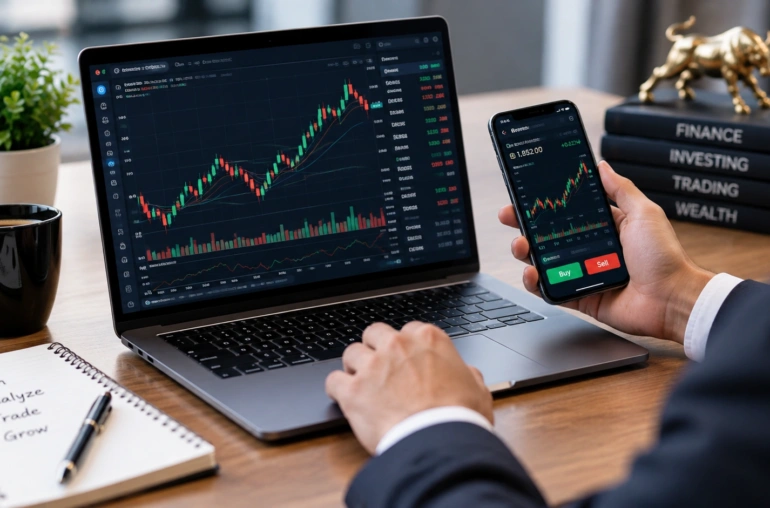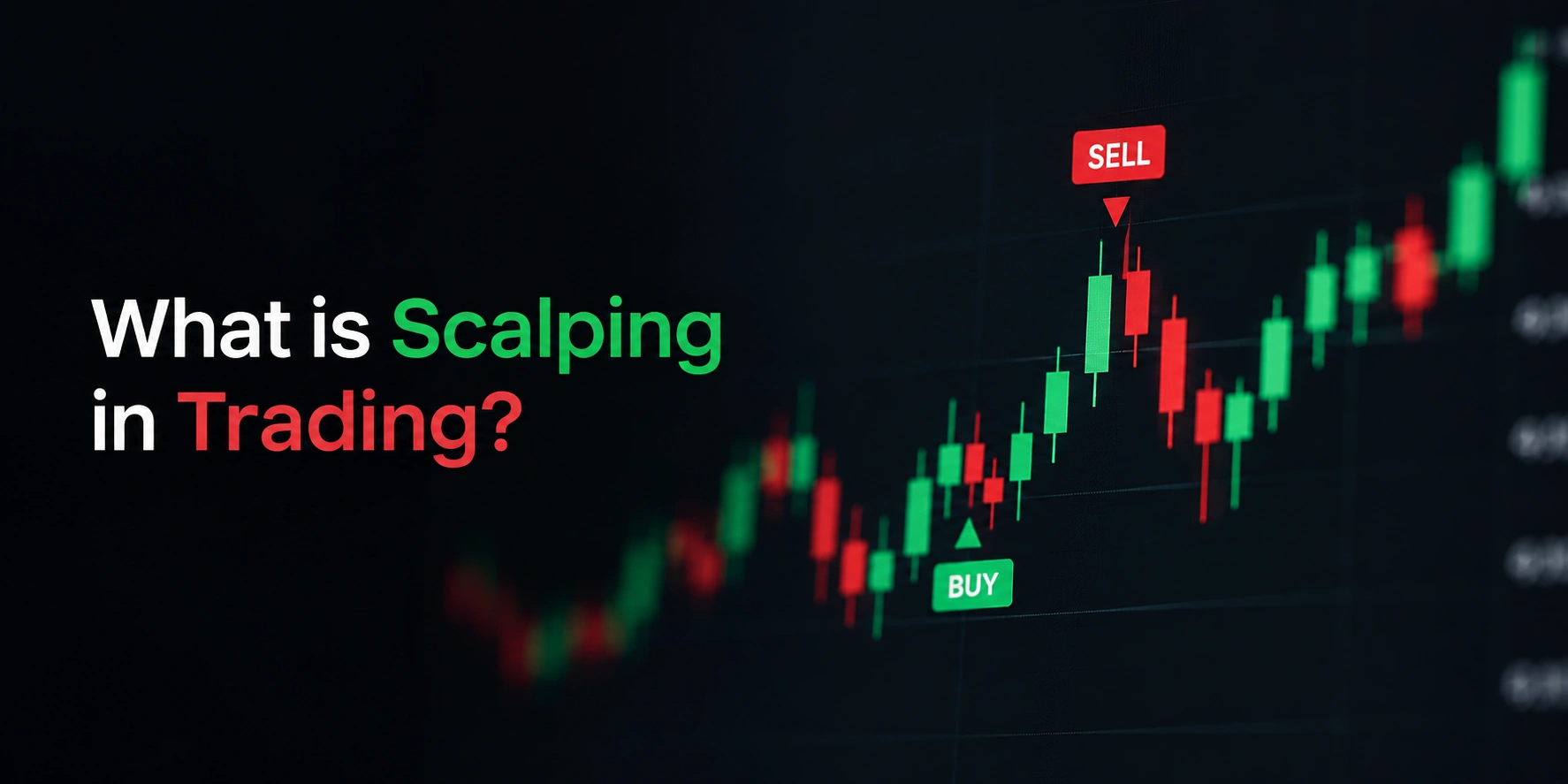
If you have ever watched a market move rapidly within minutes, you may have wondered how traders attempt to profit from these small price changes. What is scalping in trading? Scalping is a short-term trading approach where traders enter and exit positions quickly, often holding them for seconds or a few minutes. Instead of waiting for a large market movement, scalpers try to capture small price fluctuations repeatedly throughout a trading session. This method can be used across markets such as stocks, foreign exchange, futures, and cryptocurrencies, depending on the trader’s access and local regulations. Scalping may sound simple, but it requires fast decision-making, careful risk management, reliable execution, and strong emotional discipline.
What Is Scalping in Trading?
Scalping is a trading style focused on making relatively small gains from short-term price movements. A scalper may complete several trades during a single session, with each position usually remaining open for a very short period. The goal is not to predict where an asset will be weeks or months from now. Instead, the trader concentrates on immediate market behavior and attempts to benefit from temporary changes in price, momentum, or liquidity. Because individual profits may be small, scalpers often rely on a high number of carefully planned opportunities. However, a large number of trades also means that losses and transaction costs can accumulate quickly. This makes having a defined trading plan particularly important. Understanding the difference between scalping, day trading, swing trading, and long-term investing can help beginners decide whether this fast-paced approach fits their goals.
To understand the concept more clearly, imagine a stock trading at $50. A scalper might notice increased buying activity and enter at $50.05, then close the position at $50.20 if the expected movement occurs. The price difference may appear small, but repeated opportunities can potentially add up before costs and losses are considered. The same process can work in the opposite direction when traders are permitted to short an asset. However, scalping is not simply about clicking buy and sell as quickly as possible. Successful execution depends on recognizing suitable setups, controlling position size, accounting for spreads and commissions, and knowing when to stay out of the market. A trader who enters too late or exits too slowly may lose the small advantage that the setup originally offered. This is why preparation and execution are central to understanding this strategy.
How Does Scalping Work?
A typical scalping session begins with market preparation. Before trading starts, a scalper may identify liquid assets, important support and resistance levels, recent price movements, scheduled economic announcements, and periods of unusually high trading activity. The trader then creates a watchlist rather than attempting to trade every asset that moves. When a predefined setup appears, the trader enters according to specific rules and monitors the position closely. Because scalping focuses on short time frames, decisions may be based on one-minute, three-minute, or five-minute charts, although the exact timeframe varies by strategy. Traders may combine price action with volume, moving averages, momentum readings, or other technical analysis tools to assess market conditions.
Suppose a currency pair has been moving sideways for several minutes before suddenly breaking above a nearby resistance level. A scalper may wait for confirmation of the movement, enter a position, and establish a nearby exit point if momentum continues. If the price quickly falls back below the breakout level, the trader may close the position rather than allowing a small unsuccessful trade to become a larger loss. This example shows why scalping involves more than finding a fast-moving market. The trader needs a clear reason for entering, a predefined risk level, and an exit plan. Market conditions can change quickly, so hesitation can affect the outcome. Beginners should understand that the strategy requires active attention and is generally unsuitable for people who cannot monitor their positions consistently.
Popular Scalping Strategies
There are several approaches traders use when scalping. Momentum scalping focuses on assets showing strong short-term movement, often supported by increased volume or significant market news. Breakout scalping looks for price movement through a defined support or resistance level. Range scalping takes a different approach by looking for repeated movements between established boundaries. Another method involves using short-term moving averages or other indicators to identify brief changes in momentum. These approaches can be adapted to different markets, but none should be considered a guaranteed source of profit. A setup that works well during a strong trend may perform poorly when the market becomes choppy or unpredictable.
For example, a trader using a breakout approach may observe an asset repeatedly failing to move above a particular price. If buying pressure eventually pushes the price through that level with stronger volume, the trader may consider a short-term position. However, a false breakout can occur when the price briefly moves above resistance and then quickly returns below it. This is why experienced traders often look for additional confirmation rather than relying on one signal. Beginners learning about scalping strategies should test their rules using historical charts or a simulated account before risking substantial capital. Keeping a trading journal can also help identify which setups work best under different market conditions and whether the trader is following the strategy consistently.
Tools Used for Scalping
Because scalping involves short holding periods, traders generally need tools that provide reliable and timely information. A trading platform with responsive order execution, real-time market data, customizable charts, and different order types can be important. Traders may also use volume information, price alerts, economic calendars, and technical indicators. The exact setup depends on the market being traded and the individual’s strategy. A complicated workstation is not automatically better. Too many indicators can make a chart difficult to read and may encourage conflicting signals. A focused setup that supports quick and informed decisions can be more useful than a screen filled with unnecessary information. For more: What Is Stablecoin? A Simple Guide for Beginners
Execution quality is especially important because a small price difference can have a meaningful effect on a scalping trade. The spread between buying and selling prices, commissions, platform delays, and slippage can reduce potential returns. In a slower trading strategy, these costs may represent a smaller proportion of the expected price movement. In scalping, however, they can consume a significant part of a small target. Traders should therefore calculate their total trading costs before judging whether a strategy appears profitable. Beginners researching related topics such as [technical analysis tools], [market liquidity], and [types of trading orders] can gain a better understanding of why execution matters so much in short-term trading.
Risk Management in Scalping
Risk management is one of the most important parts of scalping because frequent trades can expose an account to repeated losses. A trader should establish the maximum amount they are prepared to lose before entering a position. Position size should reflect the account size and the distance between the entry point and the planned stop level. Many traders use stop-loss orders or predefined exit rules to control downside, although actual execution may differ from the expected price during rapid market movements. The purpose is not to avoid every losing trade but to prevent one mistake from causing disproportionate damage to the trading account.
Transaction costs also deserve close attention. Imagine a scalper targets a very small price movement, but commissions and the bid-ask spread consume much of that potential gain. Even a strategy with many winning trades could struggle if its average gain is too small after costs. Leverage adds another layer of risk because it can increase both potential gains and potential losses. Beginners should understand how leverage works before using it and should never assume that a larger position automatically creates better opportunities. A disciplined scalper focuses on preserving capital, controlling individual trade risk, and evaluating performance over a meaningful sample of trades rather than becoming overly focused on the result of one position.
Advantages and Disadvantages of Scalping
One potential advantage of scalping is that traders do not normally need to hold positions for long periods. Short holding times can reduce exposure to certain overnight events and allow traders to finish a session without carrying positions into the next day. Scalping can also provide frequent opportunities when markets are sufficiently active. For traders who enjoy analyzing short-term price movements and making quick decisions, the pace may be appealing. However, these advantages do not mean that scalping is easier than other trading styles. The strategy requires concentration, preparation, and consistent execution. More trading opportunities can also mean more opportunities to make mistakes.
The disadvantages can be significant. Scalping requires traders to monitor markets closely, which can be mentally demanding. Rapid decisions may increase emotional pressure, particularly after a series of losses. Trading costs can become substantial because of the number of positions opened and closed. Slippage and poor execution can also have a greater impact when profit targets are small. Another concern is overtrading. A trader may feel pressure to enter a position simply because the market is moving, even when there is no valid setup. For these reasons, anyone considering scalping should compare its demands with other approaches such as swing trading or longer-term investing before deciding which style better matches their circumstances.
Is Scalping Suitable for Beginners?
Scalping can be studied by beginners, but it is generally not a strategy that should be approached casually. New traders first need to understand basic concepts such as bid and ask prices, spreads, market orders, limit orders, stop orders, liquidity, volatility, and position sizing. They should also learn how their chosen trading platform works before attempting fast entries and exits with real money. A beginner who does not understand order execution may make avoidable mistakes when prices are changing rapidly. Practicing through paper trading or a simulated environment can provide an opportunity to learn the mechanics without immediately exposing significant capital.
Another important consideration is personality and availability. Scalping may be unsuitable for someone who becomes uncomfortable with rapid price changes or cannot concentrate for extended periods. It can also encourage excessive screen time if the trader feels compelled to search for opportunities continuously. A beginner should not assume that frequent trades lead to better results. Instead, the focus should be on developing a repeatable process and learning from data. Anyone considering real-money trading should use only capital they can afford to lose and understand applicable regulations, taxes, fees, and broker requirements. Professional financial advice may also be appropriate depending on an individual’s circumstances.
Common Scalping Mistakes
One common mistake is entering a trade without a clearly defined setup. A fast-moving asset can create excitement, and traders may feel that they must act immediately to avoid missing an opportunity. This can lead to chasing price after much of the movement has already happened. Another mistake is failing to define an exit before entering. When a position moves against them, inexperienced traders may hold on and hope that the price returns. In a strategy built around small movements, allowing one losing trade to become large can undermine the entire approach.
Overtrading is another major problem. After a loss, a trader may attempt to recover the money immediately by taking another position without waiting for a valid setup. After a winning trade, overconfidence can lead to larger positions or unnecessary trades. Both behaviors can weaken discipline. A trading journal can help by recording the reason for each trade, entry and exit prices, position size, market conditions, trading costs, and emotional state. Reviewing this information regularly can reveal patterns that are difficult to notice during a live session. Traders can then make evidence-based changes instead of constantly switching strategies whenever a trade does not produce the expected outcome.
Scalping vs. Other Trading Styles
Scalping differs from other trading approaches mainly in its holding period, frequency, and decision-making speed. A scalper may hold a position for seconds or minutes, while a typical day trader may hold positions for minutes or several hours. Swing traders generally hold positions for several days or weeks, while long-term investors may hold assets for years. Each style has different demands. Scalping requires intense short-term attention, whereas longer-term approaches generally provide more time to evaluate decisions. Understanding these differences can help traders choose a method that fits their lifestyle rather than selecting a strategy simply because it appears profitable.
A simple comparison can make the distinction clearer:
- Scalping: Very short holding periods and frequent trades.
- Day trading: Positions are generally opened and closed within the same trading day.
- Swing trading: Positions are commonly held for several days or weeks.
- Long-term investing: Assets are typically held for months or years.
No trading style is automatically safer or more suitable for everyone. The right choice depends on objectives, risk tolerance, available time, experience, and financial circumstances. Beginners should focus on understanding the practical demands of each approach before committing money. Studying related subjects such as [day trading strategies], [swing trading basics], and [long-term investing] can provide useful context when comparing different methods.
Frequently Asked Questions
What is scalping in trading in simple terms?
Scalping is a short-term trading method where traders attempt to capture small price movements by opening and closing positions quickly. A scalper may make several trades during one market session.
How long does a scalping trade last?
A scalping position may remain open for only a few seconds or several minutes. The exact holding period depends on the market, strategy, volatility, and trader’s rules.
Is scalping profitable?
Scalping can produce profitable trades, but profits are never guaranteed. Trading costs, losses, slippage, market conditions, and execution quality can significantly affect overall results.
What markets can be used for scalping?
Scalping can be applied to markets such as stocks, forex, futures, and cryptocurrencies, depending on market access, liquidity, broker availability, and applicable regulations.
Is scalping good for beginners?
Beginners can learn about scalping, but the strategy requires fast decisions, close monitoring, and strong risk management. Practicing with a simulated account can help develop skills before using real capital.
Conclusion
Understanding what is scalping in trading starts with recognizing that it is a fast-paced strategy designed to capture small market movements through short holding periods. Scalpers rely on carefully defined setups, timely execution, risk controls, and disciplined decision-making. Momentum, breakout, and range-based approaches are among the methods traders may explore, but market conditions can change quickly and no strategy guarantees profits.
The biggest lesson for beginners is that speed should never replace preparation. Learn how orders work, understand trading costs, practice a clearly defined setup, and keep a detailed trading journal. If you are exploring short-term trading, continue learning about risk management, technical analysis, and different trading styles before deciding whether scalping fits your goals and circumstances.