Day trading can look exciting, but getting started requires more than simply buying and selling stocks during the same day. Day trading for beginners is about learning how financial markets work, understanding risk, choosing a suitable strategy, and developing the discipline to follow a trading plan. Unlike long-term investing, day traders usually open and close positions within a single trading session, aiming to benefit from short-term price movements.
For a new trader, the biggest challenge is often controlling emotions and avoiding unnecessary risks. A strong foundation can make the learning process much easier. This guide explains the basics of day trading, how beginners can prepare, common strategies, risk management, useful tools, and mistakes worth avoiding.
What Is Day Trading?
Day trading is a trading style in which a person buys and sells financial assets within a relatively short period, often closing positions before the market session ends. Traders may work with stocks, exchange-traded funds, currencies, futures, or other financial instruments, depending on their location, broker, and experience. The goal is generally to benefit from short-term movements rather than hold an asset for months or years.
For beginners, it is important to understand that day trading is different from investing. Investors may tolerate short-term price changes because they are focused on longer-term growth. Day traders, however, make decisions based on shorter time frames and must manage positions much more actively. Price movements can happen quickly, and transaction costs, spreads, slippage, and poor timing can affect results. Understanding these differences before placing a first trade is an important part of learning day trading for beginners.
How Day Trading Works
A typical day trader begins by studying the market and identifying assets that may have sufficient price movement and trading activity. They may examine price charts, trading volume, market news, and technical indicators to develop a possible trade idea. After deciding on an entry point, the trader may establish a position and determine where to exit if the trade moves favorably or against expectations.
A simple example can make the process easier to understand. Imagine a trader notices that a stock has been moving between $48 and $50 and then breaks above $50 on unusually high volume. The trader might consider entering after confirming the move and plan an exit if momentum continues. At the same time, they may set a predetermined level where they will leave the trade if the setup fails. This approach demonstrates why a trading plan is more important than simply guessing whether a price will rise or fall.
What Beginners Need Before Day Trading
Before starting, beginners should understand their financial situation and decide how much money they can afford to risk. Trading capital should not come from money needed for rent, household expenses, emergency savings, or essential bills. A person should also learn basic market terminology, order types, chart reading, position sizing, and risk management before attempting to trade with real money.
Choosing a regulated and reputable broker is another important step. Beginners should compare factors such as trading fees, available markets, platform reliability, educational resources, order execution, and account requirements. Depending on the country and asset being traded, different rules may apply to day traders. Reading the broker’s documentation and understanding applicable regulations can help prevent unpleasant surprises. New traders can also consider using a demo or paper-trading account to practice market decisions without immediately putting real capital at risk.
Best Day Trading Strategies for Beginners
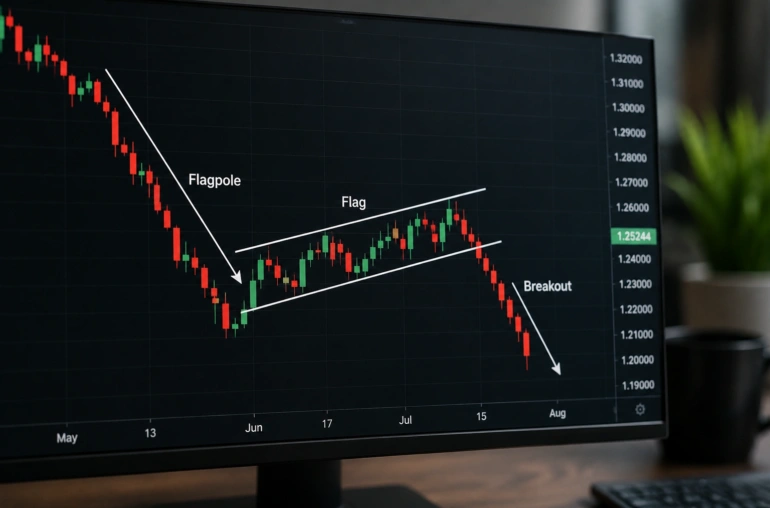
There is no single strategy that works for every trader or market condition. Beginners commonly study approaches such as trend following, breakout trading, range trading, and momentum trading. Trend trading focuses on movements that appear to be developing in one direction, while breakout trading looks for prices moving beyond an established support or resistance area. Range trading focuses on repeated movements between identifiable price levels.
The important point is not to learn dozens of strategies at once. A beginner may benefit more from understanding one straightforward setup and practicing it repeatedly. For example, a trader could study how a stock behaves after breaking above resistance and examine historical examples before risking real money. Keeping a trading journal can also reveal whether a strategy is being followed consistently. Over time, reviewing entries, exits, mistakes, and market conditions can help a trader identify weaknesses and improve decision-making.
Risk Management in Day Trading
Risk management is one of the most important parts of day trading for beginners because even a good strategy can experience losing trades. A trader should determine in advance how much of the account they are willing to risk on an individual trade. Position size should reflect the distance between the planned entry and the level where the trade idea is considered invalid. This helps prevent one unsuccessful position from causing disproportionate damage to the account. For more: Day Trading Strategies: A Practical Guide for Traders
Stop-loss orders can be useful in managing downside risk, although they do not guarantee a specific execution price during fast or illiquid market conditions. Traders should also understand the effect of leverage because borrowed exposure can increase both potential gains and losses. Another useful practice is avoiding revenge trading after a loss. Trying to immediately recover money by taking larger or less carefully planned positions can turn a manageable loss into a much larger one. Consistency and capital preservation should generally come before chasing large returns.
Tools and Charts for New Traders
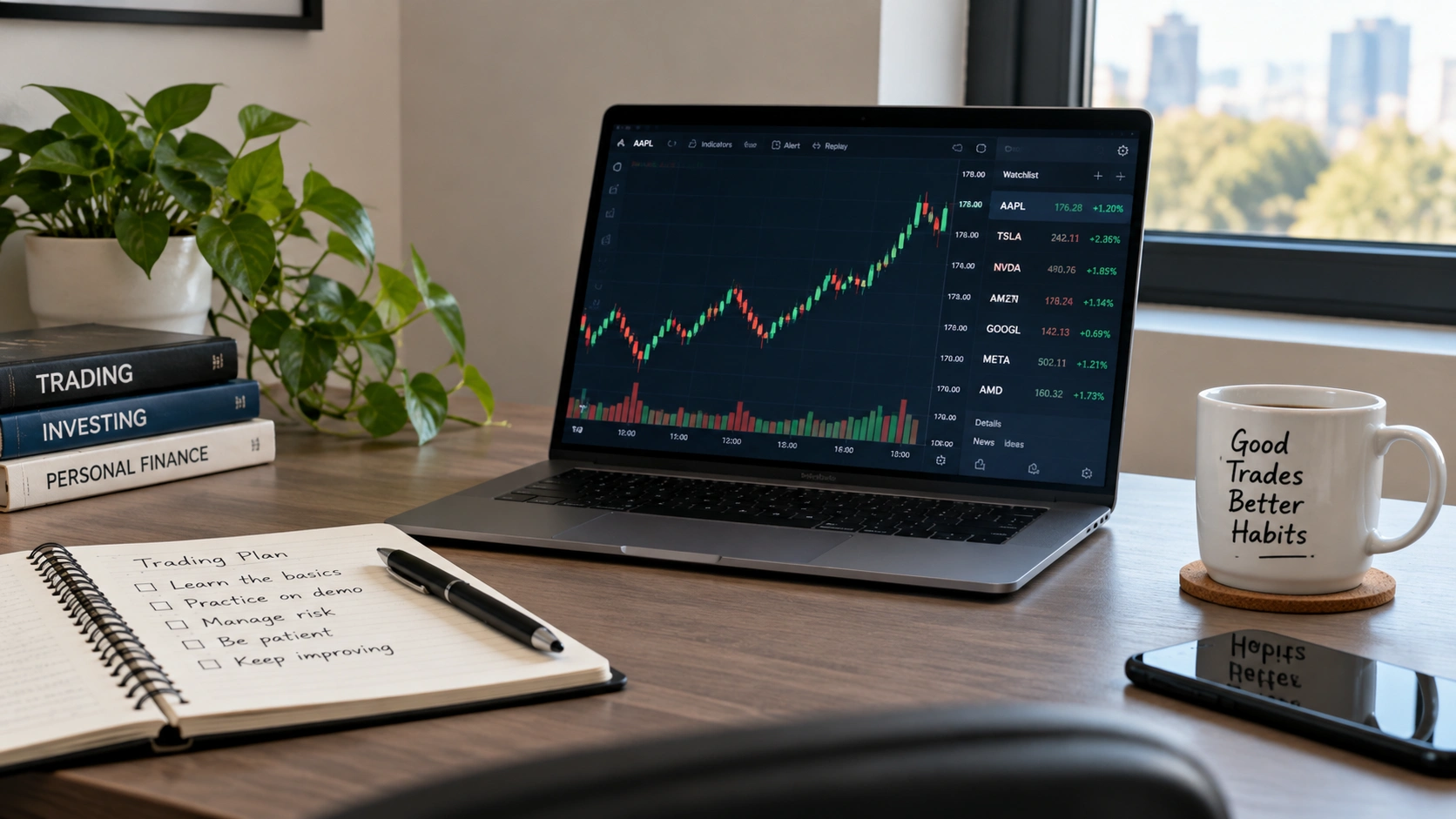
Day traders often use trading platforms that provide real-time or delayed market data, charts, order entry, watchlists, and other analytical features. A beginner does not necessarily need a complicated setup. A reliable platform, appropriate market data, basic charting tools, and a way to record trades can provide a useful starting point. As experience develops, traders can decide which additional tools actually improve their process.
Technical analysis is commonly used in short-term trading. Beginners may encounter concepts such as support and resistance, trendlines, moving averages, volume, candlestick patterns, and relative strength. These tools should be treated as methods for interpreting market behavior rather than prediction machines. No indicator can remove uncertainty from financial markets. Learning how different tools behave under different market conditions is more useful than filling a chart with numerous indicators that may create confusion.
Common Mistakes Day Trading Beginners Make
One of the most common beginner mistakes is entering trades without a clear reason for doing so. A trader may see a stock moving quickly and feel pressure to participate, even though the original setup has already passed. This behavior is sometimes associated with fear of missing out. Another mistake is risking too much on a single trade because a trader expects a particular outcome. Markets can move unexpectedly, and confidence is not a substitute for risk control.
Beginners may also trade too frequently. More trades do not automatically mean more opportunities for profit. Excessive trading can increase transaction costs and create emotional fatigue, particularly when decisions are made without a defined setup. Ignoring losses is another problem. A losing trade should be reviewed rather than automatically followed by another position. A practical trading journal can record the reason for each trade, entry and exit prices, risk level, market conditions, and the lesson learned. This turns individual trades into useful feedback for future decisions.
Building a Day Trading Plan
A trading plan gives beginners a structured way to make decisions before emotions become involved. The plan can define which markets to trade, when to trade, acceptable setups, entry conditions, exit rules, maximum risk, and circumstances in which trading should stop. Having these rules written down makes it easier to evaluate whether a trade followed the intended process rather than judging every decision only by its outcome.
A beginner’s plan should also include a review process. At the end of each trading session or week, the trader can examine completed trades and identify patterns. Were entries taken according to the setup? Were losses controlled? Did emotions influence decisions? Were trades taken during unsuitable market conditions? This type of review can be more valuable than simply calculating daily profit or loss. Beginners interested in broader financial education can also explore related topics such as [stock market basics], [technical analysis], and [investment risk management] as they build their knowledge.
Psychology and Discipline in Day Trading
Trading psychology can strongly influence results because short-term markets can trigger fear, greed, frustration, and overconfidence. A trader may follow a plan perfectly during a winning streak but abandon it after several losses. Similarly, a profitable trade can create overconfidence and encourage someone to increase position sizes without sufficient justification. Recognizing these emotional patterns is an important part of becoming a disciplined trader.
One practical way to improve discipline is to make decisions before entering a position whenever possible. Knowing the entry conditions, potential exit, and maximum acceptable loss can reduce impulsive decisions while the trade is active. Taking breaks can also be useful after a series of emotionally difficult trades. The objective is not to eliminate emotions completely, which is unrealistic, but to prevent emotions from controlling trading decisions. For anyone learning day trading for beginners, developing consistent habits can be just as important as learning chart patterns.
Is Day Trading Suitable for Beginners?
Day trading can be learned by beginners, but that does not mean it is easy or suitable for everyone. It requires time, education, discipline, and the ability to accept financial losses. New traders should avoid treating social-media success stories as evidence that quick profits are normal. Results can vary significantly, and many inexperienced traders underestimate how difficult it is to make consistent decisions under pressure.
A sensible approach is to learn first, practice without substantial financial exposure, and gradually develop a repeatable process. Beginners should also understand all applicable trading rules, taxes, fees, and account requirements before using real money. Anyone considering day trading should evaluate their own financial circumstances and, when appropriate, seek advice from a qualified financial professional. The aim should be informed decision-making rather than chasing fast profits.
Frequently Asked Questions
Is day trading good for beginners?
Day trading can be studied by beginners, but it involves substantial risk and requires preparation. Learning market basics, practicing strategies, and understanding risk management should come before committing significant capital.
How much money do I need to start day trading?
The amount depends on the market, broker, asset, and regulations that apply to you. Beginners should focus less on a minimum amount and more on using money they can genuinely afford to risk.
Can I learn day trading on my own?
Yes. Beginners can learn through reputable educational materials, market practice, chart analysis, and maintaining a trading journal. Structured learning can help reduce avoidable mistakes.
What is the best day trading strategy for beginners?
There is no universally best strategy. Beginners may find it easier to study one simple approach, such as trend, breakout, or range trading, and practice it consistently before exploring more complex methods.
Is day trading risky?
Yes. Day trading carries the possibility of losing money, sometimes quickly. Leverage, volatile markets, trading costs, and emotional decisions can increase risk, making risk management essential.
Conclusion
Day trading for beginners starts with education rather than rushing into the market. Understanding how trades work, selecting a suitable platform, practicing a clear strategy, managing risk, and keeping emotions under control can create a stronger foundation for learning. Beginners should remember that there are no guaranteed profits, and successful trading requires patience and continuous evaluation.
Start by learning the basics, practice your chosen setup, and keep detailed records of your decisions. As your experience grows, use those records to improve your process rather than simply chasing bigger trades. A careful, disciplined approach can help you understand whether day trading fits your goals, risk tolerance, and financial situation.