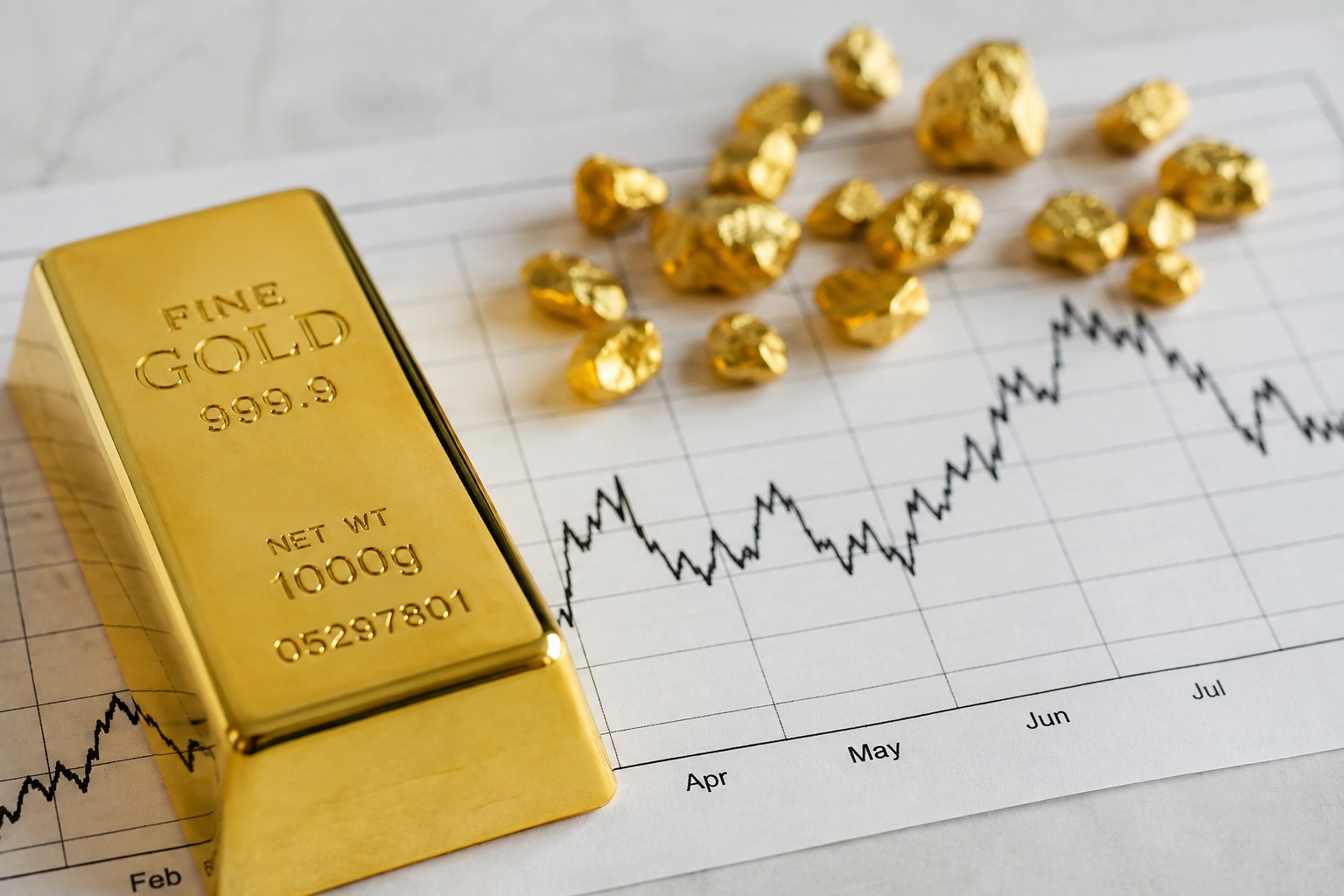
A reliable gold price prediction requires more than looking at yesterday’s price chart. Gold responds to several forces at the same time, including interest rates, inflation, the US dollar, central bank demand, investor sentiment, and geopolitical risk. This makes gold different from many assets because its price can rise even when the broader economic picture is uncertain. As of August 31, 2026, gold remains highly volatile after a major move earlier in the year. Reuters reported that spot gold was around $4,436 per ounce on August 31 after reaching about $4,696 the previous week.
For investors and traders, the important question is not simply whether gold will rise or fall. The better question is which economic conditions could support either direction. The World Gold Council’s 2026 outlook highlights interest-rate expectations, economic growth, geopolitical conditions, investor positioning, and central bank demand as important influences. Understanding these factors can help readers interpret forecasts more carefully and avoid treating any single price target as a certainty.
What Is Driving Gold Prices in 2026?
Interest Rates Remain a Major Influence
Interest rates are one of the most closely watched factors in any gold price prediction. Gold does not pay interest or dividends, so the opportunity cost of holding it can increase when interest rates and bond yields rise. Conversely, expectations of lower rates can make gold more attractive compared with interest-bearing assets. This relationship is not perfect, but it is an important part of how professional investors assess the precious-metals market.
The current environment shows why forecasts can change quickly. On August 31, Reuters reported that expectations for another Federal Reserve rate increase had risen following hawkish comments from Fed Chair Kevin Warsh. The market was pricing in a significantly higher probability of a September hike than before his speech. If future economic data causes investors to expect tighter monetary policy, gold could face pressure. If growth weakens and rate expectations move lower, the balance could shift in gold’s favor.
The US Dollar and Gold Price Prediction
Why Currency Movements Matter
The US dollar has a strong relationship with internationally traded gold because gold is generally priced in dollars. When the dollar strengthens, gold can become more expensive for buyers using other currencies, potentially reducing demand. A weaker dollar can have the opposite effect. However, currency movements should not be viewed in isolation because gold can also respond to inflation expectations, geopolitical risk, and changes in investor positioning.
Recent market action demonstrates this connection. Reuters reported during August that gold benefited at times from a weaker dollar, while later dollar strength and changing expectations about Federal Reserve policy contributed to price pressure. For anyone following a gold price prediction, watching the dollar index alongside Treasury yields and Federal Reserve expectations can therefore provide useful context rather than relying on gold charts alone.
Inflation and Gold’s Safe-Haven Role
Can Higher Inflation Support Gold?
Inflation is another important factor when considering a gold price prediction. Investors often view gold as a potential store of value when purchasing power is under pressure. However, high inflation does not automatically mean gold will rise. What matters is how inflation changes real interest rates, monetary policy, currency expectations, and investor confidence. If inflation remains high but central banks respond aggressively with higher rates, gold can experience competing pressures. For more: Paper Trading: A Complete Guide for Beginners
US inflation remains an important issue in 2026. Reuters reported that the US Personal Consumption Expenditures price index increased 3.7% year over year through July, well above the Federal Reserve’s 2% target. This creates a complicated environment for gold. Persistent inflation can support demand for defensive assets, but expectations of higher interest rates can weigh on the metal. Investors should therefore watch inflation releases together with central-bank decisions instead of interpreting inflation figures alone.
Geopolitical Risk and Gold
Why Global Uncertainty Can Move Prices
Geopolitical events can have a powerful effect on gold because investors often seek assets perceived as defensive during periods of uncertainty. Wars, trade disputes, political instability, financial stress, and unexpected international developments can increase demand for safe-haven assets. The difficulty is that geopolitical premiums can disappear quickly when tensions ease, meaning a price increase caused by fear may not remain permanent.
This factor is particularly relevant to the current gold price prediction. The World Gold Council identified geopolitical concerns as a major contributor to gold’s performance during the first half of 2026. Reuters also reported on August 31 that renewed US-Iran tensions were contributing to inflation concerns and broader financial-market uncertainty. If geopolitical risks intensify, gold could receive additional support. If markets become calmer, some of that risk premium could fade.
Central Bank Demand and Gold Forecasts
Why Central Banks Matter
Central bank purchases have become an important structural factor in the gold market. Central banks can hold gold as part of their reserves, helping diversify away from currencies and other financial assets. Unlike short-term speculative buying, reserve management can represent a longer-term source of demand. This is why central bank activity frequently appears in professional gold-market analysis.
The World Gold Council has emphasized continued central bank demand as an important variable in its 2026 outlook. Strong official-sector buying can provide underlying support even when short-term investors reduce positions. However, central bank demand should not be interpreted as a guarantee of higher prices. Investment flows, interest rates, economic growth, and market sentiment can still create substantial price swings over shorter periods.
Gold Price Prediction: Bullish and Bearish Scenarios
What Could Push Gold Higher?
A bullish gold price prediction would generally require a combination of supportive conditions rather than one isolated event. Slower economic growth, falling interest-rate expectations, a weaker dollar, renewed geopolitical stress, and stronger investment demand could create a favorable environment. A major decline in real yields could also increase gold’s appeal because the opportunity cost of holding a non-yielding asset would become less restrictive.
The World Gold Council’s mid-year analysis identified worsening economic or geopolitical conditions, lower interest-rate expectations, and renewed investor participation as potential catalysts for stronger gold performance. Its scenario analysis suggested that gold could regain momentum toward $4,500 per ounce or higher if supportive conditions emerged, while a much stronger move toward $5,000 would require a clearer and more powerful catalyst. These are scenario estimates, not guaranteed targets, and actual prices can differ substantially.
What Could Push Gold Lower?
A bearish gold price prediction becomes more plausible if economic growth remains resilient, inflation stays persistent, interest rates remain elevated, bond yields rise, and the US dollar strengthens. These conditions can reduce the relative attractiveness of gold and encourage investors to favor assets that provide income. A reduction in geopolitical tensions could also remove some of the safe-haven premium that has supported gold.
The World Gold Council has noted that resilient growth, rising yields, and calmer markets could put downward pressure on gold, although bargain-hunting demand may limit the depth of a major decline. This is an important point for beginners: a bearish outlook does not necessarily mean a straight-line collapse. Gold can move sharply in both directions, often reversing after major economic announcements or changes in market expectations.
How to Read a Gold Price Prediction
Short-Term Forecasts vs Long-Term Outlooks
Short-term gold forecasts are especially difficult because prices can react within minutes to economic releases, central-bank comments, currency movements, and geopolitical headlines. A forecast made before an inflation report may become outdated immediately after the data is released. Traders therefore tend to focus on technical levels, market positioning, economic calendars, Treasury yields, and changing expectations rather than relying on one fixed forecast.
Long-term gold price predictions have a different purpose. They focus more heavily on structural trends such as central bank reserves, global debt, monetary policy, inflation, economic growth, and investment demand. The World Gold Council’s analysis shows why scenario-based thinking is useful: gold can behave differently under slower growth, renewed geopolitical stress, stronger growth, or higher yields. Readers should therefore treat a forecast as a framework for thinking rather than a promise about where gold must trade.
Gold Price Prediction and Technical Analysis
What Charts Can Tell Investors
Technical analysis can complement a fundamental gold price prediction by helping traders identify trends, support areas, resistance levels, momentum, and potential changes in market structure. Common tools include moving averages, trendlines, relative strength indicators, and previous highs or lows. These tools do not predict the future with certainty, but they can help traders organize risk and avoid making decisions based only on emotion.
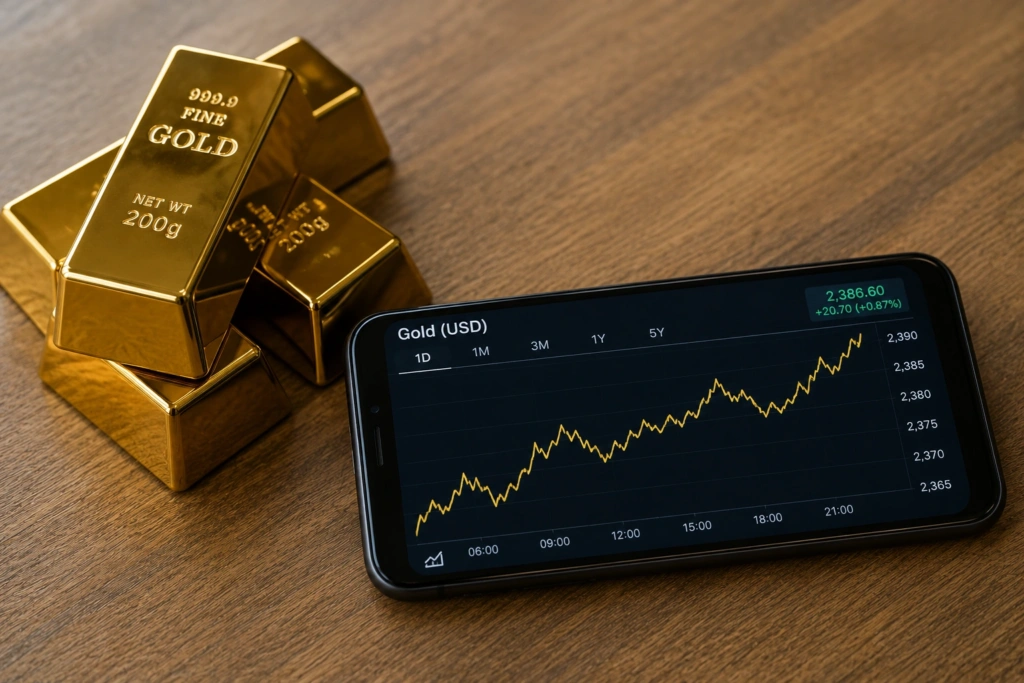
Recent price action illustrates why technical context matters. Gold reached a three-month high of about $4,696 per ounce in late August before retreating toward $4,436 by August 31, according to Reuters. A trader looking only at the recent high might assume the trend must continue, while a trader examining momentum and macroeconomic signals may recognize that the market has already experienced a significant move. Combining technical analysis with fundamental research can provide a more balanced approach.
What Investors Should Watch Next
Economic Data Could Set the Direction
The next major moves in gold are likely to depend heavily on incoming economic information and how markets interpret it. Employment data, inflation figures, Federal Reserve communication, Treasury yields, and the US dollar can all change expectations quickly. Investors should focus on whether the new data strengthens or weakens the case for tighter monetary policy rather than simply asking whether an individual number is positive or negative.
Reuters reported that markets were closely watching upcoming US labor and inflation data after expectations for Federal Reserve policy shifted sharply in late August. For readers researching a gold price prediction, this means the economic calendar can be as important as the gold chart. A useful next step is to follow a trusted market analysis guide alongside live gold prices so that price movements are understood in their broader economic context.
Gold Price Prediction for the Rest of 2026
A Range of Outcomes Is More Realistic
The most reasonable approach to a gold price prediction for the remainder of 2026 is to consider several possible paths rather than announce one exact target. If economic growth weakens, rate expectations decline, the dollar softens, and geopolitical risks remain elevated, gold could regain strong upward momentum. If growth stays firm while inflation keeps rates high and bond yields rise, gold could face consolidation or a deeper correction.
The World Gold Council’s July analysis described gold as broadly aligned with its macroeconomic backdrop at the time and suggested that, without a major change in conditions, prices could remain relatively rangebound. It also identified renewed economic or geopolitical shocks and lower-rate expectations as possible catalysts for a stronger move. Since market conditions have changed since that analysis, investors should not treat its ranges as current price targets. Instead, the analysis is useful for understanding the conditions that could influence the next major move.
How Beginners Can Use Gold Forecasts
Avoid Treating Forecasts as Guarantees
Beginners often make the mistake of searching for one exact gold price target and using it as a trading signal. Markets do not work that way. Even professional analysts can disagree because they use different assumptions about inflation, interest rates, currencies, economic growth, and geopolitical developments. A forecast is most useful when it explains why a price could move, what would invalidate the idea, and which indicators should be monitored.
A more disciplined approach is to compare several scenarios and establish a clear risk-management plan. Investors can track gold alongside the US dollar, real yields, central bank policy, inflation, and major geopolitical developments. They should also consider whether they are investing for months, years, or trading for shorter periods. For more practical research, readers can explore related internal resources such as a guide to gold investing, a precious metals comparison, or an explanation of risk management before making financial decisions.
Frequently Asked Questions
Is gold expected to rise in 2026?
Gold has both bullish and bearish factors in 2026. Lower rates, geopolitical uncertainty, and central bank demand could support it, while higher yields and stronger monetary tightening could create pressure.
What factors affect the gold price most?
Interest rates, the US dollar, inflation, geopolitical risk, central bank demand, investor flows, and economic growth are among the most important factors influencing gold prices.
Can gold reach $5,000 per ounce?
A move toward $5,000 is possible under a strong bullish scenario, but it is not guaranteed. The World Gold Council says a move toward that level would require a clear and strong catalyst.
Is gold a good investment during inflation?
Gold can provide diversification when inflation and economic uncertainty are high, but it does not always rise with inflation. Interest rates, real yields, currency movements, and investor sentiment also matter.
Should I rely on a gold price prediction before investing?
No single forecast should determine an investment decision. Compare different scenarios, understand the underlying drivers, consider your time horizon, and use appropriate risk management.
Conclusion
A useful gold price prediction should explain the forces behind the market rather than provide an unsupported number. In 2026, interest-rate expectations, inflation, the US dollar, geopolitical developments, central bank purchases, and investor positioning remain central to the outlook. Recent volatility shows how quickly gold can respond when expectations about monetary policy or global risk change.
For the rest of the year, both higher and lower price scenarios remain possible. Investors should focus on the signals that could change the market’s direction instead of chasing headlines or assuming that past performance will continue. Keep following reliable economic data, gold-market research, and risk-management principles to build a more informed view of where gold could move next.