


Learning how to day trade crypto can be an exciting way to explore cryptocurrency markets, but it requires preparation, discipline, and a clear understanding of risk. Unlike long-term investing, day trading focuses on opening and closing positions within the same trading day to benefit from short-term price movements. Traders use market charts, technical indicators, and trading plans to identify potential opportunities. However, cryptocurrency prices can change rapidly, and losses can happen just as quickly as gains. This guide explains how crypto day trading works, what beginners need to get started, and how to develop a practical approach. Whether you are interested in Bitcoin, Ethereum, or other digital assets, understanding the basics is essential before risking real money.
What Is Crypto Day Trading?
Crypto day trading is the practice of buying and selling digital assets within a relatively short period, usually during the same trading day. The goal is to benefit from price movements rather than holding an asset for weeks, months, or years. Unlike traditional stock markets, cryptocurrency markets generally operate around the clock, including weekends. This creates more opportunities to trade but also means prices can move while you are away from your screen. A day trader may open a position in the morning and close it later that day, or complete several trades during a single session.
The main difference between day trading and long-term investing is the time horizon. A long-term investor may buy Bitcoin because they believe its value will increase over several years. A day trader, however, might buy Bitcoin after a short-term price breakout and sell it when the price reaches a planned target. Both approaches involve risk, but day trading requires more frequent decisions and closer attention to market conditions. Trading fees, emotional reactions, and sudden price changes can significantly affect results. Beginners should understand that frequent trading does not automatically produce better returns.
How to Choose a Cryptocurrency for Day Trading
Choosing the right cryptocurrency is one of the first steps in learning how to day trade crypto. Beginners should generally focus on assets with strong trading volume, reliable market data, and sufficient liquidity. Bitcoin and Ethereum are widely followed examples, although other cryptocurrencies may also offer trading opportunities. High liquidity makes it easier to enter and exit positions without significantly affecting the market price. It can also help reduce the difference between the price at which you buy and the price at which you sell. A cryptocurrency with limited trading activity may be more difficult to trade efficiently.
Volatility is another important factor. A market that moves too little may offer few opportunities, while a market that moves sharply can create substantial losses. Beginners should avoid choosing an asset simply because its price has recently increased. Instead, examine its trading volume, historical price behavior, and the availability of reliable information. For example, a trader comparing two cryptocurrencies might prefer the one with tighter spreads and more consistent activity rather than the one with the largest percentage movement. A well-chosen market can make it easier to follow a trading plan and manage risk.
Important Factors to Compare
- Trading volume and liquidity.
- Bid-ask spread.
- Recent price volatility.
- Trading fees.
- Available market data.
- Exchange reliability.
- Compatibility with your trading strategy.
How to Set Up a Crypto Trading Account
Before placing a trade, you need a suitable cryptocurrency exchange account. Choose a platform that supports the assets you want to trade and provides access to useful charting and order tools. Check the platform’s security features, trading fees, deposit methods, and withdrawal conditions. It is also important to understand whether the exchange is available in your country and whether it follows applicable regulations. A platform with a simple interface can be helpful for beginners, but security and transparent costs should matter more than appearance.
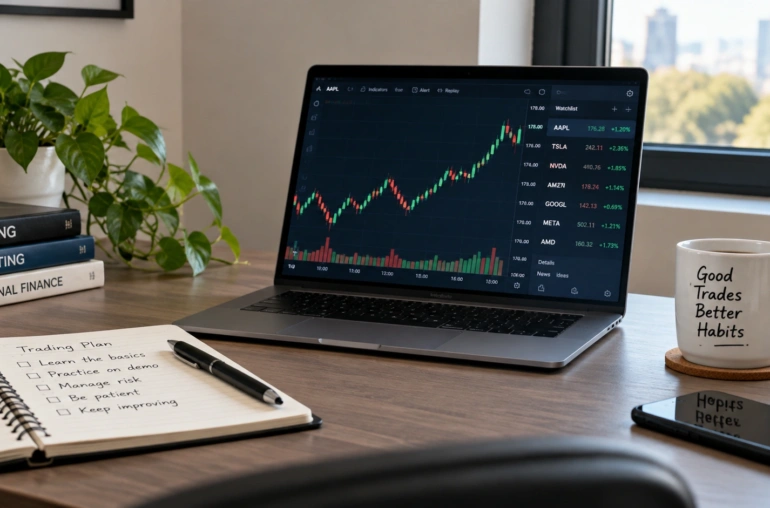
After opening an account, complete the required verification and secure it with a strong password and available two-factor authentication. Deposit only an amount you can afford to lose, and avoid borrowing money to fund your first trades. Before using real funds, explore the platform’s demo or paper-trading options if available. Learn how to place market orders, limit orders, and stop-loss orders. A short practice period can help you understand the interface and reduce the chance of making an expensive mistake when the market moves quickly.
How to Read Crypto Price Charts
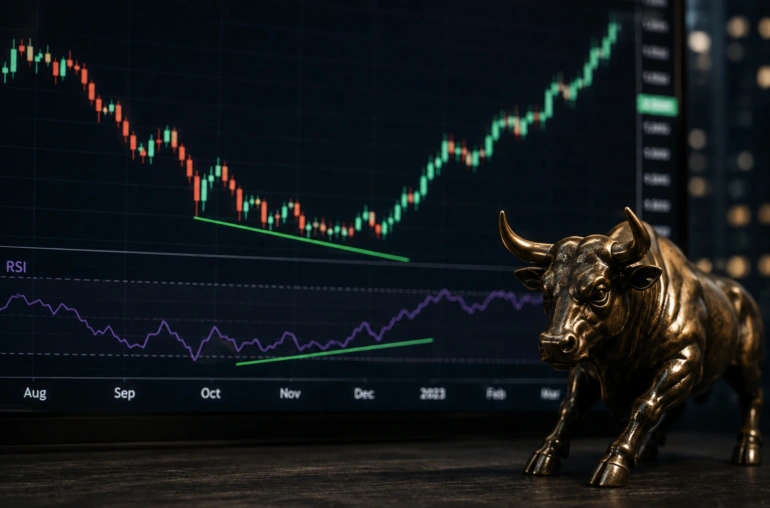
Understanding price charts is essential when learning how to day trade crypto. Most traders begin with candlestick charts because they show the opening, closing, highest, and lowest prices during a selected period. A five-minute chart may reveal short-term movements, while a one-hour chart can provide a broader view of market direction. Traders often examine support and resistance levels, which are areas where buying or selling pressure has previously affected price. These levels are not guaranteed turning points, but they can help organize a trading plan.
Technical indicators can also support chart analysis, although they should not replace judgment. Moving averages may help identify the general direction of a market, while the Relative Strength Index can provide information about recent price momentum. Volume can help traders assess whether a price movement is supported by stronger activity. For example, a breakout accompanied by increased volume may appear more convincing than a similar movement with very little trading activity. Beginners should avoid filling their charts with too many indicators. A small set of understandable tools is usually easier to interpret consistently.
Common Charting Tools
- Candlestick charts.
- Support and resistance levels.
- Moving averages.
- Relative Strength Index.
- Trading volume.
- Trendlines.
How to Day Trade Crypto Using a Trading Strategy
A trading strategy is a set of rules that explains when you enter a position, where you place your stop-loss, and when you exit. Without a plan, beginners may buy because prices are rising or sell because they feel nervous. A simple strategy might involve identifying a market trend, waiting for a pullback, and entering only when the price shows signs of continuing in the expected direction. Another approach may focus on breakouts from established price ranges. The important point is that the strategy should be understandable and testable before real money is used. For more: Funded Trading Accounts: Complete Beginner’s Guide
No strategy works in every market condition. A trend-following approach may perform differently during a sideways market, while a range-trading approach may struggle during a strong breakout. Beginners should test their chosen method using historical charts or paper trading. Record the entry price, exit price, reason for the trade, and result. This trading journal can reveal whether the strategy has a consistent advantage after fees. It also helps identify mistakes that may be difficult to notice when relying only on memory.
Risk Management for Crypto Day Trading
Risk management is one of the most important parts of learning how to day trade crypto. Cryptocurrency markets can move sharply, and even a well-planned trade can lose money. A common approach is to risk only a small portion of your trading capital on each position. For example, if your trading account contains $1,000 and you choose to risk 1%, your planned loss would be $10 before fees and slippage. This does not guarantee that the loss will remain exactly $10, but it provides a framework for controlling exposure.
Position sizing should be based on the distance between your entry price and stop-loss rather than the total account balance alone. Suppose you buy an asset at $100 and place a stop-loss at $98. If you are willing to risk $10, your position size would be approximately five units before considering fees. The calculation changes if the stop-loss is wider or narrower. Traders should also avoid increasing their position size after a loss simply to recover money. A consistent risk limit helps protect the account during periods of unfavorable performance.
Practical Risk Rules
- Decide your maximum loss before entering a trade.
- Use a stop-loss when appropriate.
- Avoid risking too much on one position.
- Consider trading fees and slippage.
- Do not chase losses.
- Review your results regularly.
How to Manage Leverage and Margin
Leverage allows traders to control a position larger than the amount of capital they deposit. For example, 5x leverage means a $100 margin position can control approximately $500 worth of exposure. This can increase potential profits, but it also increases potential losses. A relatively small price movement against the position may consume a significant portion of the margin. In some circumstances, the exchange may liquidate the position automatically if the account no longer meets its margin requirements.
Beginners should be cautious with leveraged trading because it adds complexity to an already volatile market. Perpetual futures contracts may also involve funding payments, liquidation rules, and differences between the contract price and the underlying asset. These costs and risks can make results different from those of ordinary spot trading. If you are still learning chart analysis and order execution, starting with spot trading or paper trading may be more suitable. Understanding leverage is important, but using it is not necessary to learn the fundamentals of crypto day trading.
How to Plan a Crypto Day Trading Session
A trading session should begin with preparation rather than an immediate purchase. Review the overall market direction, identify important price levels, and check whether major economic announcements or cryptocurrency developments could affect volatility. A trader might mark the previous day’s high and low, identify a current trading range, and decide which conditions would justify entering a position. The purpose is to create a clear plan before emotions become involved. If the market does not meet your criteria, remaining out of the trade is a valid decision.
During the session, focus on a limited number of markets and avoid constantly switching between charts. Too many opportunities can make it difficult to maintain discipline. Set alerts for important price levels so you do not need to watch every movement continuously. After the session, review the trades in your journal and compare the actual results with your original plan. Ask whether the entry was justified, whether risk was controlled, and whether the exit followed the rules. This process can help improve decision-making over time.
Common Crypto Day Trading Strategies
There are several strategies used by crypto day traders, and each is based on a different type of market behavior. Trend trading focuses on movements in one direction, while range trading looks for opportunities between established support and resistance levels. Breakout trading attempts to benefit when price moves beyond a defined range. Scalping takes this approach further by targeting very small price movements through frequent trades. Each method requires different skills, and none guarantees consistent profits.
Beginners should choose one strategy rather than trying to use every method at once. For example, a trader interested in breakouts might study how price behaves near resistance and practice identifying genuine moves versus temporary spikes. A range trader may focus on how price reacts near the upper and lower boundaries of a market. Testing one method makes it easier to understand its strengths and weaknesses. Before committing real funds, review enough examples to understand how the strategy performs during both favorable and unfavorable conditions.
Popular Strategies
| Strategy | Main Idea | Main Challenge |
|---|---|---|
| Trend trading | Follow an established price direction. | Sudden reversals. |
| Range trading | Trade between support and resistance. | Unexpected breakouts. |
| Breakout trading | Enter after price leaves a range. | False breakouts. |
| Scalping | Target small, frequent movements. | Fees and execution speed. |
Trading Psychology and Common Mistakes
Trading psychology can have a major effect on results. Fear may cause a trader to exit too early, while greed may encourage them to hold a position beyond the planned target. After a loss, some traders try to recover immediately by increasing their position size. This behavior, often called revenge trading, can lead to further losses. A trading plan helps reduce emotional decisions, but discipline requires practice. Accepting that some trades will lose is an important part of developing realistic expectations.
Another common mistake is trading too frequently. The availability of markets around the clock can create the feeling that every price movement must be acted upon. In reality, many market conditions do not provide a clear opportunity. Beginners may also ignore fees, trade without a stop-loss, or change their strategy after a few unsuccessful trades. A useful journal can help identify these patterns. If trading begins to interfere with sleep, work, or financial stability, taking a break and reassessing your approach is important.
How to Track and Improve Trading Performance
Tracking performance helps traders understand whether their approach is working. A trading journal should include the asset, entry price, exit price, position size, trading fees, and reason for entering the trade. It can also record the market conditions and whether the trade followed your strategy. Over time, this information makes it easier to identify patterns. For example, you may discover that trades taken during a certain market condition perform better than those taken during periods of low liquidity.
One useful measure is the average result per trade after costs. A strategy may appear profitable before fees but produce a different outcome after commissions and slippage. Traders should also examine their win rate, average winning trade, average losing trade, and maximum drawdown. A high win rate alone does not guarantee profitability if losing trades are much larger than winning trades. Reviewing performance over a meaningful number of trades provides more useful information than judging a strategy based on one successful day.
Frequently Asked Questions
Is crypto day trading suitable for beginners?
Beginners can learn crypto day trading, but it requires practice, risk management, and realistic expectations. Start with education and paper trading before using real money. Never assume that short-term trading is an easy way to earn income.
How much money do I need to start day trading crypto?
There is no universal minimum because exchange requirements and trading costs vary. A small practice account may be useful for learning, but you should only use money you can afford to lose. Your position size should reflect your risk limit.
What is the best cryptocurrency for day trading?
There is no single best cryptocurrency for everyone. Beginners often study highly liquid markets such as Bitcoin and Ethereum because they have substantial trading activity. Compare liquidity, fees, volatility, and the availability of reliable market data.
Can I day trade crypto without leverage?
Yes. Spot trading allows you to buy and sell cryptocurrency without using borrowed funds. It can be easier to understand than leveraged trading because you avoid liquidation risk from borrowed exposure. However, spot trading still involves price risk.
How long does it take to learn crypto day trading?
The learning period varies from person to person. Understanding charts and order types may take weeks, while developing a consistent strategy can take much longer. Practice, record-keeping, and risk management are more important than rushing to trade real money.
Conclusion
Learning how to day trade crypto requires more than finding a coin that is moving quickly. Successful preparation involves understanding market liquidity, reading price charts, choosing a strategy, and managing risk before every trade. Beginners should start with a clear plan, practice using simulated trading when possible, and avoid leverage until they understand its risks. Keeping a trading journal can also help identify mistakes and improve decision-making over time.
Cryptocurrency day trading offers opportunities, but it does not guarantee profits. Market conditions change, and even experienced traders can experience losses. If you want to build a stronger foundation, explore related topics such as technical analysis, trading psychology, position sizing, and cryptocurrency market risk. A patient, informed approach can help you develop the skills needed to make more responsible trading decisions.
1 Comment