

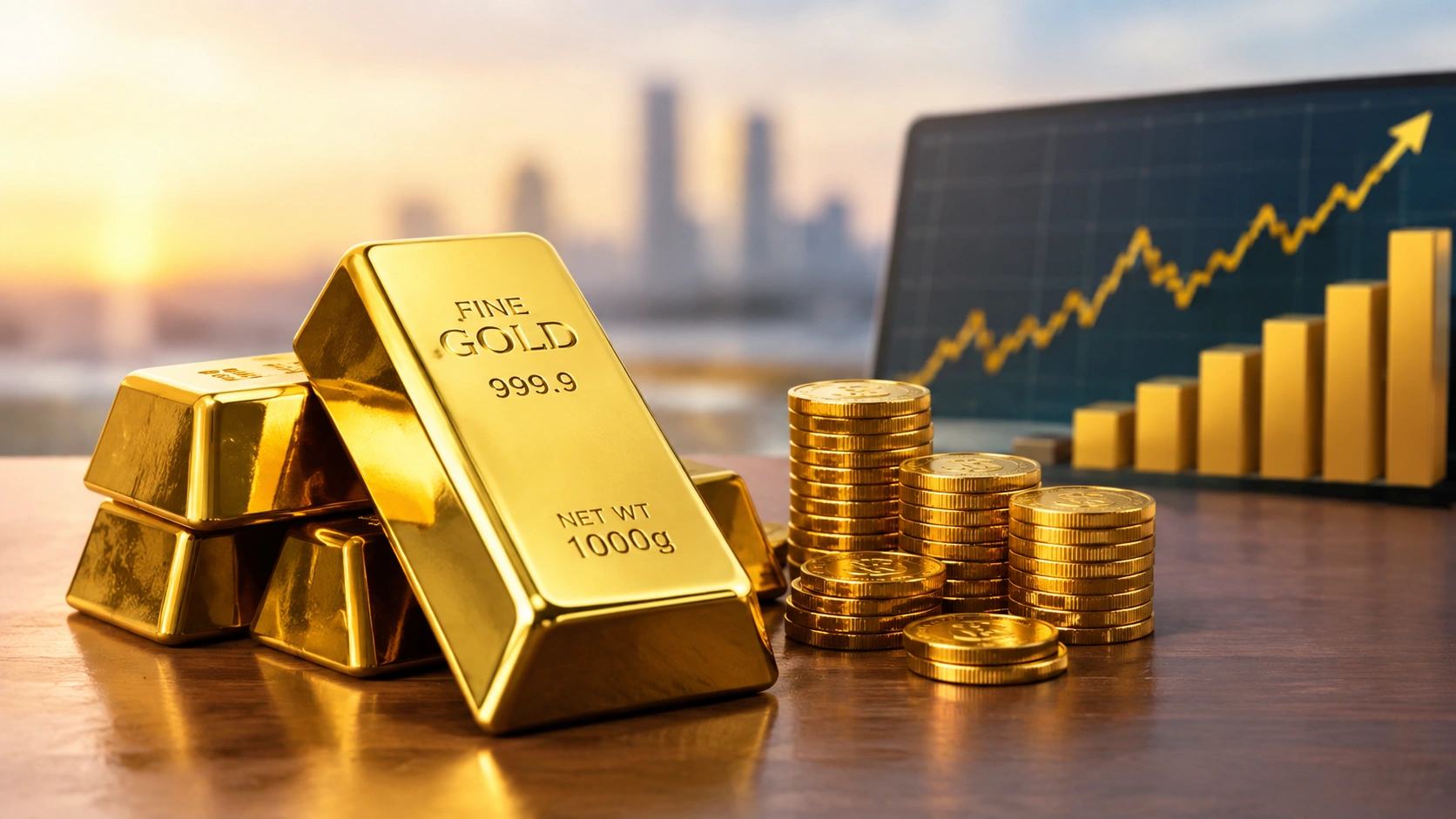
Gold has remained one of the most closely watched assets in global financial markets. From investors and traders to ordinary families saving for the future, many people want to understand where gold prices could go next. Gold predictions help explain the factors that may influence future prices, including inflation, interest rates, currency movements, central bank purchases, and global economic uncertainty. However, predicting gold prices is not as simple as assuming they will always rise. The market can experience sharp increases, sudden corrections, and extended periods of limited movement. Understanding these patterns can help readers make more informed financial decisions. This guide explains how gold predictions work, what drives future prices, and which signals investors should watch before buying or selling gold.
What Are Gold Predictions and Why Do They Matter?
Gold predictions are estimates about the future direction of gold prices based on economic data, market trends, investor behavior, and global developments. Analysts use different methods to assess whether gold may rise, fall, or remain relatively stable. Some focus on price charts and technical indicators, while others study inflation, monetary policy, currency movements, and demand from major gold-buying countries. No method can accurately predict every market movement, but combining several approaches can provide a more balanced view.
For ordinary investors, understanding gold predictions is useful because gold is often purchased as a long-term store of value. Someone buying gold jewelry, coins, or bars may want to know whether prices are likely to increase over the coming months. Similarly, a trader may be interested in shorter-term price movements. The right approach depends on the investment goal, available budget, and willingness to accept risk. Predictions should therefore be treated as informed estimates rather than guaranteed outcomes.
How Interest Rates Influence Future Gold Prices
Interest rates are among the most important factors affecting gold prices. Gold does not pay interest or dividends, so investors often compare its potential return with assets such as savings accounts, bonds, and other interest-bearing investments. When interest rates rise, these alternatives may become more attractive, particularly if investors believe they can earn better returns without taking substantial additional risk. This can reduce demand for gold and place pressure on its price.
When interest rates decline, the opportunity cost of holding gold may become lower. Investors may also become more interested in gold if lower borrowing costs encourage concerns about inflation or economic weakness. Expectations about future rate changes can influence prices even before a central bank announces an actual decision. For example, if markets begin expecting interest-rate cuts, gold may attract additional buying interest. However, the relationship is not automatic. Currency movements, inflation expectations, and global risk sentiment can strengthen or weaken the effect of interest rates on gold.
Inflation and Gold Price Predictions
Inflation is another major factor considered in gold predictions. When the prices of everyday goods and services rise, investors may look for assets that could help preserve purchasing power over time. Gold has traditionally been viewed as a store of value because its supply grows relatively slowly and it is not directly tied to the financial performance of a single company or government. This reputation can increase demand when people are concerned about the long-term value of money.
However, gold does not always rise whenever inflation increases. What matters is how investors interpret inflation alongside interest rates and economic growth. If central banks respond to inflation by raising interest rates aggressively, gold may face pressure despite higher consumer prices. On the other hand, if inflation remains persistent while real interest rates are low, gold may become more attractive. Investors should therefore examine inflation reports, central bank decisions, and broader economic conditions together rather than relying on a single economic indicator.
The Role of the US Dollar in Gold Predictions
Gold is traded internationally in US dollars, making currency movements an important part of future gold price analysis. When the dollar strengthens against other major currencies, gold can become more expensive for international buyers. This may reduce demand and create downward pressure on dollar-denominated gold prices. Conversely, a weaker dollar can make gold relatively more affordable for buyers using other currencies, potentially supporting demand. For more: How Much Is One 24K Gold Bar Worth Today?
The relationship between gold and the dollar is not always consistent. Both assets can sometimes rise together when markets are facing severe uncertainty. For example, investors may seek the dollar for liquidity while also purchasing gold as a defensive asset. For people following gold prices in Pakistan, currency movements are especially important because local gold prices are influenced by international gold prices and the exchange rate between the Pakistani rupee and the US dollar. A change in the local currency can therefore affect domestic gold prices even when international gold prices remain relatively stable.
Central Bank Buying and Global Gold Demand
Central banks play an important role in the global gold market. Many countries hold gold as part of their foreign exchange reserves, and some central banks periodically increase their holdings to diversify their reserve assets. Strong official-sector demand can support gold prices by adding a significant source of buying interest. Analysts often monitor central bank purchases because they may reflect long-term confidence in gold as a reserve asset.
Gold demand also comes from jewelry manufacturers, technology companies, investment funds, and individual buyers. Jewelry demand can be particularly important in countries where gold has cultural and financial significance. Investment demand may increase during periods of economic uncertainty, while industrial demand depends partly on manufacturing and technology activity. These sources of demand do not always move in the same direction. For instance, investment demand may rise during a financial crisis while jewelry purchases weaken because households have less disposable income. Understanding these differences helps make gold predictions more realistic.
How Global Uncertainty Affects Gold Prices
Gold is often described as a safe-haven asset because investors may turn to it during periods of financial, political, or economic uncertainty. Concerns about banking problems, geopolitical tensions, recessions, or instability in financial markets can encourage investors to seek assets that are not directly dependent on the success of a particular company or economy. This can increase demand for gold and influence short-term price movements.
The effect of uncertainty is not always straightforward. During a sudden market crisis, investors may sell gold to raise cash or cover losses in other investments. This can create temporary price declines even when long-term demand remains strong. Gold predictions should therefore consider both the type of uncertainty and the market’s response to it. Investors should also remember that safe-haven demand can fade when conditions improve. A price increase driven by fear may not continue indefinitely once investors regain confidence in other assets.
Technical Analysis and Gold Price Forecasting
Technical analysis is another method used to develop gold predictions. It involves studying historical price movements, trading volume, support and resistance levels, and indicators such as moving averages and the Relative Strength Index. Traders use these tools to identify possible trends, momentum changes, and areas where buying or selling pressure may increase. Technical analysis can be helpful for understanding market behavior, particularly when combined with broader economic information.
For example, a trader may observe that gold has been making higher highs and higher lows, suggesting an upward trend. If the price later falls below an important support level, the trader may reassess the outlook. These signals are not guarantees, because markets can move unexpectedly after economic announcements or geopolitical developments. Technical analysis is generally more useful when it is combined with risk management, realistic expectations, and an understanding of the time period being studied. A short-term trading signal should not automatically be treated as a long-term investment forecast.
Gold Predictions for Investors in Pakistan
Gold is an important asset for many Pakistani households because it is used for jewelry, wedding gifts, savings, and wealth preservation. Local gold prices are influenced by international gold prices, the Pakistani rupee’s exchange rate, domestic demand, and local market conditions. This means that gold predictions for Pakistan should consider both global and domestic factors. A rise in international gold prices may increase local prices, but currency movements can amplify or reduce that effect.
For example, if international gold prices remain unchanged but the Pakistani rupee weakens against the US dollar, gold may become more expensive in Pakistan. The opposite can also happen when the local currency strengthens. Buyers should compare the quoted price with the purity, weight, and making charges before making a purchase. Jewelry prices may differ substantially from the underlying value of gold because of craftsmanship and other costs. People considering gold as an investment should also distinguish between jewelry and investment-grade bars or coins, as their costs and resale values can differ.
Long-Term Gold Predictions: What Investors Should Watch
Long-term gold predictions depend on a combination of economic conditions, supply and demand, monetary policy, and investor confidence. Gold production generally changes gradually because developing new mines requires substantial investment and time. Recycling can add supply when prices are attractive, while mining disruptions may affect availability. Demand can change more quickly, particularly when investors respond to interest-rate expectations or economic uncertainty.
For long-term investors, the most useful approach is to focus on the factors that can influence gold over several years rather than reacting to every daily price movement. They should consider their financial goals, investment horizon, liquidity needs, and tolerance for losses. Gold can provide diversification in a broader portfolio, but it does not guarantee positive returns. Prices can decline after strong rallies, and holding physical gold may involve storage, security, and transaction costs. A well-informed decision should consider both the potential benefits and the risks.
Frequently Asked Questions
Is gold expected to rise in the future?
Gold may rise when demand increases because of economic uncertainty, lower interest rates, inflation concerns, or central bank purchases. However, future prices are uncertain, and gold can also experience significant declines.
What factors affect gold predictions the most?
Interest rates, the US dollar, inflation, central bank buying, global uncertainty, and investment demand are among the most important factors. Their influence can change depending on market conditions.
Are gold predictions accurate?
Gold predictions are estimates rather than guarantees. Even experienced analysts can be wrong because unexpected economic announcements, currency movements, or geopolitical events can change market conditions quickly.
Is gold a good investment for beginners?
Gold may be suitable for beginners who understand its risks and have a long-term investment objective. It is important to consider affordability, liquidity, storage costs, and the difference between jewelry and investment-grade gold.
How can I follow gold predictions in Pakistan?
You can follow international gold prices, the Pakistani rupee’s exchange rate, local market updates, and major economic announcements. Comparing prices from reputable dealers can also help you understand local market movements.
Conclusion
Gold predictions can help investors understand the factors that may influence future gold prices, but they should never be treated as certain outcomes. Interest rates, inflation, currency movements, central bank demand, and global uncertainty all play important roles in shaping the market. For Pakistani investors, international prices and the rupee’s exchange rate are particularly relevant when evaluating local gold prices.
The best way to use gold predictions is to combine reliable information with realistic financial planning. Whether you are buying gold for savings, jewelry, or portfolio diversification, consider your goals and risk tolerance before making a decision. Keep following market developments and compare current prices with broader economic trends to make more informed choices.

1 Comment