

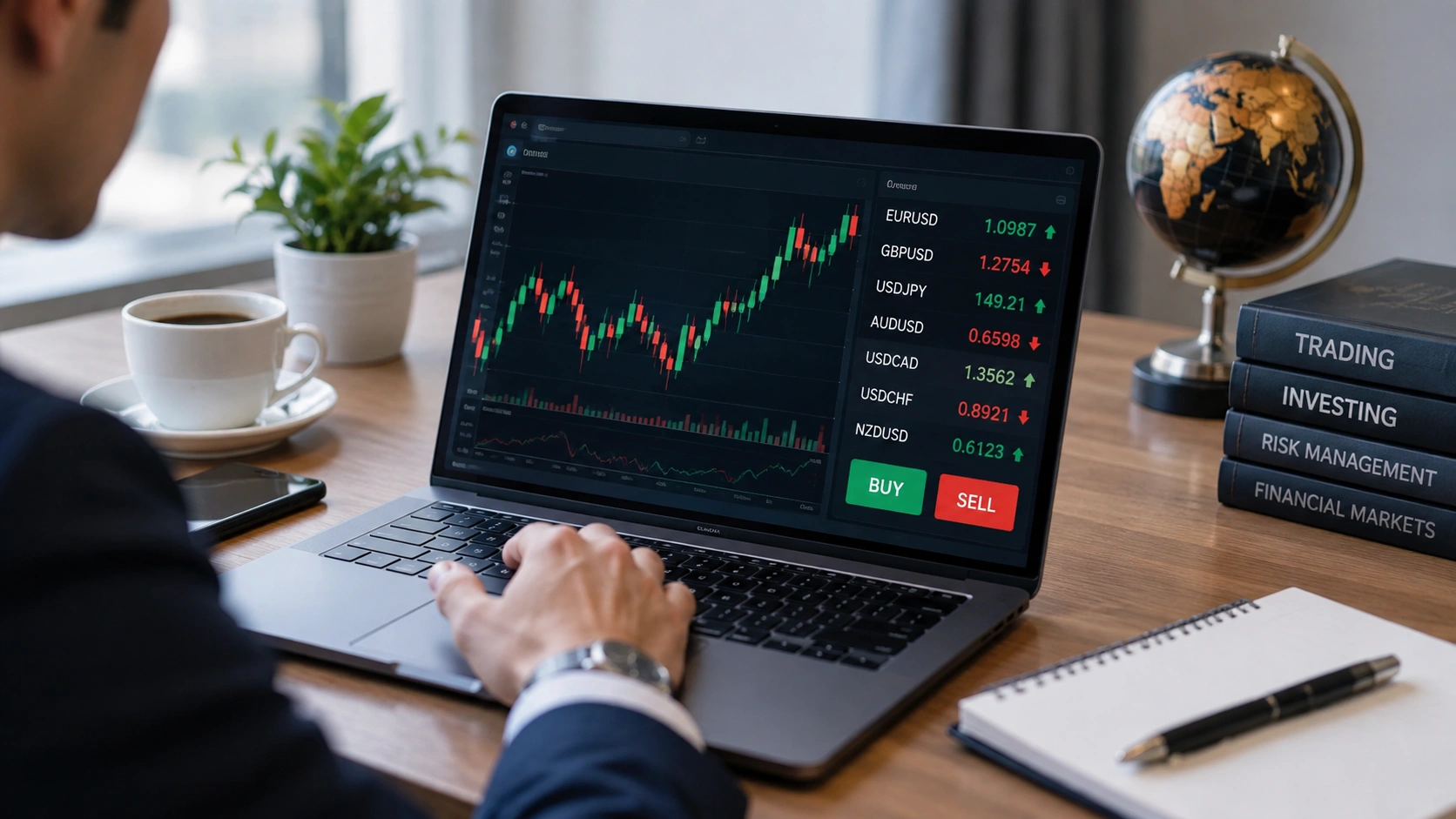
Choosing the right forex broker is one of the most important decisions for anyone interested in currency trading. A broker provides access to the foreign exchange market, where traders buy and sell currency pairs such as EUR/USD, GBP/USD, and USD/JPY. However, not every broker offers the same level of safety, pricing, technology, or customer support. Some focus on beginners, while others provide advanced tools for experienced traders. Understanding how brokers operate can help you avoid unnecessary costs and poor trading conditions. This guide explains the main features to compare, the risks to understand, and the questions to ask before opening a trading account.
What Is a Forex Broker?
A forex broker is a company that gives traders access to the currency market through a trading platform. Most individual traders cannot connect directly to global currency liquidity providers, so a broker acts as the link between the trader and the market. Depending on its business model, the broker may execute trades through external liquidity providers, match orders internally, or use a combination of both methods. The broker usually earns money through spreads, commissions, financing charges, or other account fees.
For example, when a trader opens a position on EUR/USD, the broker displays a buying price and a selling price. The difference between these prices is called the spread. A reliable broker should explain how orders are executed, what fees apply, and how client funds are handled. Before choosing a provider, beginners should also read the broker’s legal documents, risk warnings, and account terms instead of relying only on advertisements or online reviews.
Why Regulation Matters When Choosing a Forex Broker
Regulation is one of the strongest trust signals to check before depositing money. A regulated broker must usually follow rules covering client funds, financial reporting, risk controls, advertising, and complaint handling. Regulatory standards differ between countries, so traders should verify the exact legal company name, license number, and regulator listed on the broker’s official website. A brand name alone is not enough because some companies operate through different legal entities in different regions.
Traders should also understand that regulation does not remove market risk. Even a regulated company cannot guarantee profits or prevent every trading loss. However, proper oversight may provide stronger safeguards than dealing with an unknown or unlicensed provider. Useful internal resources such as a guide to trading scams, a beginner’s risk-management article, or an explanation of financial regulation can help readers understand why verification matters before account registration.
Trading Costs: Spreads, Commissions, and Hidden Fees
Trading costs can significantly affect long-term results, especially for people who place many trades. The spread is the difference between the bid and ask price, while a commission may be charged separately on each trade. Some accounts advertise very low spreads but apply higher commissions, while other accounts offer commission-free trading with wider spreads. The best choice depends on the trader’s strategy, position size, and trading frequency rather than on one advertised number.
Other costs may include overnight financing, currency conversion charges, inactivity fees, withdrawal fees, and account maintenance charges. A trader holding a position for several days may pay more attention to swap rates than to a small difference in the spread. Before selecting a forex broker, compare the complete fee schedule and calculate the likely cost of a typical trade. A simple trading-cost comparison guide can help beginners understand how small charges may accumulate over time.
Trading Platforms and Available Tools
A trading platform is the software used to study charts, place orders, manage positions, and review account activity. Many brokers offer desktop platforms, browser-based systems, and mobile applications. Beginners may prefer a clean interface with simple order controls, while experienced traders may need advanced charting, automated strategies, economic calendars, and technical indicators. Platform speed and stability are also important because delays can affect order execution during fast market movements.
A good platform should make it easy to view spreads, monitor margin, set stop-loss orders, and understand open positions. Traders should test the platform through a demo account before using real money. This allows them to practice order placement and become familiar with features without taking immediate financial risk. Articles about technical analysis, trading indicators, and demo-account practice can provide useful background for readers who are still learning how currency platforms work.
Account Types, Leverage, and Margin
Forex brokers often offer different account types to meet the needs of various traders. Standard accounts may suit ordinary retail traders, while professional or raw-spread accounts may provide different pricing and minimum deposit requirements. Some brokers also offer Islamic accounts, swap-free arrangements, or accounts designed for automated trading. The availability and conditions of these accounts depend on the trader’s country and the broker’s legal entity. For more: Gold Price News: Latest Rates, Market Trends and Analysis
Leverage allows traders to control a larger position with a smaller amount of deposited money. Although leverage can increase potential returns, it also increases potential losses and may cause a position to close quickly when the market moves against the trader. Margin is the amount of money required to maintain a leveraged position. Beginners should use leverage carefully, understand margin calls, and avoid treating a high leverage limit as a reason to trade larger positions. A position-sizing calculator and risk-per-trade guide can support safer decisions.
Deposit and Withdrawal Security
A trustworthy broker should provide clear information about deposits and withdrawals. Common payment methods may include bank transfers, cards, and approved online payment services, but available options vary by location. Traders should check processing times, minimum withdrawal amounts, fees, and identity verification requirements before opening an account. It is also sensible to make a small test withdrawal before committing a large amount of money.
Client money handling is another important consideration. Some regulated brokers are required to keep eligible client funds separate from company operating funds. Traders should read the broker’s policy to understand whether this protection applies to their account and legal region. Be cautious if a company pressures customers to deposit more money, promises guaranteed returns, or makes withdrawals unusually difficult. A practical guide to recognizing investment fraud can help readers identify warning signs before they become serious problems.
Customer Support and Trade Execution
Customer support becomes especially important when a trader experiences a technical issue, delayed withdrawal, account restriction, or unexpected trading problem. A reliable broker should offer clear contact methods, reasonable response times, and useful answers from trained staff. Support may be available through live chat, email, or telephone, depending on the provider. Traders should test customer service with basic questions before depositing funds.
Trade execution is equally important because the displayed price may change between the moment an order is placed and the moment it is filled. This difference is known as slippage. Slippage can be positive or negative, depending on market conditions. During major economic announcements, spreads may widen and execution may become less predictable. Traders should review the broker’s execution policy, order types, and slippage disclosures. Learning how economic news affects currency markets can make these conditions easier to understand.
How Beginners Can Compare Forex Brokers
Beginners should compare brokers using a consistent checklist instead of choosing the company with the most attractive advertisement. Regulation, total trading costs, platform quality, withdrawal procedures, customer support, and educational resources should all be reviewed. It is also important to confirm that the broker accepts clients from the trader’s country and offers the currency pairs they intend to trade. A broker may be well known internationally but unsuitable for a specific location or trading style.
A sensible comparison process can include the following steps:
- Verify the broker’s legal company and regulatory status.
- Read the full spread, commission, and financing schedule.
- Open a demo account and test the trading platform.
- Review deposit, withdrawal, and identity-check procedures.
- Confirm available currency pairs and order types.
- Check customer support before making a deposit.
- Start with a small amount only after understanding the risks.
Common Mistakes to Avoid When Selecting a Broker
One common mistake is choosing a broker solely because it offers high leverage or a large welcome bonus. These features may attract attention, but they do not prove that the company provides safe or efficient trading conditions. Another mistake is ignoring the difference between the broker’s brand and its actual legal entity. Traders should always check which company holds their account and which regulator supervises that entity.
Some beginners also focus only on spreads and overlook withdrawal rules, platform stability, or overnight charges. Others begin trading with borrowed money or use large positions before they understand margin. A more responsible approach is to start with a demo account, create a written trading plan, and risk only money that can be lost without affecting essential expenses. Readers can also explore internal content about trading psychology, financial planning, and risk control to build stronger habits before using real funds.
Frequently Asked Questions
What does a forex broker do?
A forex broker provides access to the currency market and allows traders to buy or sell currency pairs through a trading platform. The broker may earn income from spreads, commissions, financing charges, or other fees. Its services may also include charting tools, market information, account management, and customer support.
How can I check whether a forex broker is regulated?
Visit the broker’s official website and identify its exact legal company name and license number. Then check that information directly on the website of the stated financial regulator. Do not rely only on logos, online advertisements, or third-party claims because fake regulatory details can be used by dishonest companies.
How much money do I need to start forex trading?
The minimum deposit depends on the broker and account type. Some providers allow small deposits, but a low minimum does not mean trading is low risk. Traders should begin with an amount they can afford to lose and should avoid using essential savings, emergency funds, or borrowed money.
Is a forex broker responsible for my trading profits?
No. A broker provides market access and trading services, but it cannot guarantee profits. Currency prices can change quickly because of interest rates, inflation, economic data, political events, and market sentiment. Every trader remains responsible for position size, leverage, risk management, and trading decisions.
Should beginners use a demo account first?
Yes. A demo account allows beginners to practice placing orders, using charts, setting stop-loss levels, and managing positions without risking real money. It also helps traders test platform features and understand spreads or slippage. However, demo results may differ from live trading because emotions and execution conditions are different.
Conclusion
Choosing the right forex broker requires more than comparing advertisements or looking for the lowest spread. Regulation, transparent fees, secure withdrawals, reliable platforms, customer support, and sensible leverage should all be part of the decision. Beginners can reduce avoidable mistakes by verifying the broker’s legal status, testing a demo account, and learning how margin and trading costs work. No broker can eliminate market risk, but a carefully selected provider can offer clearer conditions and better tools for responsible trading. Take time to compare your options, read the account terms, and begin with a realistic risk-management plan.

1 Comment