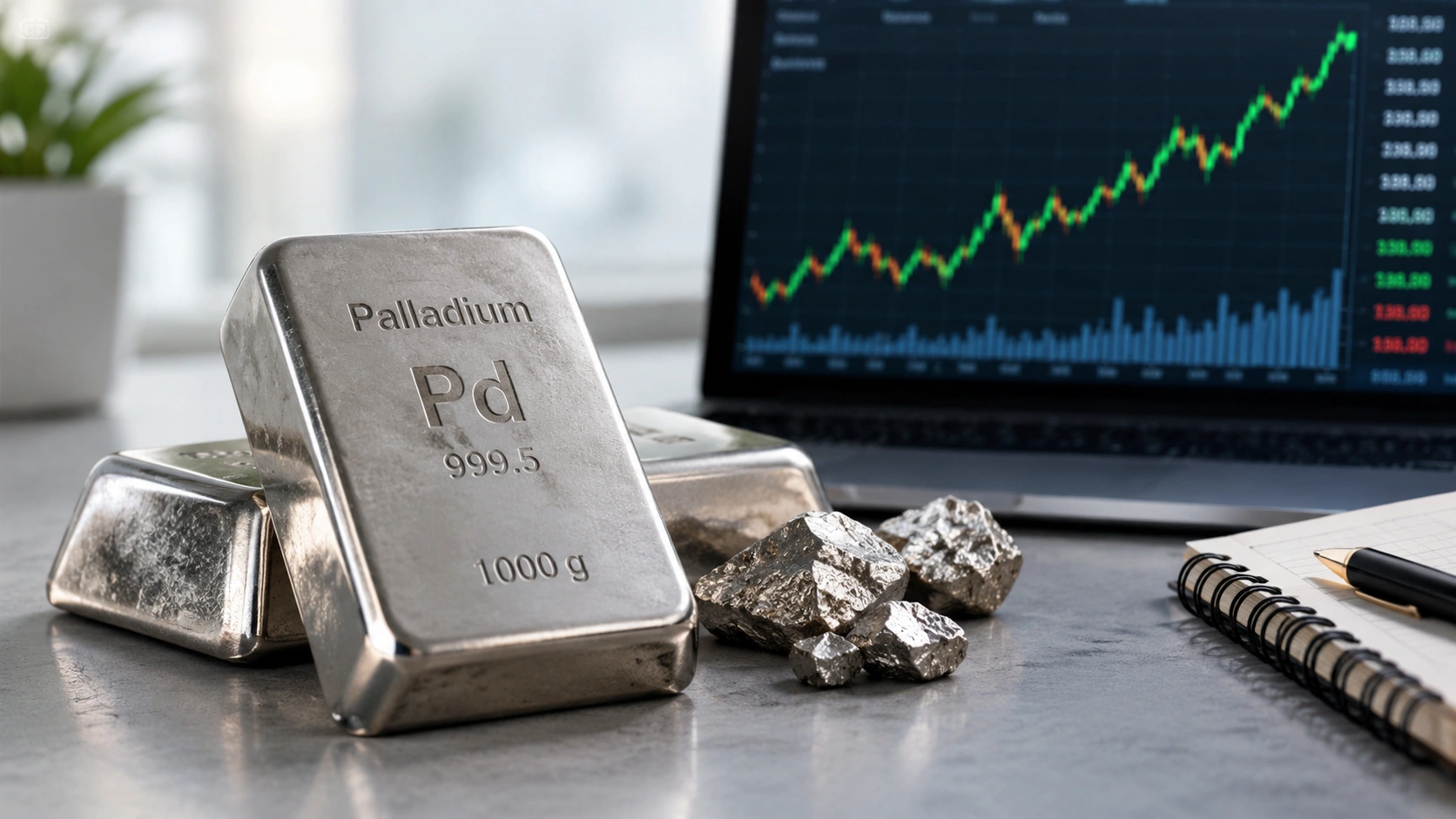
The palladium price today is closely watched by investors, traders, jewelers, and industries that use the metal in manufacturing. On October 1, 2026, live market sources showed palladium trading around $1,180–$1,210 per troy ounce, depending on the source and exact market timestamp. Kitco reported a bid price of $1,190 per ounce early in the day, while other live spot-price sources showed slightly different quotes.
These differences are normal because precious-metal prices move continuously and different providers may use different feeds, timestamps, bid prices, ask prices, or market references. For anyone checking the palladium price today, the exact time of the quote is therefore important. Retail buyers may also pay premiums above the underlying spot price.
Latest Palladium Price Per Ounce
Kitco’s live palladium page showed a $1,190 bid price per troy ounce at 12:25 a.m. EDT on October 1, 2026, with an ask price of $1,230. The quoted bid had increased by $2, or 0.17%, at that timestamp. Kitco also showed a day’s range of approximately $1,175 to $1,231 per ounce.
Another live market source listed palladium at approximately $1,182.92 per troy ounce at 5:09 a.m. ET, while a separate spot-price source showed $1,211.50 at 1:22 a.m. ET. These variations demonstrate why live commodity prices should always be checked with their timestamp and pricing methodology before making a trading or purchasing decision.
Palladium Price Per Gram
Because a troy ounce contains approximately 31.103 grams, the international palladium market price can also be converted into a price per gram. GoldPrice.com reported approximately $38.03 per gram when palladium was quoted at $1,182.92 per troy ounce on October 1, 2026. This conversion represents the value of the metal itself before dealer premiums, fabrication costs, taxes, shipping, or other charges are added.
For example, someone purchasing a physical palladium product should not expect the final retail price to equal the spot price multiplied simply by its weight. Coins, bars, and other products can carry dealer premiums. The amount paid can therefore be noticeably different from the headline palladium price today, especially for smaller purchases.
What Is Driving Palladium Prices?
Palladium prices are influenced by a combination of industrial demand, mine supply, recycling, currency movements, interest rates, investor sentiment, and developments in the automotive sector. Palladium has historically had strong exposure to automobile manufacturing because it is widely used in catalytic converters for gasoline-powered vehicles.
Market conditions can change quickly when expectations about vehicle production, emissions regulations, or substitution between platinum-group metals shift. Supply is also important because palladium production is concentrated in a relatively small number of producing regions. Disruptions involving mining, trade, transportation, or geopolitics can therefore have an outsized impact on market expectations.
Palladium and the Automotive Industry
The automotive sector remains one of the most important sources of palladium demand. The metal is used in catalytic converters to help reduce harmful emissions from gasoline engines. Changes in global vehicle production can therefore influence physical demand for palladium and affect market sentiment.
At the same time, the growing use of battery-electric vehicles has created a long-term question for palladium demand because fully electric vehicles do not require traditional catalytic converters. However, hybrid and internal-combustion vehicles continue to use emissions-control systems. This means the relationship between vehicle technology and palladium demand is more complicated than simply comparing electric and gasoline-powered cars.
Palladium Supply and Mining
Palladium supply comes primarily from mining operations that produce the metal either as a primary product or alongside other platinum-group metals and base metals. Russia and South Africa have historically been among the major sources of global palladium supply, making geopolitical developments and mining conditions important factors for the market.
Mining output cannot always respond quickly to changes in price. Developing or expanding a mine can require significant capital and many years of planning. Recycling provides another source of supply, particularly from used automotive catalytic converters. Changes in recycling rates can therefore influence the balance between palladium supply and demand.
Palladium vs. Platinum
Palladium and platinum are both platinum-group metals with important industrial applications, but their markets are not identical. They can sometimes substitute for each other in particular automotive and industrial applications, meaning that large price differences between the metals can influence manufacturers’ decisions about material usage.
Recent market conditions have shown significant volatility in both metals. Reuters reported on October 1 that spot palladium had fallen 1.7% to $1,183.30 per ounce, while platinum was around $1,711.60. The figures illustrate the substantial price difference between the two metals at that point in the market.
Why Does the Palladium Price Change So Quickly?
Palladium is a relatively specialized precious and industrial metal, so changes in supply expectations or industrial demand can produce significant price movements. Unlike some larger financial markets, palladium can experience periods of relatively limited liquidity, which can amplify short-term moves. For more: Highest Dividend Stocks: What Investors Should Know
Macroeconomic factors can also matter. Changes in interest-rate expectations, bond yields, the U.S. dollar, and broader investor risk sentiment can influence precious metals. Recent precious-metal trading has been affected by changing expectations for Federal Reserve policy, energy prices, inflation, and geopolitical developments.
Palladium Price Today and Investment Demand
Investors can gain exposure to palladium through physical bars and coins, exchange-traded products, futures, and companies involved in palladium or platinum-group-metal mining. Each approach has different costs and risks. Physical metal can involve storage and dealer premiums, while futures can involve leverage and significant price risk.
Palladium should not automatically be treated as a traditional safe-haven asset simply because it is a precious metal. Its substantial industrial use means economic activity and manufacturing trends can be particularly important. Investors researching palladium should therefore consider both its precious-metal characteristics and its role as an industrial commodity.
How to Track the Palladium Price Today
For an accurate market check, look at a live spot-price source and note the exact time of the quote. Compare the bid and ask rather than relying on a single displayed number. It is also useful to examine the daily range and recent price chart to understand whether the current quote represents a short-term move or part of a broader trend.
When researching palladium, contextual information such as precious metal prices, platinum prices, gold market trends, and commodity market news can provide useful background. These related indicators can help explain why palladium is moving instead of treating every daily price change as an isolated event.
Is Palladium a Good Investment?
Whether palladium is suitable for an investor depends on the person’s objectives, time horizon, risk tolerance, and understanding of commodity markets. Palladium can experience sharp price swings, and its industrial exposure means that changes in automobile production and technology can have an important effect on demand.
Historical performance also should not be treated as a guarantee of future returns. A recent market report noted that palladium had experienced substantial gains in 2025 before facing renewed volatility in 2026. Supply conditions, tariffs, automotive demand, and investment flows remain important considerations when evaluating the market.
Frequently Asked Questions
What is the palladium price today?
On October 1, 2026, live sources were quoting palladium around $1,180–$1,210 per troy ounce, with differences depending on the provider and timestamp.
What is palladium worth per gram?
At a spot price of $1,182.92 per ounce, palladium was approximately $38.03 per gram on October 1, 2026.
Why is palladium valuable?
Palladium is valuable because it has important industrial applications, particularly in vehicle emissions-control systems, as well as uses in electronics, chemicals, and other industries.
Will palladium prices rise?
Future prices cannot be known with certainty. Supply, automotive demand, recycling, substitution, economic conditions, currency movements, and investor sentiment can all affect palladium.
Is palladium more expensive than platinum?
Not at the October 1, 2026 prices reported by Reuters. Palladium was around $1,183 per ounce, while platinum was approximately $1,712 per ounce.
Conclusion
The palladium price today remains sensitive to industrial demand, automotive trends, mining supply, recycling, geopolitical developments, and broader financial-market conditions. On October 1, 2026, live sources placed the spot market roughly in the $1,180–$1,210-per-ounce area, although prices changed throughout the trading session.
For anyone following palladium, the most useful approach is to check a live quote alongside market fundamentals rather than focusing on one price alone. Monitoring supply, demand, platinum-group metals, automotive trends, and broader commodity markets can provide better context for understanding future price movements.