

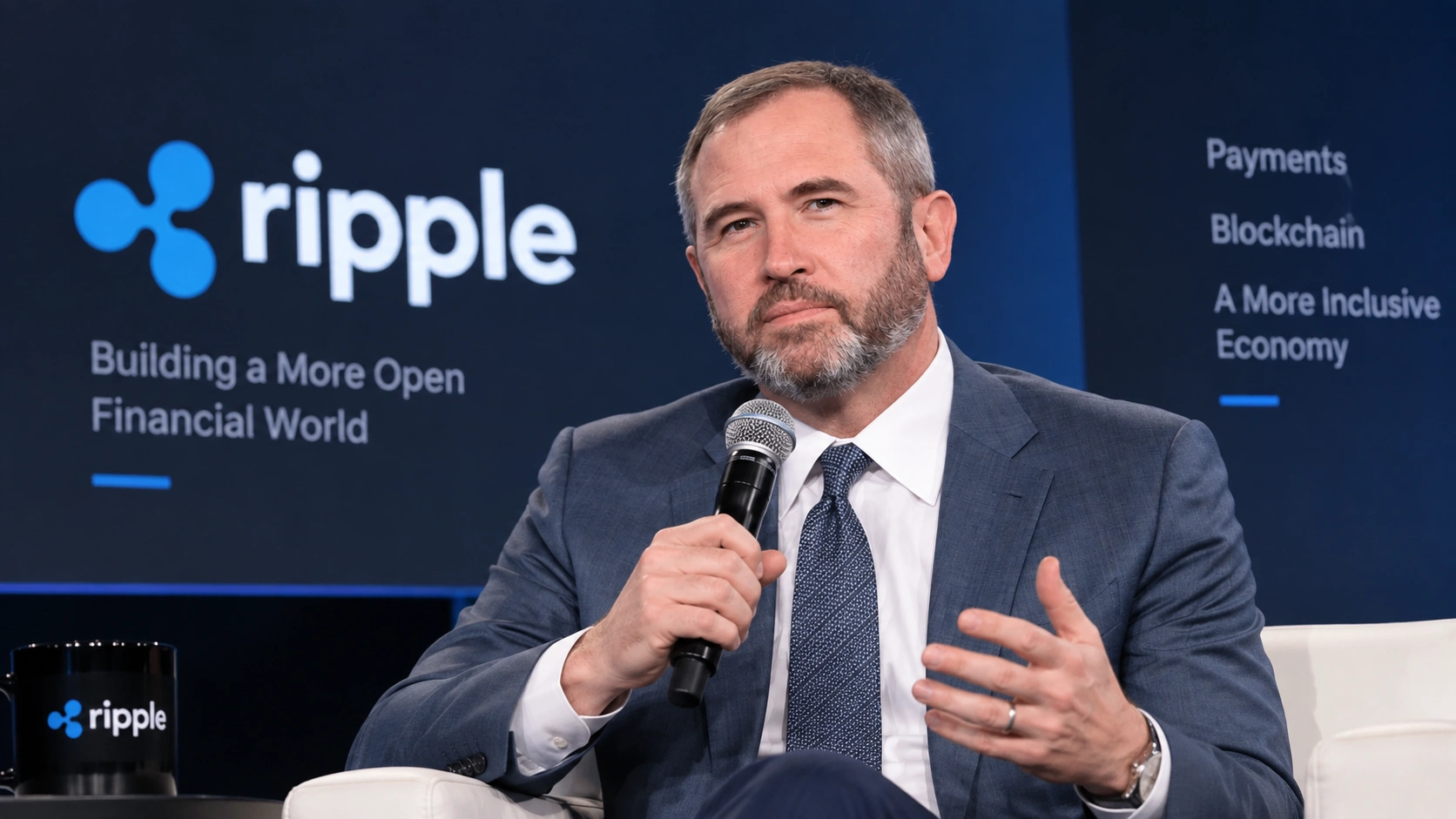
Brad Garlinghouse is an American technology executive best known as the Chief Executive Officer of Ripple, a company focused on blockchain and digital-asset solutions for financial institutions. He joined Ripple in 2015 as its first Chief Operating Officer and became CEO in January 2017. Before Ripple, he held senior positions at Yahoo!, AOL, Hightail, and other technology companies. Ripple’s current leadership page continues to list him as CEO.
Garlinghouse has become a recognizable figure in the cryptocurrency industry because of his role in expanding Ripple’s institutional business and publicly discussing digital-asset regulation, cross-border payments, and XRP. His career combines traditional Silicon Valley management experience with leadership in the rapidly changing blockchain sector.
Who is Bradley Garlinghouse ? A brief biography
| Category | Information |
|---|---|
| Full Name | Bradley Kent Garlinghouse |
| Profession | Business executive and technology leader |
| Nationality | American |
| Known For | CEO of Ripple |
| Current Role | Chief Executive Officer of Ripple |
| Industry | Fintech, blockchain, and cryptocurrency |
| Company | Ripple |
| Previous Role | President and COO of Hightail |
| Previous Company | Yahoo! |
| Education | Bachelor’s degree from the University of Kansas |
| Leadership Focus | Blockchain technology and global payments |
| Known For | Leading Ripple’s growth and advocacy for blockchain-based payments |
Early Life, Education and Business Background
Brad Garlinghouse built his career in technology and business before entering the cryptocurrency industry. Ripple’s biography from his appointment as COO states that he earned a Bachelor of Arts from the University of Kansas and an MBA from Harvard Business School. His education gave him a foundation in business management before he moved into senior technology and internet-industry positions.
His early professional experience included business development work at @Home Network and a role as a partner at @Ventures. He later spent six years at Yahoo!, where he held several senior positions. He also became President of Applications and Commerce at AOL and later served as CEO of Hightail, then known as YouSendIt. These positions gave him experience in managing technology businesses, products, teams, and growth before he joined Ripple.
The Yahoo! “Peanut Butter Manifesto”
Garlinghouse became particularly well known in the technology industry because of a 2006 Yahoo! memo that later became known as the “Peanut Butter Manifesto.” In the memo, he criticized what he viewed as Yahoo’s tendency to spread resources across too many initiatives instead of concentrating on its strongest opportunities. Ripple later highlighted the memo when introducing him to the company in 2015.
The episode became an important part of his professional reputation because it demonstrated his willingness to speak openly about organizational strategy. At Ripple, he brought a similar emphasis on focus, execution, and company culture. His earlier technology career therefore provides useful context for understanding the management style he later applied to a blockchain company.
Brad Garlinghouse and Hightail
Before joining Ripple, Garlinghouse served as CEO of Hightail, a company previously known as YouSendIt. Hightail operated in the online file-sharing and collaboration space, giving Garlinghouse experience in running a technology company outside the financial sector. Ripple stated when announcing his appointment that he had doubled Hightail’s revenue in a highly competitive market.
This experience was significant because Ripple was also attempting to turn an emerging technology into a commercially useful enterprise. Managing a technology company requires more than understanding its underlying product. It involves sales, hiring, partnerships, customer relationships, operations, and long-term strategy. Garlinghouse brought that broader management experience to Ripple when he joined the company in 2015.
Joining Ripple in 2015
In April 2015, Ripple Labs announced Garlinghouse as its first Chief Operating Officer. The company said his responsibilities would include helping advance its business execution and growth. At that point, Ripple was developing its vision of an “Internet of Value,” focused on making the movement of money more efficient through distributed financial technology.
Garlinghouse’s appointment marked a major step in his transition from mainstream technology companies to blockchain. He was not coming from a traditional banking background. Instead, he brought years of experience from Silicon Valley and internet businesses to a company attempting to build new infrastructure for global payments.
Brad Garlinghouse Becomes Ripple CEO
In November 2016, Ripple announced that Garlinghouse would succeed Chris Larsen as CEO, effective January 1, 2017. Before becoming CEO, Garlinghouse had served as Ripple’s president and chief operating officer for more than a year and a half. Ripple credited him with helping expand the organization’s operations and customer adoption during that period.
As CEO, Garlinghouse became the public face of Ripple during a period when blockchain technology was moving from a specialized technology field into mainstream financial discussions. His role involved overseeing business strategy while representing Ripple in conversations with financial institutions, regulators, investors, and the wider technology community.
Leadership at Ripple
Under Garlinghouse, Ripple has continued developing products aimed at institutional financial services. Ripple’s current leadership page identifies him as CEO, with Monica Long serving as president and other executives overseeing finance, legal, treasury, business development, and related functions. For more: Benjamin Cowen: Crypto Analyst, Career and Into The Cryptoverse
His leadership has also involved expanding Ripple internationally. For example, Ripple announced in 2022 that it was establishing a Toronto engineering hub, initially planning to hire 50 engineers with the intention of expanding the team further. In 2025, Ripple also announced approval from the Dubai Financial Services Authority to provide regulated crypto payments and services in the Dubai International Financial Centre.
Brad Garlinghouse and XRP
Brad Garlinghouse is closely associated with XRP because Ripple has developed financial products that can use the digital asset for payments and liquidity. XRP is the native digital asset of the XRP Ledger, while Ripple is a separate company that develops enterprise blockchain and digital-asset products. Understanding this distinction is important when researching the relationship between Garlinghouse, Ripple, and XRP.
Ripple has described XRP as an asset that can be used in payment solutions to provide liquidity between currencies. For example, Ripple’s description of its On-Demand Liquidity product explains that XRP can be used to settle cross-border transactions without requiring customers to maintain pre-funded capital in destination markets.
Ripple’s Focus on Institutional Payments
A major part of Garlinghouse’s leadership has involved positioning blockchain technology as infrastructure for financial institutions. Ripple has promoted solutions designed to support cross-border payments, treasury operations, digital assets, and other institutional financial services. This strategy differs from a business model focused primarily on retail cryptocurrency trading.
The company’s approach has expanded over time. In 2024, Ripple announced plans for a U.S.-dollar-backed stablecoin, describing it as another way to connect traditional finance with digital assets. Ripple said the stablecoin would be backed by dollar deposits, short-term U.S. government Treasuries, and other cash equivalents, with monthly attestations planned.
Brad Garlinghouse and the SEC Lawsuit
One of the most important periods of Garlinghouse’s career at Ripple was the company’s legal dispute with the U.S. Securities and Exchange Commission. The SEC filed its lawsuit against Ripple in December 2020, creating years of legal and regulatory uncertainty around the company’s XRP-related activities.
Garlinghouse became one of Ripple’s most visible representatives during the dispute. He repeatedly argued for greater regulatory clarity for the cryptocurrency industry. In March 2025, Ripple published his statement following the announcement that the SEC would drop its appeal, subject to Commission approval. Ripple described the development as concluding the more than four-year litigation.
Why the Case Mattered to the Crypto Industry
The Ripple-SEC dispute attracted attention well beyond the company itself because it involved questions about how U.S. securities laws apply to digital assets. The case became part of a much larger debate involving cryptocurrency companies, regulators, exchanges, investors, and policymakers.
Garlinghouse also publicly advocated for clearer rules governing blockchain and digital-asset businesses. In a 2019 open letter to Congress, he argued that digital currencies could complement existing currencies and called for regulatory treatment that recognized differences among digital assets and technologies.
Ripple’s Global Expansion Under Garlinghouse
International expansion has been another important part of Ripple’s strategy. The company has worked with financial institutions and businesses in multiple regions while developing products for cross-border payments and digital-asset infrastructure. Garlinghouse has regularly presented international markets as important areas for blockchain adoption.
A notable example came in Brazil, where Ripple announced the launch of its On-Demand Liquidity service with Travelex Bank in 2022. Ripple described Travelex as the first bank in Latin America to use ODL and explained that XRP could be used to facilitate cross-border settlement without pre-funded capital in the destination market.
Expansion Into the Middle East
The Middle East has also become an important region for Ripple. In March 2025, Ripple announced that it had received approval from the Dubai Financial Services Authority to provide regulated crypto payments and services within the Dubai International Financial Centre. Ripple described the approval as its first license in the Middle East.
This type of regulatory approval illustrates an important part of Ripple’s business strategy: working within regulated financial systems rather than treating blockchain as completely separate from traditional finance. For Garlinghouse, institutional adoption and regulatory engagement have remained recurring themes throughout his leadership of the company.
Brad Garlinghouse and Ripple’s Growth
Garlinghouse has overseen Ripple during a period of significant expansion in both its products and global operations. Ripple stated in 2024 that the company had more than 900 employees across 15 offices worldwide. The company also emphasized the development of blockchain and crypto expertise as it expanded its operations.
Ripple’s business has also expanded beyond its original focus on payment infrastructure. The company has made acquisitions in areas such as digital-asset custody and financial infrastructure. In 2023, Ripple announced its agreement to acquire Fortress Trust, following its acquisition of custody provider Metaco.
Expanding Beyond Payments
Ripple’s evolving business strategy shows how the institutional crypto industry has broadened. Instead of focusing on a single payment product, companies now operate across custody, stablecoins, tokenization, treasury services, liquidity, and other financial technologies.
In October 2025, Ripple announced a $1 billion acquisition of GTreasury, a company specializing in corporate treasury management systems. Ripple said the acquisition would expand its presence in the corporate treasury market. Garlinghouse described the deal as part of the company’s effort to address outdated money-movement infrastructure with blockchain technology.
Brad Garlinghouse’s Role in Crypto Regulation
Regulation has been one of Garlinghouse’s most consistent public subjects. His position has generally centered on the need for clearer rules that allow digital-asset businesses to operate while maintaining appropriate protections for consumers and financial markets.
His public statements should be understood as the perspective of a company executive with a direct interest in the regulatory environment affecting Ripple and its products. For readers researching cryptocurrency policy, it is useful to compare his statements with regulatory documents, legislation, court decisions, and independent analysis rather than relying on any single industry participant.
Public Advocacy and Industry Leadership
Garlinghouse has frequently spoken about the relationship between traditional finance and digital assets. His role includes representing Ripple at industry events and discussing subjects such as blockchain payments, institutional adoption, and the future of digital assets.
Ripple’s 2026 XRP Community Day, for example, included Garlinghouse in discussions about XRP’s use in financial infrastructure and capital markets. The event’s agenda also covered regulated products, ETFs, tokenized assets, and on-chain infrastructure.
What Is Brad Garlinghouse Known For?
Brad Garlinghouse is primarily known for his leadership of Ripple and his public role in discussions about blockchain payments and cryptocurrency regulation. His career before Ripple also contributes to his profile, particularly his senior positions at Yahoo!, AOL, and Hightail.
His career illustrates a transition from mainstream internet technology to blockchain and digital finance. For readers interested in the broader cryptocurrency industry, his story provides useful context for understanding how established technology executives became involved in digital assets and how blockchain companies have increasingly focused on institutional customers.
Why His Career Matters
Garlinghouse’s career is relevant to the development of the institutional side of cryptocurrency. His work has involved business strategy, international expansion, financial technology, regulatory policy, and digital assets. These areas increasingly overlap as banks and financial companies explore blockchain-based infrastructure.
Readers researching this subject can also explore related topics such as Ripple and XRP, XRP Ledger, crypto regulation, and cross-border payments. Looking at these subjects together provides a clearer picture of the technology and business environment in which Garlinghouse operates.
Frequently Asked Questions
Who is Brad Garlinghouse?
Brad Garlinghouse is the CEO of Ripple, a blockchain and digital-asset technology company. He joined Ripple in 2015 and became CEO in 2017.
What is Brad Garlinghouse known for?
He is best known for leading Ripple and representing the company in discussions about XRP, blockchain payments, institutional adoption, and cryptocurrency regulation.
What did Brad Garlinghouse do before Ripple?
He held senior positions at Yahoo! and AOL and served as CEO of Hightail. He also worked in business development and venture capital earlier in his career.
Is Brad Garlinghouse the founder of Ripple?
No. Ripple was co-founded by Chris Larsen and others. Garlinghouse joined Ripple later, first as COO and then as CEO.
What is Brad Garlinghouse’s connection to XRP?
Garlinghouse leads Ripple, a company whose financial products can use XRP for liquidity and cross-border payment applications. XRP itself is the native digital asset of the XRP Ledger.
Conclusion
Brad Garlinghouse has built a career spanning traditional technology companies, Silicon Valley leadership, fintech, and blockchain. His move from Yahoo!, AOL, and Hightail to Ripple placed him at the center of the growing institutional cryptocurrency industry. Since becoming Ripple CEO in 2017, he has focused on global expansion, financial infrastructure, digital assets, and regulatory engagement.
His career also provides a useful way to understand Ripple’s evolution. The company has expanded from its early focus on blockchain-based payment infrastructure into areas including stablecoins, custody, treasury technology, and broader institutional digital-asset services. For readers who want to explore the subject further, learning about Ripple, XRP, blockchain payments, and cryptocurrency regulation can provide valuable context around Brad Garlinghouse and his role in the industry.


1 Comment