

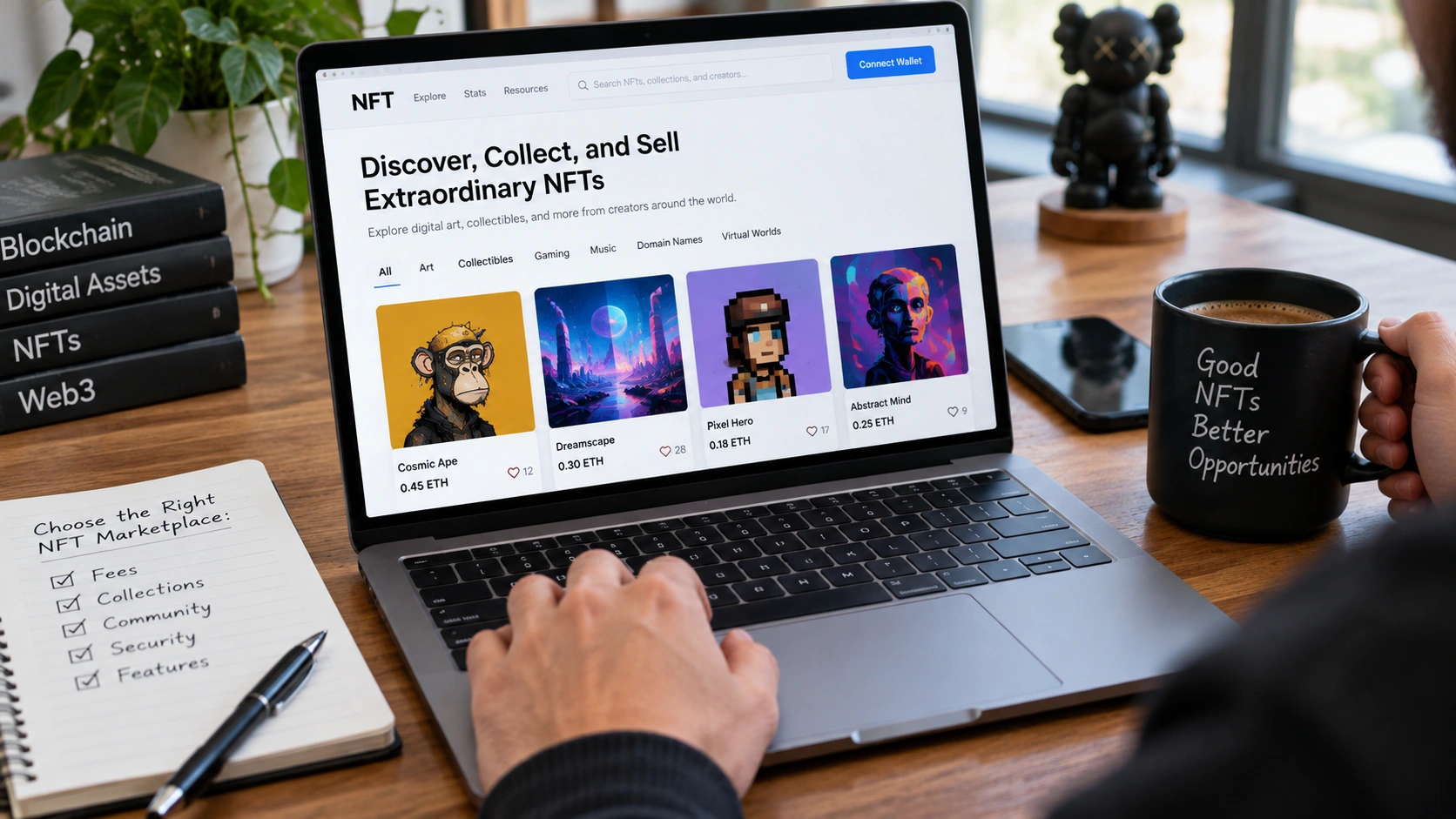
Finding the best NFT marketplace depends on what you want to do with NFTs. Some platforms are designed for beginners who want to browse and purchase digital collectibles, while others focus on professional trading, specific blockchains, gaming assets, or curated digital art. Marketplace fees, supported networks, wallet compatibility, creator royalties, liquidity, and security can also vary considerably. There is no single platform that is ideal for every NFT buyer or seller. The right choice depends on your experience, preferred blockchain, budget, and the type of NFT you want to trade. In this guide, we compare the most important factors to consider when choosing an NFT marketplace and explain how platforms such as OpenSea, Blur, Magic Eden, Tensor, and specialist marketplaces differ.
What Is an NFT Marketplace?
An NFT marketplace is an online platform where users can discover, buy, sell, and sometimes create or mint non-fungible tokens. NFTs are blockchain-based digital assets that can represent artwork, collectibles, gaming items, memberships, tickets, and other forms of digital ownership. Marketplaces provide an interface that makes it easier to find these assets and interact with the underlying blockchain.
The marketplace itself does not necessarily own the NFTs listed on its platform. Instead, blockchain technology records ownership and transactions, while the marketplace provides tools for listing, bidding, purchasing, and transferring assets. Depending on the platform, users may connect a crypto wallet or use an integrated wallet system. Understanding how NFT marketplaces work is important before comparing platforms because the marketplace interface is only one part of the overall NFT transaction.
How to Choose the Best NFT Marketplace
The best NFT marketplace for one person may not be the right choice for another. The first thing to consider is blockchain compatibility. If you already hold NFTs on Ethereum, for example, you may want a marketplace with strong Ethereum support. Someone interested in Solana NFTs may instead prioritize a platform focused on the Solana ecosystem.
Fees are another important consideration. A marketplace can charge platform fees, while the blockchain can separately charge network or gas fees. Creator earnings may also affect the final price or seller proceeds. These costs can change over time, so checking the marketplace’s current fee information before completing a transaction is important. For example, OpenSea currently states that it charges a 1% fee on NFT sales, while blockchain gas fees are separate and paid to network validators.
OpenSea for Multi-Chain NFT Trading
OpenSea is one of the most recognizable NFT marketplaces and has expanded its support across numerous blockchain networks. Its current blockchain documentation lists networks including Ethereum, Polygon, Arbitrum, Optimism, Avalanche, Base, Zora, Solana, and others. In August 2026, OpenSea also announced support for Solana NFTs, adding them to its multi-chain NFT marketplace.
This broad network support can be useful for users who want to explore different NFT ecosystems without relying on a separate marketplace for every chain. OpenSea also provides tools for browsing collections, buying and selling NFTs, making offers, and creating collections. However, users should still check the exact fees and transaction requirements for the NFT and blockchain they are using. The platform’s fee structure can change, and gas costs are determined by the relevant blockchain rather than OpenSea itself.
Blur for Active NFT Traders
Blur is designed around active NFT trading and is particularly associated with the Ethereum NFT market. Instead of focusing primarily on a simple browsing experience, platforms like Blur emphasize trading tools, liquidity, bids, collection activity, and faster portfolio management. These features can be more relevant to experienced users who frequently buy and sell NFTs.
For a beginner, however, a professional trading interface can require more time to understand. Before choosing a platform based only on trading fees, consider the complete cost of a transaction, including gas, creator earnings, and other applicable charges. It is also important to distinguish between a platform’s advertised fee and the total cost of completing a blockchain transaction. If you are new to NFTs, learning about NFT gas fees and transaction costs can make marketplace comparisons much easier.
Magic Eden and the Solana NFT Ecosystem
Magic Eden has historically supported multiple blockchain ecosystems, but its marketplace strategy changed significantly during 2026. According to its June 2026 service update, Magic Eden ended marketplace support for EVM chains and Bitcoin on March 9, 2026, while continuing to support its Solana Marketplace and Packs.
This makes checking current platform support especially important when researching the best NFT marketplace. Magic Eden’s current documentation identifies Solana as a supported blockchain for NFT transactions and also describes payment options that can include fiat or card purchases through third-party providers such as Crossmint. If your primary interest is Solana NFTs, examining the available collections, liquidity, fees, wallet compatibility, and marketplace tools can help you determine whether Magic Eden fits your needs.
Tensor and Specialized NFT Trading
Some NFT marketplaces concentrate heavily on particular blockchain ecosystems rather than trying to serve every type of NFT buyer. Tensor is an example associated with Solana NFT trading and is often considered by users who want specialized tools for that ecosystem. Specialized platforms can offer interfaces and trading features designed around the behavior of their target community.
The advantage of a specialized marketplace is that its tools may be closely aligned with the blockchain and collections you actually use. The trade-off is that you may need another marketplace when you move to a different ecosystem. This is why choosing the best NFT marketplace should start with your preferred blockchain and NFT category rather than a generic popularity ranking. A useful internal guide about Solana NFTs can also help beginners understand the ecosystem before making purchases.
NFT Marketplace Fees and Royalties
Fees can have a major effect on the real cost of buying or selling an NFT. Marketplace fees are only one possible expense. Buyers and sellers may also encounter blockchain gas fees, creator earnings, payment-provider charges, or other transaction-related costs. These expenses can differ according to the blockchain, transaction type, marketplace, and collection. For more: What Is a Wallet Address? A Beginner’s Guide
For example, OpenSea currently lists a 1% NFT selling fee and explains that gas fees are paid to blockchain validators rather than to OpenSea. Its documentation also notes that creator earnings can apply to NFT transactions depending on the collection and transaction structure. This demonstrates why comparing marketplaces based only on a headline percentage can be misleading. Before completing a purchase, review the final checkout amount and understand which costs are included in the displayed NFT price.
Security and Wallet Protection
Security should be one of the first considerations when selecting an NFT marketplace. A legitimate marketplace should provide clear information about transactions, wallet connections, fees, and support. However, even a reputable platform cannot eliminate all risks associated with cryptocurrency. Users can still encounter phishing websites, fake collections, malicious links, impersonation accounts, and fraudulent NFT listings.
Wallet security is equally important. Never provide a private key or seed phrase to a marketplace, seller, buyer, or person claiming to offer technical support. OpenSea, for example, warns users about phishing attempts and states that it will not ask users to send funds to resolve a failed transaction. Before connecting a wallet, check the website address carefully and verify the NFT collection through reliable sources. For larger transactions, reviewing the contract address and transaction details can provide an additional layer of protection.
Best NFT Marketplace for Beginners
For beginners, simplicity can be more important than advanced trading tools. A new user should look for a marketplace with a clear interface, supported wallet options, understandable transaction information, and straightforward access to collection data. It is also useful to choose a platform that supports the blockchain you already understand.
A beginner should not select a marketplace simply because it advertises low fees. A platform with a lower marketplace fee may still involve blockchain gas costs, creator earnings, or other expenses. Start with a small transaction, learn how listings and offers work, and confirm the NFT collection before purchasing. If you are completely new to digital assets, reading a beginner guide on how to buy NFTs safely before making your first purchase can help you avoid common mistakes.
Best NFT Marketplace for Creators
NFT creators should evaluate marketplaces differently from collectors. A creator may care about minting tools, collection management, royalties or creator earnings, smart-contract control, audience reach, discoverability, and the blockchain’s transaction costs. The marketplace’s reputation among collectors can also affect how easily potential buyers discover a collection.
Creators should also understand exactly what rights an NFT purchase provides. Owning an NFT does not automatically mean owning the copyright to the artwork or receiving unlimited commercial rights. Those rights depend on the terms established by the creator or collection. Marketplace documentation may provide information about the NFT, but users should review the creator’s terms before making assumptions about intellectual property or usage rights.
Common Mistakes When Choosing an NFT Marketplace
One common mistake is choosing a marketplace solely because it appears popular. Popularity does not necessarily mean that it supports the blockchain, collection type, wallet, or trading strategy you need. Another mistake is ignoring total transaction costs. A low platform fee can still be accompanied by substantial network fees or other charges depending on market conditions.
Another problem is failing to verify an NFT collection. Fake collections can imitate the names, artwork, and branding of legitimate projects. Before buying, check the collection’s verified information where available, confirm its contract address through trusted sources, and investigate the creator or project. Avoid pressure to buy immediately because of claims about guaranteed profits or limited opportunities. A careful approach is generally more useful than chasing whichever marketplace appears most popular at a particular moment.
Frequently Asked Questions
What is the best NFT marketplace?
There is no single marketplace that suits every NFT user. The right choice depends on your preferred blockchain, NFT category, fees, wallet, liquidity needs, and trading experience.
Which NFT marketplace is best for beginners?
Beginners should generally prioritize simple interfaces, clear fees, strong wallet compatibility, and access to the blockchain they want to use. Understanding the transaction process is more important than choosing a platform based on popularity alone.
Which NFT marketplace has the lowest fees?
Fees vary by marketplace, blockchain, transaction type, and creator terms. Always compare the complete transaction cost rather than looking only at the advertised marketplace fee.
Can I sell NFTs on an NFT marketplace?
Yes. Many marketplaces allow creators and owners to list NFTs for sale, although the exact listing, minting, royalty, and transaction requirements differ between platforms.
Are NFT marketplaces safe?
Reputable marketplaces can provide useful security features, but users still face risks such as phishing, fake collections, malicious contracts, and wallet scams. Always verify websites, collections, and transaction details before signing.
Conclusion
Choosing the best NFT marketplace requires more than comparing platform names. Blockchain support, fees, liquidity, wallet compatibility, security, NFT categories, creator tools, and user experience can all influence whether a marketplace is suitable for you. OpenSea currently offers broad multi-chain support, while Magic Eden has shifted its marketplace focus toward Solana, and specialized platforms such as Blur and Tensor cater to particular trading environments.
Before buying or selling an NFT, compare the complete costs and make sure the marketplace supports the blockchain and wallet you intend to use. Take time to verify collections, understand gas fees, and protect your wallet credentials. For more practical guidance, explore related topics such as how NFTs work, how to buy NFTs, and crypto wallet security before making your first transaction.
1 Comment