

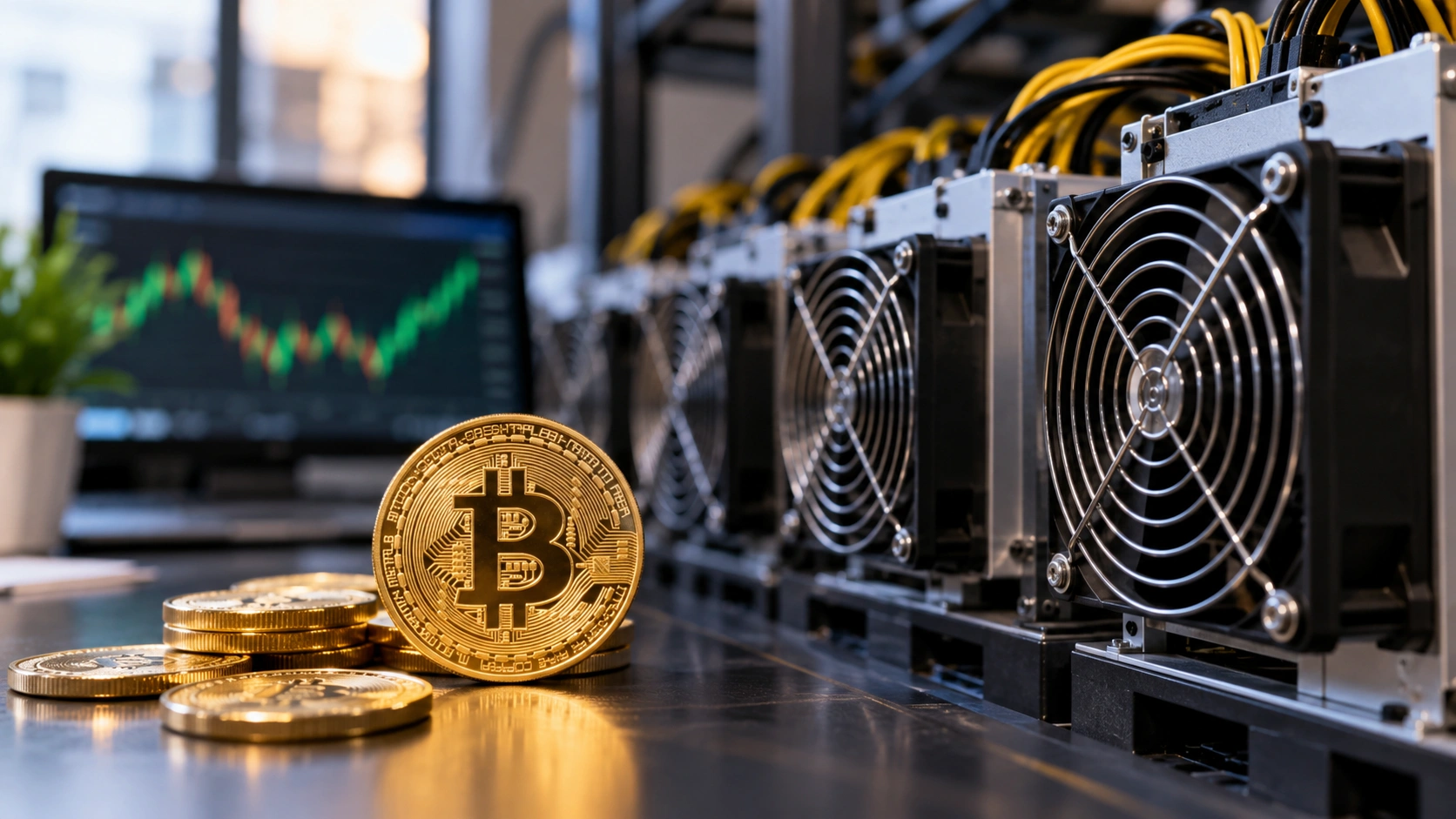
Bitcoin mining news is an important source of information for anyone interested in cryptocurrency, blockchain technology, or digital asset investments. Mining is the process that helps secure the Bitcoin network and adds new transactions to its blockchain. It is also a competitive industry where electricity costs, hardware efficiency, Bitcoin prices, and government policies can determine whether mining operations remain profitable. Recent developments show that miners are facing new challenges while exploring opportunities in artificial intelligence and high-performance computing. Understanding these changes can help beginners, investors, and mining operators make better decisions. This article explains the latest Bitcoin mining developments, the forces shaping profitability, and the trends that could influence the industry’s future.
Latest Bitcoin Mining News: What Is Happening in the Industry?
Recent Bitcoin mining news shows that the industry is experiencing a major shift in business strategy. Mining companies are no longer focusing only on producing Bitcoin. Many are also exploring artificial intelligence and high-performance computing because these businesses can generate additional revenue from existing data center infrastructure. The change is especially important as miners face higher operating costs and competition for computing resources.
The move toward AI does not mean Bitcoin mining is disappearing. Instead, companies are looking for ways to use their electricity connections, facilities, and technical expertise more efficiently. Some operators are expanding mining capacity, while others are redirecting investment toward AI services. This creates a more complex industry where Bitcoin production, computing demand, and energy availability are closely connected.
Bitcoin Mining Profitability and Market Conditions
Mining profitability depends on several factors, including the Bitcoin price, electricity costs, mining difficulty, and machine efficiency. When Bitcoin prices rise, miners may receive more revenue from the coins they produce. However, higher prices can also encourage more miners to join the network, increasing competition. This means a Bitcoin rally does not automatically translate into higher profits for every mining company.
Recent market reports show that Bitcoin miners have not always benefited as much as other crypto-related businesses during price recoveries. Mining companies must continue paying for electricity, maintenance, cooling, and equipment even when market conditions become difficult. For this reason, investors often examine mining costs and operational efficiency rather than looking only at Bitcoin’s market price.
Bitcoin Mining News: Hash Rate and Mining Difficulty
Bitcoin’s hash rate measures the total computing power being used to secure the network. A higher hash rate generally means more competition among miners, while a lower hash rate may indicate that some operators have reduced or stopped their activities. Mining difficulty adjusts periodically to help maintain Bitcoin’s target block production time, making the network more consistent even when the amount of computing power changes.
Recent mining reports indicate that some Bitcoin mining capacity has been taken offline as companies respond to changing profitability. At the same time, improving economics can encourage miners to restart equipment. These changes matter because they affect the competition for block rewards. Anyone following Bitcoin mining news should pay attention to hash rate, difficulty, and hash price together rather than relying on a single indicator.
The Impact of Bitcoin Halving on Mining Revenue
Bitcoin’s halving is one of the most important events in the mining industry. It reduces the number of new Bitcoin awarded to miners for successfully producing a block. The April 2024 halving reduced the block subsidy from 6.25 BTC to 3.125 BTC. This change placed additional pressure on mining companies because they needed to produce more efficiently or find ways to reduce their costs.
The effects of the halving can continue long after the event itself. Miners may need to upgrade their machines, negotiate cheaper electricity contracts, or reduce operations that are no longer profitable. Some companies also explore other computing businesses to diversify their income. The halving does not guarantee that Bitcoin’s price will rise, so mining operators must plan carefully for different market conditions.
Bitcoin Mining News: AI and High-Performance Computing
Artificial intelligence has become one of the biggest new themes in Bitcoin mining news. Mining companies already operate large facilities with electricity connections, cooling systems, and specialized infrastructure. Some are using these resources to support AI and high-performance computing, which can create new revenue opportunities. This strategy may be especially attractive when traditional Bitcoin mining margins become tighter. For more: Solana Price Prediction 2030: Future SOL Price Outlook
However, switching from Bitcoin mining to AI is not always simple. AI data centers often require different equipment, cooling systems, network connections, and customer contracts. Mining companies must also consider the cost of purchasing or financing GPUs. The success of this strategy depends on whether demand for computing services is strong enough to justify the investment.
Electricity Costs and Energy Management
Electricity is one of the most important expenses in Bitcoin mining. Specialized mining machines operate continuously, consuming large amounts of power while producing heat that must be removed through cooling systems. A mining facility with expensive electricity may struggle to remain profitable even when Bitcoin prices are relatively high. This is why miners often search for locations with competitive energy prices and reliable infrastructure.
Energy management is also becoming a major part of the industry’s public image. Mining operations may face concerns about electricity demand, water use, noise, and local infrastructure. A recent case in Oklahoma highlighted how problems at a Bitcoin mining facility can affect surrounding businesses and public services. Responsible operators need to follow permits, maintain equipment properly, and consider their impact on local communities.
Bitcoin Mining Hardware and Technology Trends
Mining hardware continues to influence the industry’s competitive landscape. Modern application-specific integrated circuit machines, commonly called ASICs, are designed to perform Bitcoin’s mining calculations efficiently. Newer machines may offer better energy efficiency, allowing operators to produce more computing power with less electricity. Hardware selection is therefore an important decision for both large mining companies and smaller operators.
Mining companies must also think about equipment lifespan and replacement costs. A machine that appears profitable today may become less competitive if electricity prices rise or network difficulty increases. Operators need to compare expected Bitcoin production with hardware costs, maintenance, and the time required to recover their investment. Efficient equipment can improve performance, but it cannot eliminate the risks of cryptocurrency market volatility.
Bitcoin Mining Regulations and Global Developments
Government policy can have a significant influence on where Bitcoin mining takes place. Rules covering electricity use, taxation, environmental standards, and digital assets may affect the cost of operating a mining facility. Some countries have welcomed mining investment, while others have introduced restrictions because of energy concerns or financial regulations. These differences can encourage companies to relocate their operations.
Recent developments also show that mining operations can face challenges even in countries with renewable energy resources. A Reuters investigation into Tether’s abandoned mining project in Uruguay highlighted how disagreements over electricity supply contributed to the collapse of a major investment. The case demonstrates that access to energy is not enough; mining companies also need reliable contracts, suitable infrastructure, and stable operating conditions.
How Bitcoin Mining News Affects Investors
Bitcoin mining news can influence investors in different ways. When miners report strong production, lower costs, or successful expansion, the information may improve market confidence. On the other hand, rising debt, falling revenue, or expensive equipment investments can create concerns about a company’s financial health. Investors should examine company reports and understand how mining businesses earn money before making decisions.
Mining stocks are not the same as Bitcoin itself. A mining company may face business risks that do not directly affect someone holding BTC, such as equipment financing, electricity contracts, employee costs, and share dilution. A company can also lose money even when Bitcoin prices increase. For this reason, investors should compare mining companies with the cryptocurrency itself and consider their own risk tolerance.
Frequently Asked Questions
What is Bitcoin mining news?
Bitcoin mining news covers developments affecting the Bitcoin mining industry. It includes updates about mining companies, hash rate, difficulty, hardware, electricity costs, regulations, and profitability. Following these topics can help readers understand how the industry is changing and what challenges miners may face.
Why is Bitcoin mining becoming more difficult?
Mining difficulty adjusts as the network’s computing power changes. When more miners participate, competition increases and the network adjusts difficulty to maintain its target block production time. This can make mining more expensive for individual operators, especially when electricity costs are high.
Is Bitcoin mining still profitable?
Bitcoin mining can be profitable, but the outcome depends on electricity prices, equipment efficiency, Bitcoin’s market price, and mining difficulty. Some operators earn profits while others may struggle. Profitability should be calculated using realistic costs rather than assuming that Bitcoin’s price alone determines earnings.
Why are Bitcoin miners moving into AI?
Some mining companies are exploring AI because they already own data centers, power connections, and computing infrastructure. AI services may provide another source of revenue when Bitcoin mining margins are under pressure. However, the transition requires suitable equipment, investment, and customer demand.
How can I stay updated with Bitcoin mining news?
Readers can follow reliable cryptocurrency news publications, mining company announcements, and official network data. It is helpful to compare information from multiple sources and check publication dates. Important developments should be evaluated carefully instead of relying only on social media headlines.
Conclusion
Bitcoin mining news continues to highlight an industry undergoing significant change. Mining companies are balancing Bitcoin production with rising operating costs, changing market conditions, and growing demand for AI computing. Hash rate, mining difficulty, electricity prices, and hardware efficiency remain important factors that influence profitability. Regulatory developments and energy management are also shaping where and how mining operations can grow.
For beginners and investors, understanding these trends is more valuable than focusing on one headline or short-term price movement. Follow reliable industry updates, examine the economics behind mining businesses, and consider the risks before making financial decisions. For more useful cryptocurrency insights, explore related articles on Bitcoin price trends, blockchain technology, and digital asset market developments.


1 Comment