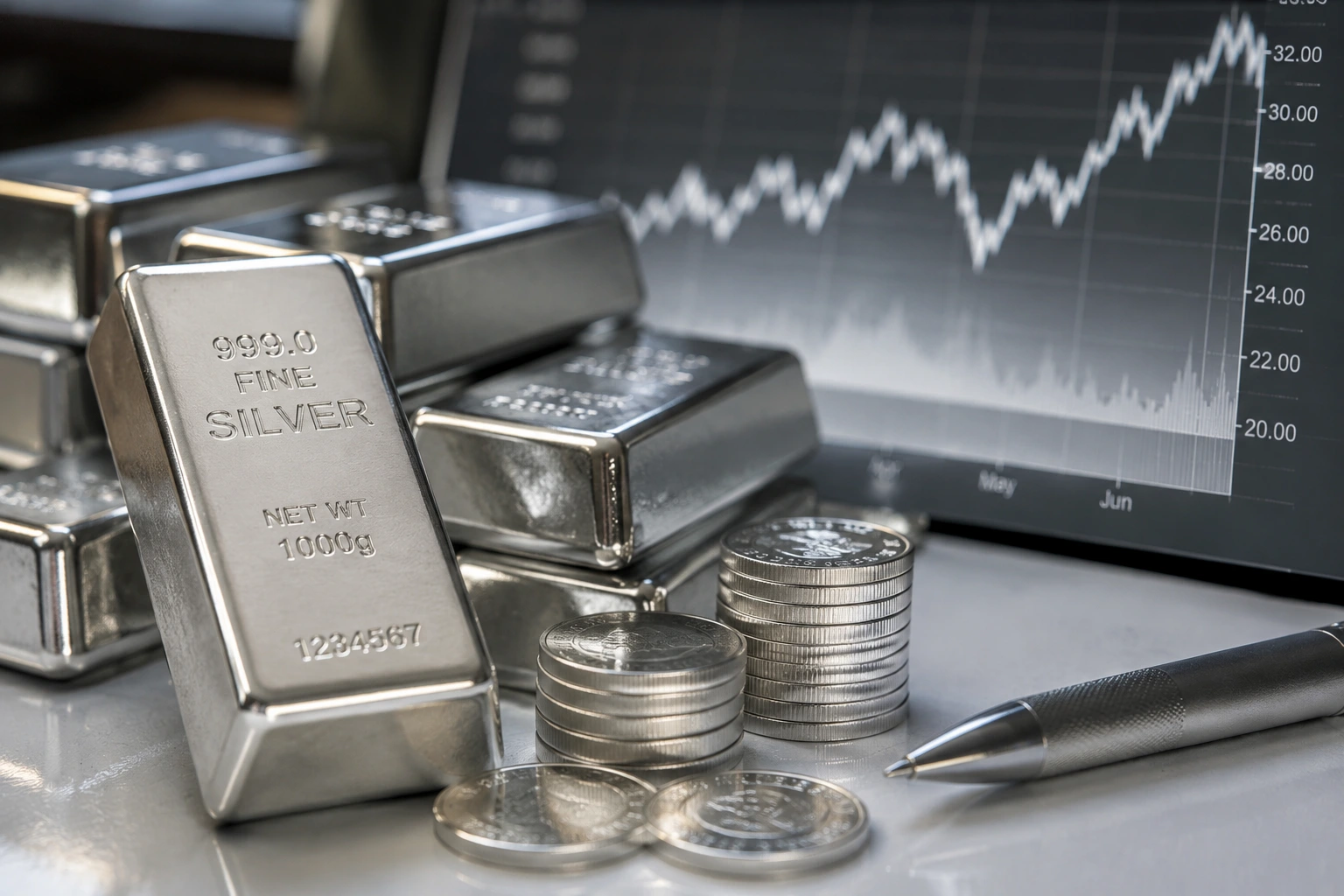
The silver price prediction has become an important topic for investors, traders, and people interested in precious metals. Silver has a unique role because it functions both as an investment asset and as an industrial material. Demand comes from areas such as solar panels, electronics, vehicles, and other technologies. At the same time, investors often buy silver during periods of economic uncertainty or inflation concerns. This combination can create significant price movements. However, predicting silver prices with complete accuracy is impossible. A better approach involves studying supply, industrial demand, interest rates, the US dollar, investment flows, and broader economic conditions. Understanding these factors can help readers build a more informed view of where silver prices could move next.
What Is Silver Price Prediction?
A silver price prediction is an estimate of where the market price of silver could move over a particular period. Analysts may examine historical price patterns, economic data, supply and demand figures, interest rates, currency movements, and investor behavior. Some forecasts focus on days or weeks, while others examine several years. Each timeframe requires a different approach because short-term prices can react quickly to news and market sentiment.
Long-term forecasts often focus more heavily on structural demand and mining supply. For example, growing use of silver in renewable energy technology could support demand over time. Short-term traders may pay more attention to technical indicators, futures positioning, inflation data, and central-bank decisions. A useful guide to precious metal investing can help beginners understand how these different factors work together. Most importantly, investors should treat forecasts as scenarios rather than guaranteed outcomes.
Why Silver Prices Are Important
Silver occupies a special position in global markets because it has both monetary and industrial uses. Gold receives greater attention as a traditional store of value, but silver has a much broader industrial role. Manufacturers use silver because of its electrical conductivity, thermal properties, and other characteristics. This makes the metal sensitive to changes in economic activity and technology demand.
The industrial connection can create both opportunities and risks. Strong manufacturing activity can increase silver consumption, while a major economic slowdown may reduce some forms of industrial demand. At the same time, investment demand can move in the opposite direction during periods of financial stress. This creates a market with several competing forces. Anyone studying a silver price prediction should therefore consider both investment demand and industrial consumption rather than focusing on only one factor.
Key Factors Affecting Silver Prices
Interest rates play an important role in precious-metal markets. When interest rates and bond yields rise, assets that generate income can become more attractive compared with metals that do not pay interest. Higher rates can therefore create pressure on silver prices. When markets expect interest rates to decline, precious metals may become more attractive to some investors.
The US dollar also matters because silver trades internationally in US dollars. A stronger dollar can make silver more expensive for buyers using other currencies. That can reduce demand in some markets. A weaker dollar can have the opposite effect. Inflation expectations, economic growth, geopolitical uncertainty, and investor sentiment can also influence prices. Because these factors can change quickly, silver forecasts can shift considerably within a short period.
Silver Supply and Mining Production
Supply is another major factor behind any long-term silver price prediction. Mining companies produce silver from dedicated silver mines and as a by-product of mining for metals such as copper, lead, and zinc. This creates an unusual supply structure. Silver production does not always respond quickly to changes in silver prices because many producers depend on the economics of other metals. For more: Charles Hoskinson Net Worth: Wealth & Career
New mining projects also require substantial capital and time. Companies must explore deposits, secure permits, develop infrastructure, and construct operations before production begins. This can limit how quickly supply responds when demand increases. Recycling provides another source of silver, particularly when prices rise enough to encourage more recovery. Investors should therefore examine mine production, recycling trends, inventories, and project development when evaluating the longer-term silver market.
Industrial Demand and the Silver Market
Industrial demand is one of the most important elements in the modern silver market. Silver appears in electrical components, electronics, solar technology, medical applications, and several other products. Growing investment in renewable energy has increased interest in silver because solar photovoltaic technology uses the metal in electrical connections.
However, industrial demand is not guaranteed to grow at the same rate forever. Manufacturers often try to reduce the amount of expensive materials used in products. Technological improvements can also change the quantity of silver required for individual applications. At the same time, rising production volumes can offset lower silver use per unit. For this reason, a reliable silver price prediction should consider both technological efficiency and total manufacturing demand.
Silver and Solar Energy
Solar power has become a major theme in discussions about silver demand. Solar photovoltaic cells use silver to conduct electricity, making the metal an important material in many solar technologies. Continued expansion of solar installations could therefore support long-term silver consumption.
The relationship is more complicated than simply assuming more solar panels will always mean proportionally more silver demand. Manufacturers continue working to reduce silver use and improve material efficiency. Some technologies may also explore alternative materials. This means investors should track both solar deployment and changes in silver intensity. A strong solar market can support silver demand, but technological innovation can influence how much metal each panel requires.
Silver Compared With Gold
Silver and gold often move in the same broad direction because both belong to the precious-metals sector. However, silver usually experiences larger price swings because its market is smaller and its industrial exposure is greater. This can make silver attractive to investors seeking greater potential volatility, but it also increases downside risk.
The gold-to-silver ratio is another measure investors sometimes watch. It compares the price of gold with the price of silver and can provide historical context about relative valuations. However, the ratio should not be used alone to predict future prices. Market conditions can change, and historical relationships do not guarantee future outcomes. Investors can learn more through an internal gold versus silver investing guide before using the ratio as part of their analysis.
Technical Analysis for Silver Price Prediction
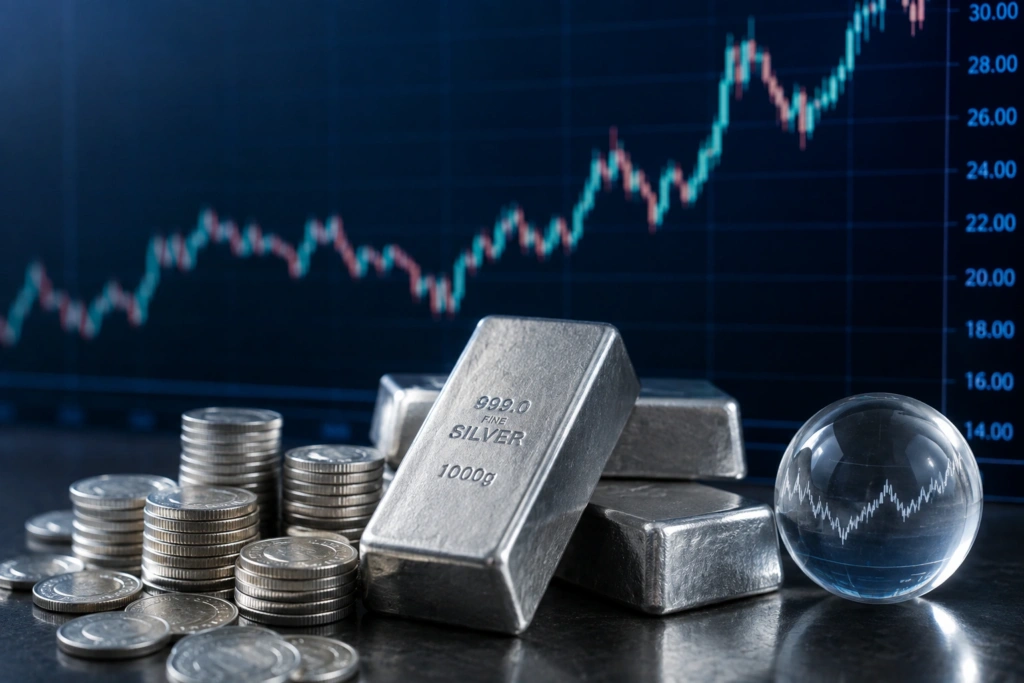
Technical analysis focuses on price charts and market behavior rather than primarily examining economic fundamentals. Traders may study support and resistance levels, moving averages, trendlines, momentum indicators, and trading volume. These tools can help identify possible areas where buying or selling pressure may change.
For example, if silver repeatedly finds buyers near a particular price level, traders may consider that area a potential support zone. A decisive move above resistance could then suggest stronger momentum. However, technical patterns can fail when major economic news changes market expectations. Traders should therefore combine chart analysis with fundamental information. A detailed technical analysis guide for beginners can help explain how these tools work without relying on a single indicator.
Short-Term Silver Price Outlook
Short-term silver prices can respond quickly to economic announcements and financial-market expectations. Inflation reports, employment data, central-bank decisions, currency movements, and changes in bond yields can all create sharp price movements. Futures markets can also influence short-term sentiment because traders adjust their positions based on expected price changes.
This makes short-term silver forecasting particularly difficult. A bullish chart pattern can disappear after an unexpected economic announcement. Similarly, a sudden change in interest-rate expectations can quickly strengthen or weaken precious metals. Traders should therefore avoid treating a short-term prediction as certain. Position sizing and risk management remain important even when several indicators appear to support the same direction.
Long-Term Silver Price Outlook
The long-term outlook for silver depends heavily on the balance between mine supply, recycling, investment demand, and industrial consumption. The continued expansion of electrification and renewable energy could provide structural support for silver demand. Electronics and other high-technology applications may also contribute to future consumption.
However, long-term forecasts still face considerable uncertainty. Technology can reduce silver usage, new mining projects can increase supply, and economic conditions can change industrial demand. Investment behavior can also shift dramatically during periods of financial stress. As a result, investors should think in terms of multiple scenarios instead of relying on one exact price target. A useful long-term commodity investing strategy can provide additional context when evaluating precious metals.
Risks That Could Affect Silver Prices
Silver carries several important risks. Its relatively high volatility can produce substantial price movements in both directions. Investors who buy after a strong rally may face significant losses if market sentiment suddenly reverses. Leverage can make these movements even more dangerous for traders using futures or other leveraged products.
Industrial demand also creates economic sensitivity. A major global slowdown could weaken demand from manufacturing and technology sectors. Higher interest rates and a stronger US dollar could create additional pressure. Mining supply could also increase if higher prices encourage production or recycling. These factors demonstrate why a silver price prediction should never be treated as a guaranteed investment outcome.
How Investors Can Evaluate Silver Forecasts
Investors should first examine who produced a forecast and what assumptions support it. A credible analysis should explain the expected relationship between supply, demand, interest rates, currencies, and investment flows. Forecasts that provide only a dramatic price target without explaining the underlying reasoning deserve extra caution.
It can also help to compare several scenarios. A bullish scenario might assume strong industrial demand, supportive monetary conditions, and limited supply growth. A bearish scenario could involve weaker economic activity, rising real yields, and stronger mine production. A neutral scenario might assume balanced supply and demand. This approach provides a more realistic framework than relying on one number. Investors can also review a commodity market research guide to strengthen their understanding of price forecasts.
Frequently Asked Questions
Is silver expected to rise in the future?
Silver could benefit from industrial demand and investment interest, but its future price remains uncertain. Market conditions can change quickly.
What factors affect silver prices the most?
Interest rates, the US dollar, industrial demand, investment flows, mining supply, inflation expectations, and economic growth can all affect silver.
Is silver more volatile than gold?
Generally, yes. Silver often experiences larger percentage price movements because of its smaller market and stronger industrial exposure.
Is silver a good investment?
Silver may provide diversification and exposure to precious metals, but it also carries significant volatility and market risk.
Can silver reach a new record high?
It is possible, but no price target is guaranteed. Future performance will depend on supply, demand, monetary conditions, and investor sentiment.
Conclusion
The silver price prediction depends on several interconnected forces rather than one simple indicator. Industrial demand, solar technology, mining supply, interest rates, inflation, the US dollar, and investment activity can all influence the market. These factors can sometimes support higher prices while creating pressure at other times.
For investors, the most useful approach is to study several possible scenarios instead of relying on a single forecast. Silver can offer interesting exposure to both precious metals and industrial growth, but its volatility requires careful risk management. Before making an investment decision, continue researching precious metal investing strategies, market fundamentals, and portfolio diversification to develop a balanced view of the opportunities and risks.