
USDJPY is the currency pair that compares the value of the U.S. dollar with the Japanese yen. It tells you how many Japanese yen are needed to buy one U.S. dollar. For example, if USDJPY trades at 150, one U.S. dollar equals 150 Japanese yen. The pair ranks among the most actively traded currency pairs in the global foreign exchange market. Traders, businesses, investors, and financial institutions watch it closely because the U.S. and Japanese economies have major global importance. Understanding USDJPY starts with learning how its price moves and what those movements mean.
USDJPY can react quickly to economic data, interest-rate decisions, political developments, and changes in investor sentiment. The Federal Reserve and Bank of Japan play especially important roles in this market. Their monetary policies can influence the interest-rate gap between the United States and Japan. That gap often affects demand for dollars and yen. The pair can also respond to global risk appetite and safe-haven flows. In recent years, interest-rate differences have remained an important factor behind major yen movements.
How Does USDJPY Work?
USDJPY follows the standard format used for currency pairs. The first currency is the base currency, while the second currency is the quote currency. Therefore, USD is the base currency and JPY is the quote currency. When the pair rises, the dollar becomes stronger against the yen, or the yen becomes weaker against the dollar. When the pair falls, the opposite happens. This simple relationship helps traders understand price movements without needing complicated calculations.
For example, imagine USDJPY moves from 145 to 150. The dollar has gained value against the yen because one dollar now buys more yen. If the pair falls from 150 to 145, the yen has strengthened relative to the dollar. This movement can affect importers, exporters, tourists, investors, and currency traders. Japanese companies that buy goods priced in dollars may face higher costs when the yen weakens. Therefore, USDJPY matters beyond the forex market because it can influence real economic activity.
Why Is USDJPY Important?
USDJPY is important because both currencies represent major economies and financial markets. The U.S. dollar remains the world’s dominant reserve currency, while the Japanese yen plays a major role in international finance. The pair also attracts significant trading activity from banks, corporations, hedge funds, asset managers, and individual traders. High liquidity can make the pair attractive to market participants who want to enter or exit positions efficiently.
The pair also provides useful information about the relationship between U.S. and Japanese monetary conditions. When U.S. interest rates rise relative to Japanese rates, investors may find dollar assets more attractive. That situation can increase demand for the dollar and push USDJPY higher. Research from the Bank of Japan has found that U.S. interest-rate movements have played an important role in past yen depreciation. This does not mean rates determine every move, but they remain a key factor.
What Moves USDJPY?
Interest rates are among the biggest factors affecting USDJPY. The Federal Reserve sets U.S. monetary policy, while the Bank of Japan manages Japanese monetary policy. When the two central banks move in different directions, the resulting yield difference can influence currency demand. Investors often compare the returns available from dollar and yen assets. A wider interest-rate gap can support the dollar, while a narrowing gap can support the yen. The Bank of Japan has also highlighted monetary-policy divergence as an important factor behind major yen movements. For more: How Much Does Elon Musk Make a Day? 2026 Guide
Economic data can also create sharp movements in the pair. U.S. employment reports, inflation figures, economic growth, and Federal Reserve decisions can affect expectations for American interest rates. Japanese inflation, wages, economic growth, and Bank of Japan decisions can influence expectations for Japanese policy. Traders often react not only to the actual numbers but also to how those numbers compare with market expectations. This can make USDJPY volatile around major economic announcements. Understanding the economic calendar can therefore help readers interpret sudden price movements.
How Do Federal Reserve Decisions Affect USDJPY?
The Federal Reserve can strongly influence USDJPY because its interest-rate decisions affect the attractiveness of U.S. assets. When markets expect higher U.S. rates, Treasury yields may rise and demand for dollars can increase. This situation can push USDJPY higher if Japanese rates remain comparatively low. On the other hand, expectations for lower U.S. rates can reduce the interest advantage of dollar assets. That change can support the yen and put downward pressure on the currency pair.
The Federal Reserve does not target a specific exchange-rate level for the dollar. Instead, its monetary policy focuses on broader economic conditions, including employment and inflation. However, changes in U.S. monetary policy can still influence foreign-exchange markets. The Federal Reserve explains that dollar movements affect U.S. economic activity and prices, even though policymakers do not target a particular dollar exchange rate. Traders therefore watch Federal Reserve communication closely when analyzing USDJPY.
How Does the Bank of Japan Affect USDJPY?
The Bank of Japan has a major influence on USDJPY because its decisions affect the value and attractiveness of yen assets. For many years, Japan maintained very accommodative monetary conditions compared with the United States. This contributed to a large interest-rate gap during periods when the Federal Reserve tightened policy. That difference helped create pressure on the yen. The Bank of Japan has studied the relationship between monetary policy and the dollar-yen exchange rate in several research papers.
A change toward tighter Japanese monetary policy can support the yen if investors expect Japanese interest rates to rise. Markets may also react before the Bank of Japan actually changes rates because traders price future decisions into currency markets. This makes central-bank communication especially important. Statements from officials, policy forecasts, and inflation data can all influence expectations. In August 2026, markets were closely watching the possibility of further Japanese rate increases, while the yen also remained sensitive to intervention concerns.
What Does a Rising USDJPY Mean?
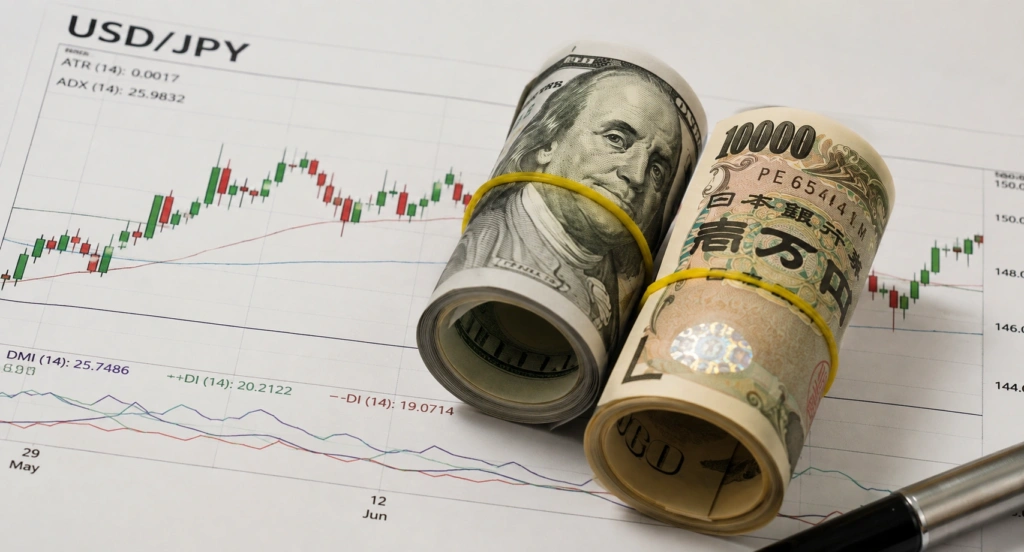
When USDJPY rises, the U.S. dollar becomes stronger relative to the Japanese yen. For example, a move from 150 to 155 means that one dollar now buys five more yen than before. Traders often describe this situation as dollar strength or yen weakness. However, the reasons behind the move can vary. The increase could result from stronger U.S. economic data, higher American yields, weaker Japanese conditions, or changes in global investor sentiment.
A rising USDJPY can create both benefits and challenges for different groups. Japanese exporters may benefit because overseas earnings can become more valuable when converted into yen. Japanese consumers and companies that import goods may face higher costs, especially for dollar-priced commodities. Energy and raw-material prices can become more expensive in yen terms. These effects show why USDJPY is not simply a trading symbol. Its movements can influence corporate profits, consumer prices, and purchasing power in Japan.
What Does a Falling USDJPY Mean?
When USDJPY falls, the Japanese yen becomes stronger against the U.S. dollar. A move from 155 to 150 means that fewer yen are required to purchase one dollar. A stronger yen can reduce the yen cost of imported goods and services. It may also help companies and households that need to purchase products priced in dollars. However, exporters can face challenges because foreign earnings may convert into fewer yen.
A falling USDJPY can result from several factors. Markets may expect lower U.S. interest rates, higher Japanese rates, stronger Japanese economic conditions, or increased demand for the yen as a safe-haven currency. Large market movements can also occur when investors reduce leveraged positions. Therefore, traders should avoid assuming that every decline has the same cause. Looking at interest rates, economic data, market sentiment, and central-bank communication can provide a more complete explanation.
USDJPY and Safe-Haven Demand
The Japanese yen has traditionally attracted safe-haven demand during periods of market stress. Investors sometimes seek currencies and assets they consider relatively defensive when uncertainty rises. This behavior can support the yen and push USDJPY lower. However, safe-haven flows do not always produce the same result because global markets can respond differently to each crisis. Investors also consider U.S. Treasury assets and the dollar as defensive holdings.
Risk sentiment can therefore create complicated movements in USDJPY. A sudden rise in geopolitical uncertainty may strengthen the yen in one situation but support the dollar in another. Interest-rate expectations can also override safe-haven flows. This is why experienced market analysis considers several factors together. The pair’s direction often reflects a combination of monetary policy, economic expectations, market positioning, and global risk appetite rather than one isolated event.
USDJPY and Government Intervention
Government intervention can become important when currency movements become unusually rapid or disorderly. Japanese authorities have intervened in currency markets in the past to support the yen. Such actions can create sudden movements in USDJPY because large amounts of currency may enter the market. Intervention can also influence trader expectations about future policy actions. Market participants therefore watch statements from Japanese finance officials when USDJPY approaches levels that attract official attention.
In 2026, intervention risks became especially important as the yen reached very weak levels against the dollar. Reuters reported that Japan may have spent as much as $36.58 billion to buy yen in early August, following earlier intervention activity. Reuters also reported in July that U.S. authorities had alerted banks about the possibility of future intervention involving the yen. These developments show why traders should consider policy risk when analyzing USDJPY.
How to Trade USDJPY
Trading USDJPY requires a clear understanding of risk. Traders commonly analyze price charts, economic calendars, interest-rate expectations, and technical indicators before making decisions. Some use short-term strategies, while others hold positions for longer periods. There is no single approach that works in every market environment. A strategy that performs well during strong trends may struggle when the pair moves sideways.
Risk management should remain central to any trading plan. Traders can consider position size, stop-loss levels, leverage, and the amount they are willing to lose before entering a position. Major economic announcements can produce rapid price changes and wider spreads. Beginners should learn how currency pairs work before using real money. A strong understanding of forex risk management, technical analysis, and economic indicators can provide a useful foundation.
USDJPY Technical Analysis
Technical analysis focuses on price behavior rather than relying only on economic data. Traders may study support and resistance levels, moving averages, trend lines, candlestick patterns, and momentum indicators. These tools can help identify possible trends or areas where buying and selling pressure may change. However, technical indicators do not guarantee future price movements. They work best as part of a broader analysis process.
For example, a trader may notice that USDJPY repeatedly struggles near a certain resistance level. Another trader may focus on a moving-average crossover that suggests changing momentum. Both signals can provide useful information, but neither guarantees a successful trade. Fundamental events can quickly invalidate a technical setup. This is especially relevant for USDJPY because central-bank announcements and economic releases can cause sudden price changes. Combining technical signals with fundamental context can create a more balanced approach.
USDJPY Outlook and Market Expectations
The outlook for USDJPY depends heavily on expectations for U.S. and Japanese monetary policy. If markets expect U.S. rates to remain high while Japanese rates stay relatively low, the dollar may retain support. If the gap narrows because U.S. rates fall or Japanese rates rise, the yen could gain strength. These relationships are important, but they do not provide a guaranteed forecast. Currency markets can react unexpectedly to new information.
Recent 2026 market developments show why the outlook can change quickly. Reuters reported in August that the dollar remained sensitive to expectations for Federal Reserve policy, while the yen responded to inflation data and expectations for possible Bank of Japan action. Intervention risks have also remained relevant. Anyone following USDJPY should therefore monitor central-bank decisions, inflation, employment data, bond yields, and official comments instead of relying on a single forecast.
Frequently Asked Questions
What does USDJPY mean?
USDJPY represents the exchange rate between the U.S. dollar and Japanese yen. It shows how many Japanese yen are required to purchase one U.S. dollar. A higher figure generally means a stronger dollar relative to the yen.
Is USDJPY good for beginners?
USDJPY can be useful for learning forex because it is a major currency pair with extensive market information. However, beginners should understand leverage and risk before trading. Currency prices can change quickly, especially around major economic announcements.
What makes USDJPY go up?
USDJPY can rise when the dollar strengthens against the yen. Higher U.S. interest-rate expectations, weaker Japanese monetary conditions, stronger U.S. economic data, and changes in market sentiment can contribute to upward movements.
What makes USDJPY go down?
USDJPY can fall when the yen strengthens against the dollar. Expectations for higher Japanese interest rates, lower U.S. rates, stronger Japanese economic conditions, or increased yen demand can contribute to declines.
What is the best time to trade USDJPY?
There is no universally best trading time. Liquidity and volatility can increase when major financial markets overlap or when important economic data is released. Traders should consider their strategy, risk tolerance, and the economic calendar before choosing a session.
Conclusion
USDJPY is one of the world’s most important currency pairs because it connects two major economies and responds to many global financial forces. Its price reflects the relationship between the U.S. dollar and Japanese yen. Interest rates, inflation, economic data, central-bank decisions, market sentiment, and government intervention can all influence its direction.
For anyone researching USDJPY, the most important step is to look beyond the price chart. Understanding the Federal Reserve and Bank of Japan can provide valuable context for major movements. Recent market developments also show that intervention and changing interest-rate expectations can quickly alter the outlook. If you want to learn more, explore related guides on forex trading, currency exchange rates, interest-rate differentials, and technical analysis before making financial decisions.