

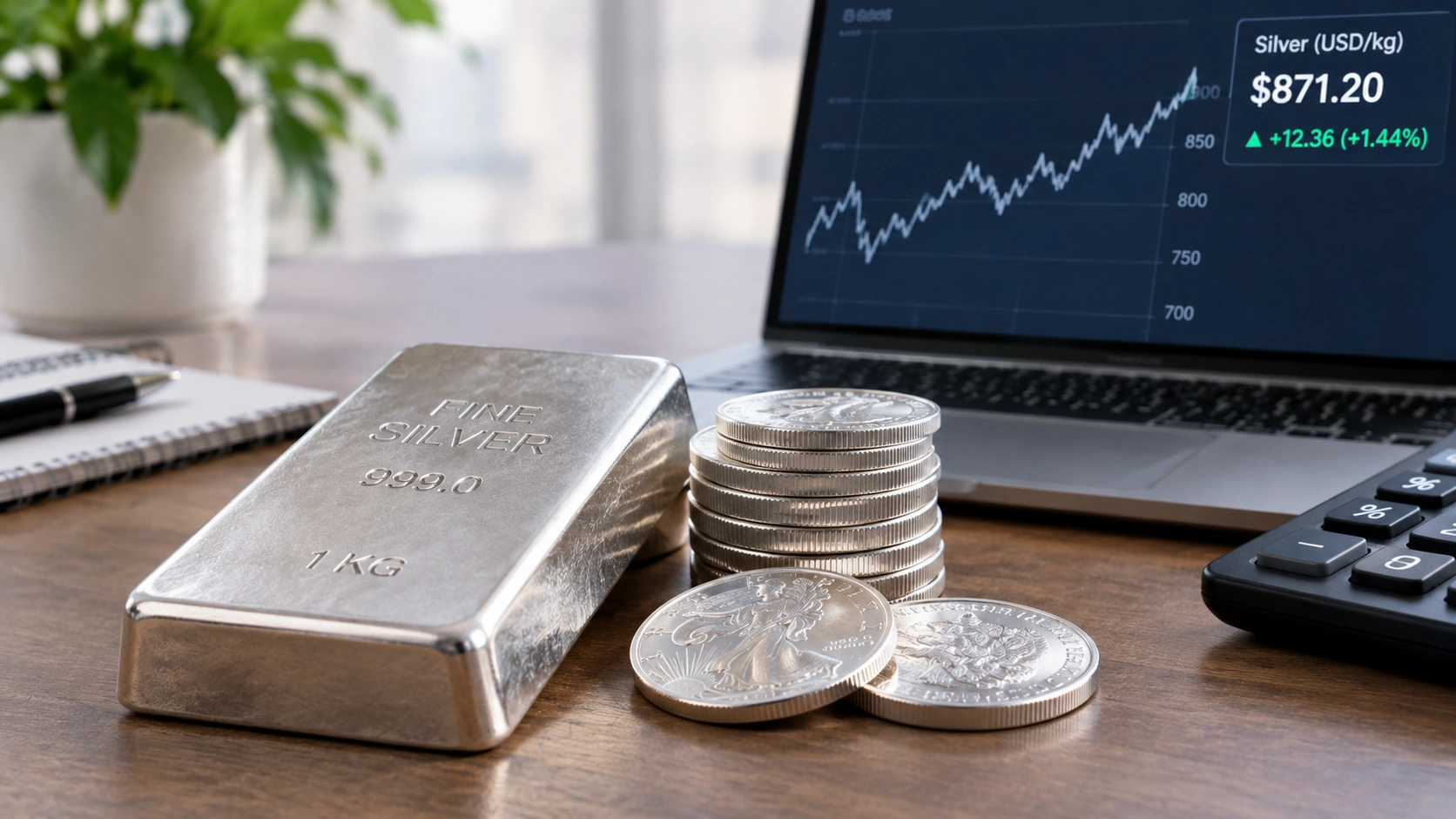
The silver rate today per kg is a useful benchmark for US investors, bullion buyers, collectors, and anyone comparing physical silver prices. In the United States, silver is normally quoted in U.S. dollars per troy ounce, but major precious-metal pricing services also convert the live spot price into kilograms. One kilogram contains about 32.1507 troy ounces, making the conversion straightforward.
As of September 28, 2026, Kitco showed silver at $60.65 per troy ounce, equivalent to about $1,949.97 per kilogram at its quoted spot bid. Because silver trades continuously during market hours, this figure can change quickly. The price of physical silver can also be higher because of dealer premiums, shipping, fabrication, and other costs.
What Is the Silver Rate Today Per Kg in the US?
The silver rate today per kg refers to the spot-market value of one kilogram of silver expressed in U.S. dollars. Unlike a retail price for a silver bar or coin, the spot rate represents the underlying market value of silver before most retail premiums are added. US bullion dealers use the spot market as a reference when pricing products for customers.
Kitco’s live pricing system converts the silver price from its standard troy-ounce quotation into several units, including grams and kilograms. Its September 28, 2026 quotation showed a spot bid of $60.65 per troy ounce and approximately $1,949.97 per kilogram. GoldPrice.com, using a separate live data source, showed approximately $61.04 per ounce and $1,962.32 per kilogram at another point that day. These small differences demonstrate why the exact time of a price quote matters.
How Is Silver Per Kg Calculated?
Calculating the silver rate today per kg from the US spot price is relatively simple. One troy ounce contains approximately 31.1035 grams, and one kilogram contains approximately 32.1507 troy ounces. Therefore, the silver price per troy ounce can be multiplied by 32.1507 to estimate the spot value of one kilogram.
For example, using a hypothetical silver price of $60 per troy ounce, the calculation would be approximately $60 × 32.1507, giving a value of about $1,929 per kilogram. This is only the theoretical spot value. A one-kilogram silver bar purchased from a US dealer may cost more because the dealer adds a premium. The final retail price can also depend on the refinery, brand, availability, payment method, shipping, and market conditions.
Silver Spot Price vs. Retail Price
The silver rate today per kg should not be confused with the price of a physical silver bar. Spot pricing represents the market value of the metal, while a dealer’s asking price includes additional costs. These costs can cover fabrication, distribution, inventory, insurance, employee expenses, payment processing, and the dealer’s operating margin.
This difference becomes especially important when comparing large silver bars. FindBullionPrices reported a spot value around $1,965 per kilogram on September 28, 2026 and showed that dealer pricing can vary depending on bar size and product. Larger bars can sometimes have lower premiums per ounce than small bars because fabrication and distribution costs represent a smaller percentage of the total metal value. However, buyers should compare the complete delivered price rather than assuming that every kilogram bar carries the same premium.
What Moves the Silver Rate in the US?
Several factors influence the silver rate today per kg. Silver is both a precious metal and an industrial commodity, so its market is affected by investment demand as well as industrial consumption. Solar technology, electronics, manufacturing, jewelry, and other applications contribute to demand for silver. Changes in economic expectations can therefore influence silver differently from purely monetary metals.
Interest rates and the US dollar are also important. Precious metals are generally priced in dollars, so changes in the dollar’s value can influence international silver pricing. Expectations about Federal Reserve policy can also affect investor demand and market sentiment. Recent 2026 market reporting has shown significant volatility in silver, including sharp movements connected with interest-rate expectations, currency conditions, and broader economic uncertainty. This is why today’s kilogram price can be substantially different from a quotation several weeks or months earlier.
Why Silver Prices Change During the Day
The US silver market is connected to a global precious-metals market, so prices can change throughout the trading day. New economic data, currency movements, changes in bond yields, central-bank expectations, geopolitical developments, and buying or selling activity can all affect the spot price.
For this reason, a website showing the silver rate today per kg should ideally provide a timestamp along with the price. Kitco states that its live silver price is updated frequently during trading hours, while Monex also provides live silver prices per ounce, gram, and kilogram. If two websites show slightly different prices, it does not necessarily mean one is incorrect. They may simply be displaying different market snapshots, bid/ask prices, or data feeds.
Silver Rate Per Kg for US Investors
A kilogram of silver contains approximately 32.15 troy ounces, making it a substantial physical holding. US investors considering a kilogram bar should compare its total purchase price with the current spot value. The difference between the two figures represents the premium and associated costs that the buyer is paying above the underlying silver value.
Liquidity should also be considered. A one-kilogram bar can be convenient for storing a significant amount of silver in one piece, but selling a large bar may require finding a suitable bullion dealer or buyer. Smaller bars and widely recognized coins may provide different resale options. The right format depends on the buyer’s objectives, storage arrangements, budget, and preferred level of flexibility rather than simply the current silver rate today per kg.
Silver Purity and the Per-Kg Value
The quoted silver rate today per kg generally refers to fine silver, commonly .999 or 99.9% pure silver. However, not every silver item contains the same percentage of pure metal. Sterling silver, for example, is 92.5% silver, while some older US coins contain 90% silver. Their melt values therefore differ from the value of a kilogram of .999 fine bullion. For more: Silver 5 oz: Complete Guide for Buyers and Investors
Kitco’s silver calculator illustrates this difference by showing separate values for .999 fine silver, .925 sterling silver, .900 coin silver, and .800 silver. When buying physical silver in the US, check the product’s weight and fineness rather than relying only on the word “silver.” A one-kilogram item made from lower-purity material does not contain the same quantity of pure silver as a one-kilogram .999 fine bar.
How to Check the Silver Rate Before Buying
Before buying a kilogram of silver, start by checking a current spot-price source that clearly shows the time of the quotation. Then compare the spot value with prices from several established US bullion dealers. This allows you to see how much premium is being charged for the specific bar or product.
It is also useful to check whether the quoted dealer price includes shipping, insurance, sales tax, or payment-related fees. The cheapest advertised price is not always the lowest final cost. For larger purchases, buyers should also examine the refinery or mint, product authenticity, packaging, and potential resale market. Keeping the invoice and product documentation can make future transactions easier. A careful comparison of spot price and total purchase cost gives a much clearer picture than looking at the silver rate today per kg alone.
Where Can You Track the Silver Rate Today Per Kg?
Several established precious-metal pricing websites publish silver prices in US dollars and provide conversions into kilograms. Kitco displays live silver prices per ounce, gram, and kilo, while Monex publishes silver spot prices across multiple weight units. GoldPrice.com also provides silver prices per ounce, gram, and kilogram along with historical information.
For serious buyers, checking more than one source can be helpful because prices may be captured at different moments. BullionVault also publishes market spreads and shows silver pricing across several international markets, illustrating how global bullion markets can have different quoted levels. When comparing sources, focus on the timestamp, bid or ask designation, currency, and whether the number represents spot metal value or a physical product’s retail price.
Is Buying Silver by the Kilogram Worth Considering?
A kilogram can be an efficient format for someone who wants to own a larger amount of physical silver without purchasing dozens of individual coins or small bars. Larger bullion products may sometimes have lower premiums relative to their metal content. This can make them worth comparing with smaller products when the buyer already has a clear plan for storage and resale.
However, physical silver involves more than the metal price. Buyers need to consider storage, insurance, transaction costs, dealer spreads, and the possibility that the market price may fall after purchase. Silver can be volatile, and historical performance does not guarantee future results. The silver rate today per kg is therefore best treated as a market reference rather than a guarantee of what a buyer will earn later. Anyone considering a purchase should compare current prices and understand the risks before committing money.
Frequently Asked Questions
What is the silver rate today per kg in the US?
The rate changes throughout the trading day. Kitco quoted approximately $1,949.97 per kilogram at its September 28, 2026 spot bid.
How many ounces are in 1 kg of silver?
One kilogram contains approximately 32.1507 troy ounces of silver.
Is the US silver rate per kg the same at every dealer?
No. Dealers can charge different premiums, spreads, shipping costs, and other fees above the underlying spot value.
Is a kilogram of silver .999 pure?
A .999 silver kilogram bar contains approximately 99.9% silver. Always check the product’s stated fineness before buying.
Why does the silver price change so often?
Silver prices respond to global trading activity, industrial demand, investment demand, interest rates, currency movements, and economic expectations.
Conclusion
The silver rate today per kg provides a convenient way to understand the US dollar value of a substantial quantity of silver. Since international silver is normally quoted per troy ounce, converting the spot price into kilograms gives buyers a useful benchmark for comparing physical bullion products.
For US buyers, the most important distinction is between the spot value and the retail price. A physical kilogram bar can cost more than its metal value because of premiums and other expenses. Check the latest timestamped spot price, compare several reputable dealers, confirm purity, and calculate the complete purchase cost before buying.
For ongoing research, following live silver prices and historical market movements can help you understand how the value of a kilogram of silver changes over time.

1 Comment