

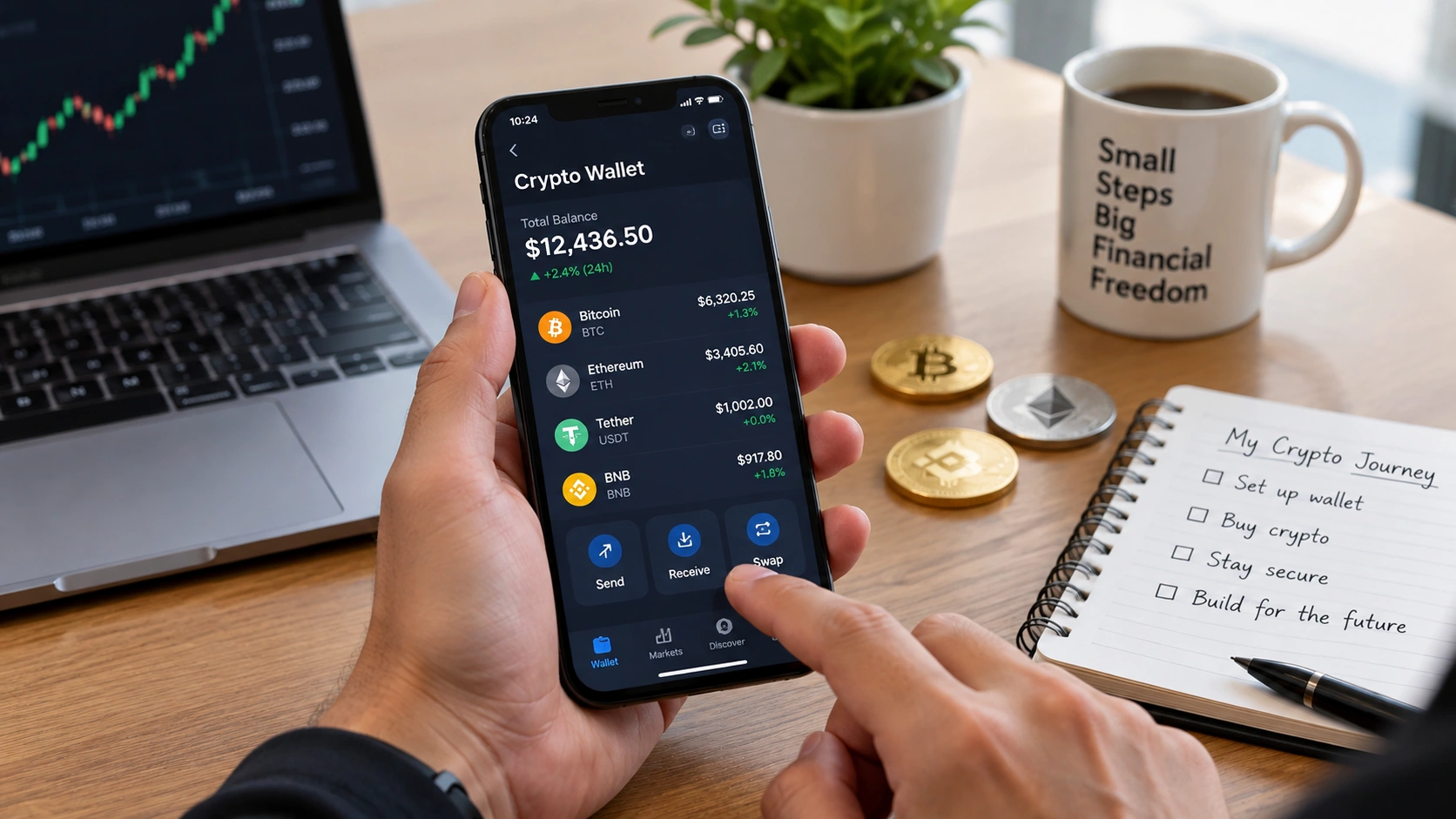
Learning how to get a crypto wallet is one of the first steps for anyone who wants to own, receive, send, or manage cryptocurrency independently. A crypto wallet does not usually store coins in the same way a physical wallet stores cash. Instead, it helps you manage the private keys or credentials that give you control over cryptocurrency recorded on a blockchain.
There are different wallet types, including mobile wallets, desktop wallets, browser-based wallets, hardware wallets, and exchange-connected wallets. Each option has different levels of convenience and security. Choosing one depends on how often you use crypto, what assets you own, and how much control you want over your keys. For beginners, understanding these differences before creating a wallet can help prevent expensive mistakes.
What Is a Crypto Wallet?
A crypto wallet is a tool that allows you to interact with blockchain networks and manage digital assets. Depending on the wallet, it may generate and manage private keys, provide addresses for receiving cryptocurrency, and allow you to approve transactions. Your cryptocurrency itself generally remains recorded on the relevant blockchain rather than sitting inside the wallet application.
A wallet may provide a public address that you can share when someone wants to send you cryptocurrency. It may also use a private key or recovery phrase to prove control over your assets. This distinction is extremely important. Your public address can normally be shared for receiving funds, while private keys and recovery phrases must remain confidential. Anyone who gains control of your private credentials may be able to control the associated assets, which is why wallet security should be treated as a priority from the beginning.
How to Get a Crypto Wallet
Getting a crypto wallet is usually straightforward, but the exact process depends on the wallet provider and type you choose. The first decision is whether you want a software wallet or a hardware wallet. Software wallets are generally installed on phones, computers, or browsers and can be convenient for regular transactions. Hardware wallets are dedicated physical devices designed to keep key information separated from an internet-connected environment.
Once you select a wallet, obtain it only from the provider’s official website or an official app store listing. Avoid downloading wallet software from advertisements, random websites, social media posts, or links sent by strangers. After installation, follow the wallet’s setup instructions and carefully create or back up the recovery information it provides. Never share this information with another person, even if someone claims to be customer support.
Choose the Right Type of Crypto Wallet
The right wallet depends largely on how you plan to use cryptocurrency. A mobile wallet can be practical for everyday transactions because it is available on a smartphone. A desktop wallet can provide additional functionality for people who prefer managing assets from a computer. Browser wallets can be useful for interacting with decentralized applications, although users should be especially careful about which websites they connect to.
Hardware wallets are often considered by users who want to keep important cryptocurrency holdings under their own control while reducing exposure to online threats. Exchange wallets are another option, where an exchange manages the underlying wallet infrastructure on behalf of the customer. Each approach has trade-offs involving convenience, control, security, and responsibility. Before choosing a wallet, consider whether you need frequent access, long-term storage, support for specific cryptocurrencies, or compatibility with particular blockchain applications.
How to Set Up a Crypto Wallet
After installing or obtaining your wallet, the setup process normally involves creating a new wallet or importing an existing one. A new wallet may generate a recovery phrase, sometimes called a seed phrase. This phrase can be used to restore access to the wallet if your device is lost, damaged, or replaced. It should therefore be treated as extremely sensitive information.
Write the recovery phrase down carefully and store it somewhere secure and private. Avoid taking screenshots, sending it through email, storing it in ordinary chat messages, or keeping an unprotected digital copy. If someone obtains the phrase, they may be able to restore the wallet elsewhere. Likewise, losing the phrase can make recovery difficult or impossible if you lose access to your wallet and have no other recovery method. Always follow the wallet manufacturer’s official backup instructions.
How to Protect Your Crypto Wallet
Wallet security starts with protecting the credentials that control your assets. Use a strong device password or PIN, keep your phone and computer updated, and enable available security features. If the wallet supports additional authentication, use it where appropriate. You should also be careful when installing browser extensions or applications because malicious software can attempt to steal wallet information or manipulate transactions. For more: Best Paying Jobs in Finance: Top Careers to Consider
Transaction verification is another important habit. Before confirming a payment, carefully check the destination address, network, amount, and other transaction details. Blockchain transactions can be difficult or impossible to reverse once confirmed. Be particularly cautious with unexpected messages claiming that your wallet is compromised or that you must urgently verify your account. Scammers often use urgency and impersonation to persuade people to reveal sensitive credentials. Genuine wallet support should not need your recovery phrase or private key.
How to Receive Cryptocurrency in a Wallet
Receiving cryptocurrency usually involves providing the sender with a compatible wallet address. Open your wallet, select the cryptocurrency you want to receive, and locate its receiving address. You may see the address as a long string of characters or as a QR code. Copy it carefully when sharing it with the sender.
Network compatibility is especially important. Some cryptocurrencies can operate across multiple networks, and sending an asset through an unsupported network can create serious problems. For example, the same token may exist on different blockchain networks, but the receiving wallet may support only certain versions. Always confirm the asset and network before a transaction. If you are receiving a significant amount for the first time, a small test transaction can be a sensible way to confirm that the address and network are correct.
How to Send Cryptocurrency From a Wallet
Sending cryptocurrency requires more attention than simply entering an address. You normally select the asset, enter the recipient’s address, choose the appropriate network when applicable, specify the amount, and review the transaction before confirming it. Depending on the blockchain, you may also need to pay a network transaction fee.
Always verify the destination address before approving the transaction. Copy-and-paste carefully and check the beginning and ending characters against the recipient’s intended address. Be cautious about relying only on an address displayed on a website because malicious software can sometimes interfere with copied information. It is also important to understand that transaction fees and confirmation times vary between blockchains. If you are unfamiliar with a network, learn how its fees and confirmations work before transferring a large amount.
Hot Wallet vs. Cold Wallet
A hot wallet is generally connected to the internet or used on an internet-connected device. Mobile wallets, desktop wallets, and many browser wallets fall into this category. Their main advantage is convenience because users can access their cryptocurrency relatively quickly. However, internet-connected environments can expose users to phishing, malware, malicious applications, and other online threats.
A cold wallet generally keeps private keys away from an actively connected environment. Hardware wallets are a common example. They can be useful for people who want to hold cryptocurrency for longer periods without frequently interacting with decentralized applications or making transactions. Neither approach removes the need for careful security practices. A hardware device can still be compromised through scams, fraudulent software, poor backup practices, or careless transaction approval. The best choice depends on the user’s needs and ability to manage security responsibly.
Common Mistakes to Avoid When Getting a Crypto Wallet
Beginners often focus on finding a wallet quickly and overlook the importance of verifying the provider and understanding how recovery works. One common mistake is downloading a fake wallet application that looks similar to a legitimate product. Another is storing a recovery phrase in an insecure location or sharing it with someone claiming to provide technical support.
Other mistakes can happen during transactions. Users may select the wrong network, send an unsupported asset, enter an incorrect address, or approve a transaction without understanding what they are signing. It is also risky to connect a wallet to unknown decentralized applications simply because a website promises rewards or free tokens. Before using a new wallet or blockchain service, research how it works and verify information through reliable sources. Learning basic crypto security practices can be just as important as learning how to use the wallet itself.
What Should You Look for in a Crypto Wallet?
When comparing wallets, security should be considered alongside convenience and compatibility. A useful wallet should support the cryptocurrencies and networks you actually intend to use. You should also examine whether the wallet allows you to control your own keys, how recovery works, what security features are available, and whether the provider has clear documentation.
Ease of use matters too, particularly for beginners. A complicated interface can increase the chance of making an avoidable transaction mistake. Look for transparent information about fees, supported networks, backup procedures, and security practices. It can also help to read independent reviews and learn about common scams associated with the wallet category you are considering. If you are researching cryptocurrency more broadly, related guides about crypto exchanges, how cryptocurrency transactions work, and crypto security for beginners can provide useful background before you transfer significant funds.
Is a Crypto Wallet Free?
Many software crypto wallets can be downloaded and used without an upfront purchase. However, using cryptocurrency can involve blockchain network fees, and certain wallet services may have additional charges depending on their features. A free wallet therefore does not necessarily mean that every transaction is free.
Hardware wallets generally require purchasing a physical device, although prices vary between manufacturers and models. You should also be cautious about choosing a wallet solely because it is free or inexpensive. Security, authenticity, supported networks, backup options, and reputation are more important considerations when you are protecting valuable digital assets. Before paying for a wallet or related service, verify that you are purchasing from a legitimate source and understand exactly what the product provides.
FAQ
How do I get a crypto wallet for the first time?
Choose a reputable wallet, download or purchase it through an official source, create your wallet, and securely back up the recovery information it provides.
Is a crypto wallet necessary to buy cryptocurrency?
Not always. Some exchanges hold cryptocurrency for customers, but a personal wallet can provide greater direct control over the associated keys and assets.
Can I get a crypto wallet for free?
Yes. Many software wallets are free to download, although blockchain transactions can still involve network fees.
What happens if I lose my phone with my crypto wallet?
If you have securely backed up your wallet’s recovery information, you may be able to restore access using a compatible wallet. Without a valid backup, recovery may be difficult or impossible.
Should I keep my recovery phrase on my phone?
It is generally safer to avoid storing a recovery phrase in ordinary digital files, screenshots, emails, or messages. Follow the wallet provider’s recommended secure backup method instead.
Conclusion
Learning how to get a crypto wallet is relatively simple, but protecting that wallet requires careful attention. Start by choosing a reputable wallet that supports the cryptocurrency and network you plan to use. Download software only from official sources, understand the difference between public addresses and private credentials, and create a secure backup of your recovery information.
For beginners, the most important lesson is that convenience should never replace security. Take time to verify wallet addresses, networks, applications, and transaction details before approving anything. Whether you choose a software wallet for everyday use or a hardware wallet for longer-term storage, learning basic crypto security practices first can help you manage digital assets more responsibly.

1 Comment