

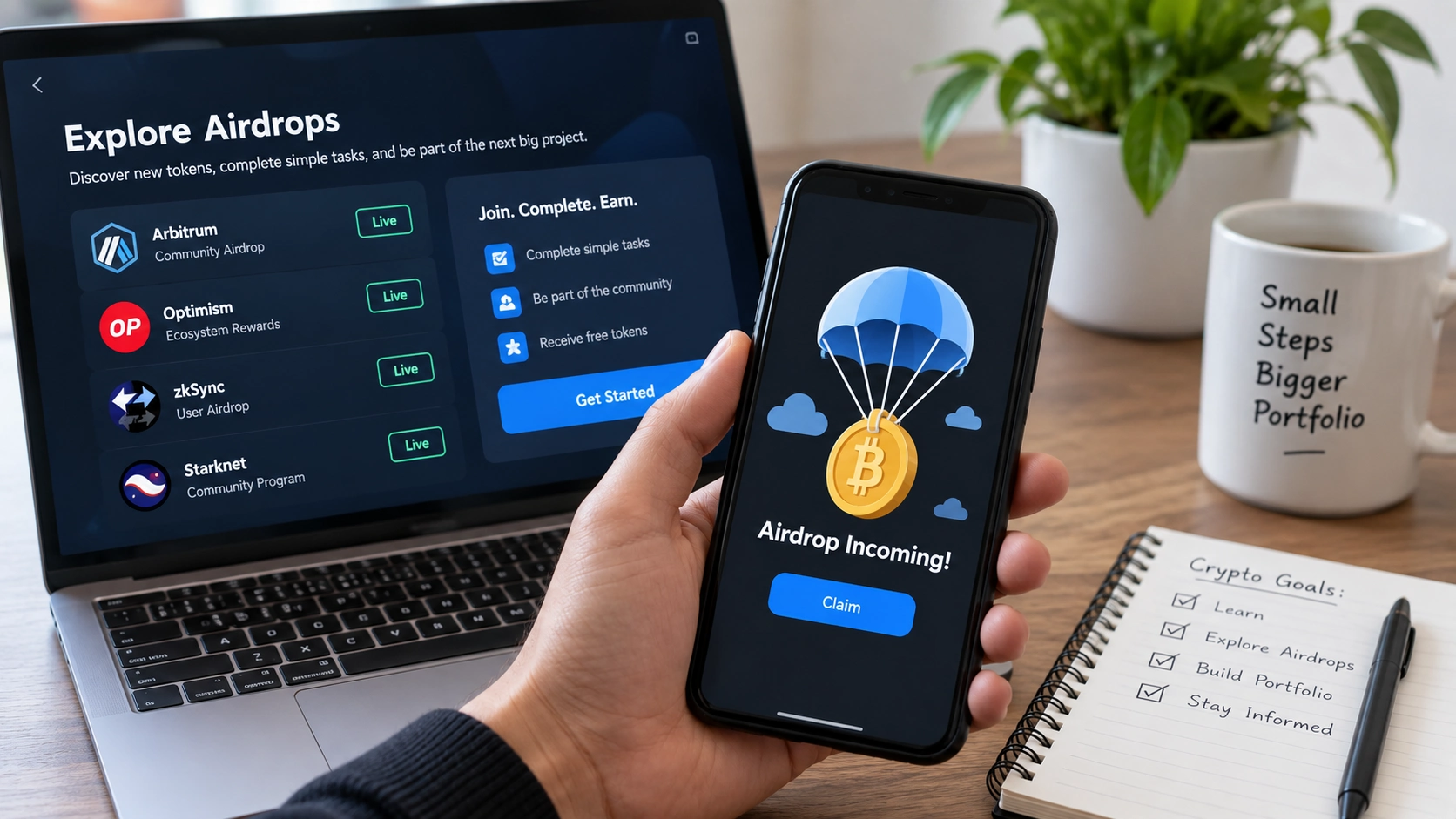
Crypto airdrops are a method used by blockchain projects to distribute digital tokens or other blockchain-based rewards to eligible users. They can be used to introduce a new cryptocurrency, reward an existing community, encourage people to use a decentralized application, or increase awareness of a project. Some airdrops require users to complete specific activities, while others may reward people who already meet certain criteria. Although the idea of receiving free tokens sounds simple, airdrops can involve eligibility rules, deadlines, wallet requirements, and significant security risks. Some opportunities are legitimate, while others are designed to trick users into connecting wallets or revealing sensitive information. Understanding how crypto airdrops work can help beginners evaluate opportunities more carefully and avoid unnecessary risks.
What Are Crypto Airdrops?
Crypto airdrops are token distributions made by blockchain projects to selected wallets or users. Instead of selling every token through an exchange, a project may distribute some of its supply to community members. The distribution can serve different purposes, such as rewarding early users, encouraging participation, building a community, or creating awareness around a new network or application.
An airdrop does not always mean that everyone receives tokens automatically. Eligibility can depend on factors established by the project. For example, users may need to have interacted with a decentralized application, held a particular asset, completed specific tasks, or participated before a certain date. Some distributions are announced in advance, while others are revealed after an eligibility snapshot. Because requirements differ significantly, users should always verify the official rules before assuming they qualify.
How Do Crypto Airdrops Work?
The process behind an airdrop usually starts with a blockchain project deciding how tokens will be allocated. The team may establish eligibility criteria, identify qualifying wallets, and determine how many tokens each eligible participant should receive. A snapshot can sometimes be used to record wallet activity or balances at a particular point in time. After eligibility is determined, tokens may be distributed directly to qualifying addresses or made available through a claim process.
For example, suppose a decentralized application wants to reward users who interacted with its platform during its first year. The project could examine blockchain activity and identify qualifying wallets. Eligible users might then receive an allocation of the project’s governance token. The exact process varies from project to project, and some distributions require users to claim their tokens manually. Others may be sent automatically. This is why understanding the project’s official announcement and eligibility rules is more important than relying on social media posts or third-party claims.
Why Do Projects Give Away Crypto?
One reason projects use airdrops is to build an active user community. Distributing tokens to early users can recognize their participation and potentially encourage them to remain involved with the project. In decentralized ecosystems, token distribution can also help create a broader group of token holders rather than concentrating ownership among a small number of participants.
Airdrops can also support governance and network adoption. Some blockchain projects use tokens to give holders voting rights over certain protocol decisions, although the specific rights vary by project. In other cases, tokens can be used within an application’s ecosystem. However, receiving a token does not automatically mean it has lasting value. Token prices can fluctuate significantly, liquidity can be limited, and some projects may never develop a sustainable ecosystem. Users should therefore evaluate the underlying project instead of assuming an airdrop is automatically valuable.
Common Types of Crypto Airdrops
There are several approaches to token distribution, and the terminology can vary between projects. A standard airdrop may distribute tokens to users who meet clearly defined eligibility requirements. A holder-based distribution may depend on ownership of a particular cryptocurrency or NFT at a specified time. Some projects also use activity-based distributions, where previous interaction with an application or protocol determines eligibility.
Another approach is a task-based or promotional airdrop. Users may be asked to complete activities such as joining a community, using a protocol, testing an application, or performing on-chain transactions. These campaigns should be evaluated carefully because completing unnecessary transactions can create costs and risks without guaranteeing a reward. A legitimate project should clearly explain its terms rather than demanding sensitive wallet credentials. Learning about different types of token distributions can help users understand why eligibility requirements vary so widely.
How Can You Qualify for Crypto Airdrops?
Eligibility depends entirely on the individual project. Some airdrops reward historical activity, meaning users may have needed to interact with a protocol before the announcement. Others are designed for current users and may have ongoing requirements. Projects can also establish geographical, wallet, or regulatory restrictions depending on their circumstances and distribution structure. For more: Best NFT Marketplace: How to Choose the Right One
If you are interested in future opportunities, focus on using reputable blockchain applications for their actual utility rather than performing random transactions solely to chase an airdrop. Keep records of the wallets you use and understand which applications you have authorized to interact with them. When an official eligibility checker becomes available, access it through a verified project website or official communication channel. Avoid assuming that every post claiming you have qualified is genuine. Airdrop campaigns are frequently discussed on social media, which also makes them attractive targets for impersonators and scammers.
How to Find Legitimate Crypto Airdrops
Finding legitimate airdrops requires careful research because fraudulent campaigns can closely imitate real projects. Start by checking the project’s official website, verified social media accounts, documentation, and announcements. Look for consistent information across multiple official channels. If an airdrop is genuine, the project should normally provide enough information for users to understand what is being distributed, who may qualify, and how the process works.
Community discussions can sometimes provide useful clues, but they should not replace primary sources. A post on a social platform can be copied, edited, or published by an impersonator. Be especially cautious with urgent messages claiming that your allocation will disappear unless you connect a wallet immediately. Before interacting with a claim page, verify its domain carefully. Users should also avoid downloading unknown wallet software or signing transactions they do not understand. A few minutes of verification can help prevent a much more expensive mistake.
Crypto Airdrop Scams and Security Risks
Airdrop scams often rely on the appeal of receiving free cryptocurrency. A fake campaign may promise an unusually large token allocation and direct users to a website that resembles an authentic project page. The site may ask users to connect their wallet, approve a token transaction, or provide their recovery phrase. These requests can put wallet assets at risk.
Your seed phrase or private key should never be entered into an airdrop website. Legitimate projects do not need your private recovery credentials to send tokens to your public wallet address. Users should also understand that signing a blockchain transaction can grant permissions or move assets depending on what the transaction does. Before signing, review the requested action and confirm that the website and contract are genuine. For more information, an internal guide on crypto wallet security can help explain wallet approvals, private keys, and common phishing techniques.
Are Crypto Airdrops Really Free?
The word “free” can be misleading when discussing airdrops. Some distributions may require no payment from eligible users, but others can involve transaction fees, network gas costs, or time spent completing activities. If a project asks users to perform multiple blockchain transactions, those transactions may generate costs even if the eventual token distribution has no purchase price.
There can also be financial risk after receiving tokens. Newly distributed assets may experience high volatility, limited liquidity, or significant price changes. A token that appears valuable immediately after an airdrop may later trade at a much lower price. Taxes and reporting requirements may also apply depending on the user’s jurisdiction and circumstances. Before participating, consider the total cost and risk rather than focusing only on the advertised token allocation. A genuine opportunity can still be unsuitable if the required activity exposes you to more risk than you are comfortable accepting.
How to Participate in Crypto Airdrops Safely
A cautious approach can reduce many common airdrop risks. Before participating, verify the project, understand the requirements, and use a wallet appropriate for the activity. Some experienced users prefer to keep valuable long-term assets in a separate wallet rather than exposing their primary holdings to unfamiliar decentralized applications.
A practical safety checklist includes:
- Verify the project through official channels.
- Check the website domain carefully before connecting a wallet.
- Never provide a seed phrase or private key.
- Read wallet prompts and transaction details before signing.
- Understand possible gas or network fees.
- Avoid unrealistic promises of guaranteed profits.
- Research the token, project, and contract before claiming.
- Consider using a separate wallet for higher-risk experiments.
These steps cannot eliminate every risk, but they can help users make more informed decisions. The most important rule is simple: receiving free tokens is never worth sacrificing control of your entire wallet.
Do Crypto Airdrops Have Value?
The value of an airdropped token depends on factors such as demand, supply, liquidity, utility, market conditions, and the development of the underlying project. Some tokens may become actively traded, while others may have little practical use or market demand. Even when a token is listed on an exchange, its price can change rapidly.
Token supply is particularly important. A project may distribute a large number of tokens while retaining additional supply for investors, team members, treasury operations, or future incentives. Unlock schedules can influence the circulating supply over time. Therefore, receiving a certain number of tokens does not tell you how valuable the allocation will ultimately become. Anyone researching crypto airdrops should look beyond the number of tokens offered and examine the project’s tokenomics, utility, distribution structure, and available market liquidity.
Common Mistakes Beginners Should Avoid
One common mistake is chasing every airdrop advertised online. Completing random tasks across unknown websites can expose users to phishing attempts, malicious contracts, unnecessary transaction fees, and privacy risks. Another mistake is connecting a valuable wallet to a new application without understanding what permissions the interaction may grant.
Beginners should also avoid treating airdrops as guaranteed income. Token prices are uncertain, eligibility is never universal, and some projects may change their distribution plans. A more sensible approach is to research projects based on their actual technology or utility and treat any potential airdrop as secondary. Keep your wallet security practices consistent whether the expected reward is worth a few dollars or a much larger amount. If an opportunity requires urgency, secrecy, or sensitive credentials, those are strong reasons to stop and investigate before proceeding.
Frequently Asked Questions
What are crypto airdrops?
Crypto airdrops are token distributions made by blockchain projects to eligible users or wallet addresses. They can reward participation, encourage adoption, or distribute tokens to a community.
Are crypto airdrops free?
Some airdrops distribute tokens without requiring a purchase, but users may still face network fees, time costs, or other requirements. Not every airdrop has monetary value.
How do I qualify for an airdrop?
Each project establishes its own eligibility rules. Qualification may depend on previous activity, token holdings, NFT ownership, application usage, or specific campaign requirements.
Are crypto airdrops safe?
Some are legitimate, but scams are common. Never provide a private key or recovery phrase, and verify the project and claim website through official sources before connecting a wallet.
Can I make money from crypto airdrops?
Airdropped tokens can have market value, but there is no guaranteed profit. Token prices, liquidity, eligibility, and project development can all change, sometimes substantially.
Conclusion
Crypto airdrops can be an interesting part of the blockchain ecosystem, giving projects a way to distribute tokens and reward users or communities. However, receiving tokens should never be viewed as guaranteed income. Eligibility requirements, token economics, market conditions, transaction costs, and security risks all matter when evaluating an opportunity.
If you want to explore airdrops, start with projects you genuinely understand and verify every opportunity through official sources. Protect your wallet, never share private credentials, and carefully review every transaction before signing. For a stronger foundation, continue learning about blockchain technology, crypto wallets, DeFi, and tokenomics before participating in unfamiliar airdrop campaigns.

1 Comment