

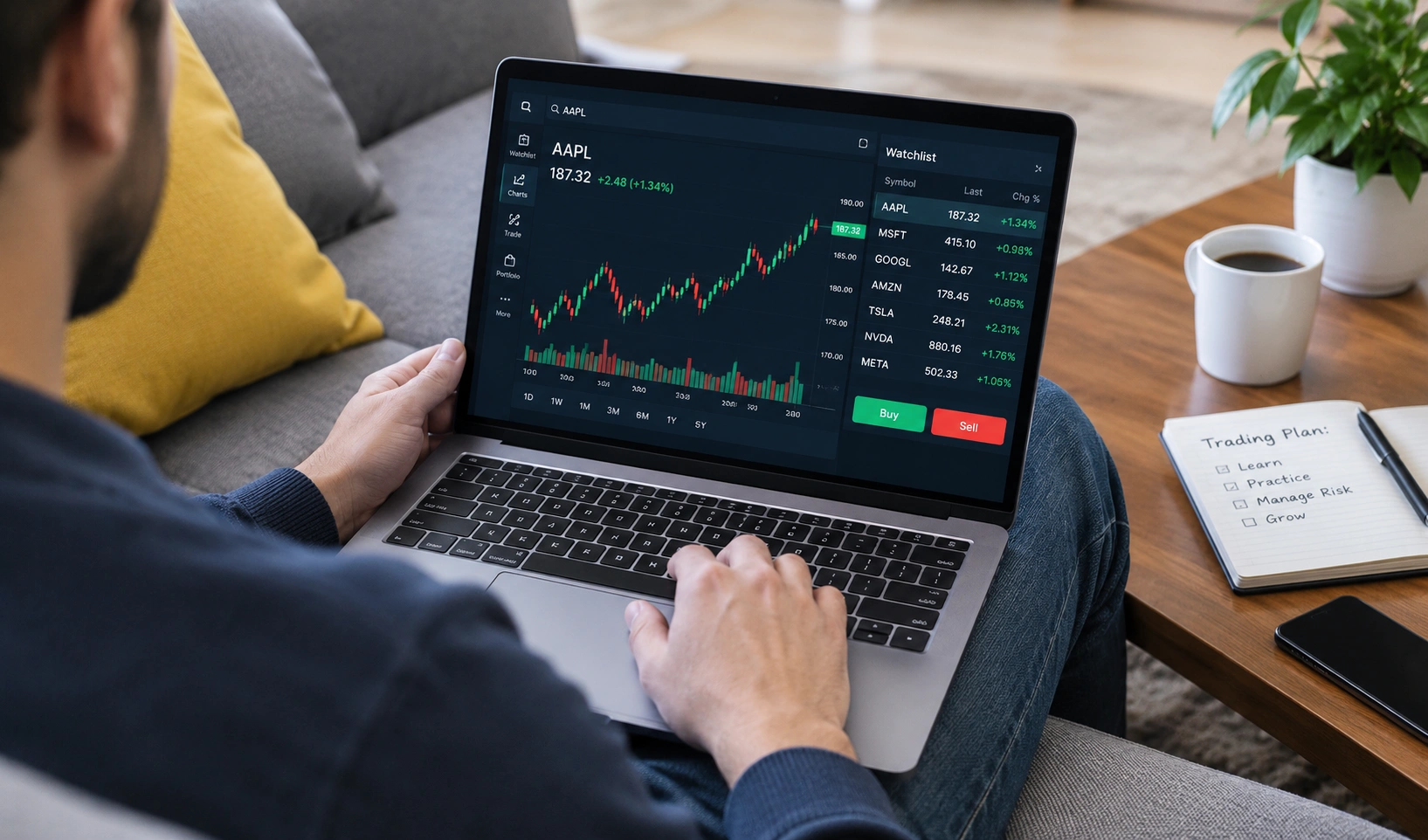
Online stock trading has made it easier for people to buy and sell shares through a computer or smartphone. Instead of visiting a traditional brokerage office, investors can use digital platforms to research companies, place orders, and monitor their portfolios. However, convenient access does not remove investment risk. Stock prices can rise or fall because of company performance, economic conditions, interest rates, and market sentiment. Beginners who understand these factors can make more informed decisions about their money. This guide explains how online stock trading works, what new investors need to know, and how to approach the stock market with realistic expectations and careful planning.
What Is Online Stock Trading?
Online stock trading is the process of buying and selling company shares through an internet-based brokerage platform. When you purchase a share, you acquire a small ownership interest in that business. Investors may earn returns through rising share prices or dividends, depending on the company and the investment strategy. Unlike traditional investing methods that may involve telephone instructions or in-person services, online platforms allow investors to manage orders and view account information digitally. The process is accessible, but investors remain responsible for understanding what they buy and the risks involved.
A typical online stock trading platform provides access to market prices, company information, portfolio balances, and different order types. Some platforms also offer charting tools, educational materials, and research reports. For example, an investor researching a technology company may review its earnings, revenue growth, debt, and competitive position before purchasing shares. A trading platform makes the transaction possible, but it does not guarantee that the investment will perform well. The quality of the investment decision depends on research, financial goals, and risk management rather than the convenience of the software.
How Does Online Stock Trading Work?
The process begins when an investor opens a brokerage account with a regulated financial services provider. Depending on the country, the broker may require identity verification, tax information, and details about the investor’s financial circumstances. After the account is approved, the investor deposits money and can begin researching available investments. Some brokers offer access to individual stocks, exchange-traded funds, bonds, and other financial products. The exact choices depend on the platform and the investor’s location. Beginners should understand the products available before placing an order.
When an investor decides to buy shares, they submit an order through the brokerage platform. A market order generally instructs the broker to buy or sell at the best available price, while a limit order specifies the maximum purchase price or minimum selling price. Orders may be executed immediately or remain open until their conditions are met. Once a trade is completed, the shares appear in the investment account. The investor can later sell the shares through the same platform. Understanding order types is important because prices can change between the moment an order is placed and the moment it is executed.
Choosing an Online Stock Trading Platform
Selecting a brokerage platform requires more than comparing advertised commission rates. Investors should consider whether the broker is regulated, which markets it supports, and how clearly it explains fees. Other factors include account minimums, customer service, research tools, mobile-app quality, and security features. A platform that is suitable for an experienced trader may not be the best fit for someone who wants a simple long-term investment account. The right choice depends on the investor’s goals, location, and preferred investment products.
Fees can affect investment returns over time. Some brokers advertise commission-free stock trades but may charge other fees or earn revenue through different services. Investors should review the complete fee schedule before opening an account. Currency conversion charges can also matter when buying shares listed in another country. For example, an investor depositing Pakistani rupees into an account that trades US stocks may face exchange-rate costs in addition to any brokerage charges. Comparing the total cost of investing is more useful than focusing only on a single advertised fee.
Understanding Stock Prices and Market Movements
Stock prices change because buyers and sellers continuously interact in the market. Company earnings, product launches, economic data, interest rates, and investor expectations can all influence demand for shares. A company may report strong profits, but its stock price could still fall if investors expected even better results. Similarly, a business with weak recent earnings may see its share price rise if the market expects future improvement. This is why stock prices reflect expectations about the future rather than only current financial results.
Market movements can also be influenced by broader economic conditions. Higher interest rates may affect borrowing costs and the value investors place on future earnings. Inflation, employment data, and changes in consumer spending can influence different industries in different ways. For example, a company selling luxury goods may respond differently to economic pressure than a business providing essential products. Beginners should avoid assuming that every market movement has a simple explanation. Reviewing company reports and reliable financial news can help investors understand the factors behind price changes.
Long-Term Investing vs. Short-Term Trading
Online stock trading can support both long-term investing and short-term trading, but these approaches have different objectives. Long-term investors generally buy shares with the intention of holding them for years. They may focus on business quality, earnings growth, dividends, and portfolio diversification. Short-term traders attempt to benefit from price movements over days, hours, or even minutes. They often rely on charts, market momentum, and carefully defined entry and exit rules. Neither approach eliminates risk, and each requires a different level of research and attention.
For example, someone saving for retirement may prefer a diversified portfolio of investments that can be reviewed periodically. Another person who has studied technical analysis may be interested in short-term trades. A long-term investor can still experience losses during market declines, while a short-term trader may face additional costs and emotional pressure from frequent decisions. Understanding the difference between investing and trading helps beginners choose an approach that matches their financial goals, time availability, and willingness to accept losses.
Risk Management in Online Stock Trading
Risk management is one of the most important parts of online stock trading. Even a financially strong company can experience a decline in its share price. Investors can reduce some risks by diversifying across different companies, industries, and asset types rather than placing all their money into one investment. Diversification does not guarantee profits or prevent losses, but it can reduce the effect of a single company’s poor performance on the overall portfolio. For more: Quant Trading: A Complete Guide for Beginners
Investors should also understand how much money they can afford to lose. Money needed for rent, essential expenses, or emergencies should not be placed into risky investments. Borrowing money to trade can increase potential losses and may create additional financial pressure. Beginners should be cautious with margin accounts, leveraged products, and complex trading strategies. A simple investment plan that reflects personal financial circumstances is often easier to manage than a strategy built around frequent speculation or unrealistic profit expectations.
How to Start Online Stock Trading as a Beginner
Starting online stock trading does not require advanced financial knowledge, but beginners should learn the basics before investing real money. Understanding company shares, market orders, dividends, investment fees, and portfolio diversification provides a useful foundation. Investors should also become familiar with the rules that apply in their country, including account requirements and taxes. A beginner who understands the process is better prepared to recognize potential risks and avoid unnecessary mistakes.
A practical starting process includes:
- Learn how stock markets and brokerage accounts work.
- Choose a regulated broker that fits your location and goals.
- Review the platform’s fees and available investments.
- Deposit only money that is appropriate for investing.
- Research companies before purchasing shares.
- Start with a manageable investment amount.
- Review your portfolio and adjust your plan when necessary.
Investors should keep records of their purchases, costs, and investment reasons. This makes it easier to understand portfolio performance and identify decisions that need improvement. Beginners should also avoid making investment choices based solely on social media posts or short-term price movements. A clear plan is more useful than reacting to every market headline.
Common Mistakes to Avoid
One common mistake in online stock trading is buying shares without understanding the company. A stock may look attractive because its price has recently increased, but price movement alone does not explain whether the business is financially healthy. Investors should review revenue, earnings, debt, and the company’s competitive position before making a decision. Another mistake is putting too much money into a single stock because of confidence in its future. Even well-known businesses can face unexpected problems.
Frequent trading can also create unnecessary costs and emotional stress. Investors may buy after prices rise because they fear missing an opportunity, then sell during a decline because they become worried. This behavior can lead to decisions that do not match their original financial plan. A better approach is to establish clear goals, understand the risks, and review investments based on relevant information. Beginners should also be careful with promises of guaranteed returns, automated profit systems, and trading advice that does not explain the risks involved.
FAQ
Is online stock trading safe?
Online stock trading platforms can provide secure access to markets, but investments themselves carry risk. Choose a regulated broker and protect your account information.
How much money do I need to start?
The amount depends on the broker, share prices, and investment products available. Some platforms allow small investments, but you should only use money you can afford to lose.
Can beginners make money trading stocks?
Yes, investors can earn returns, but profits are not guaranteed. Results depend on investment choices, market conditions, costs, and risk management.
What is the difference between stocks and ETFs?
Stocks represent ownership in individual companies. ETFs hold a collection of investments and can provide broader diversification through a single fund.
Can I trade stocks using a smartphone?
Many brokerage platforms offer mobile apps that allow users to research investments, place orders, and monitor portfolios. Features vary by provider.
Conclusion
Online stock trading has made investing more accessible by allowing people to buy and sell shares through digital platforms. However, successful investing requires more than opening an account and placing orders. Beginners should understand market movements, compare brokerage costs, research companies, and build a risk-management plan that fits their financial situation.
Whether you are interested in long-term investing or short-term trading, learning the basics is a useful first step. Start with a clear goal, use reliable information, and avoid risking money you cannot afford to lose. For more practical financial education, explore related guides on stock market basics, investment strategies, and portfolio diversification.


1 Comment