

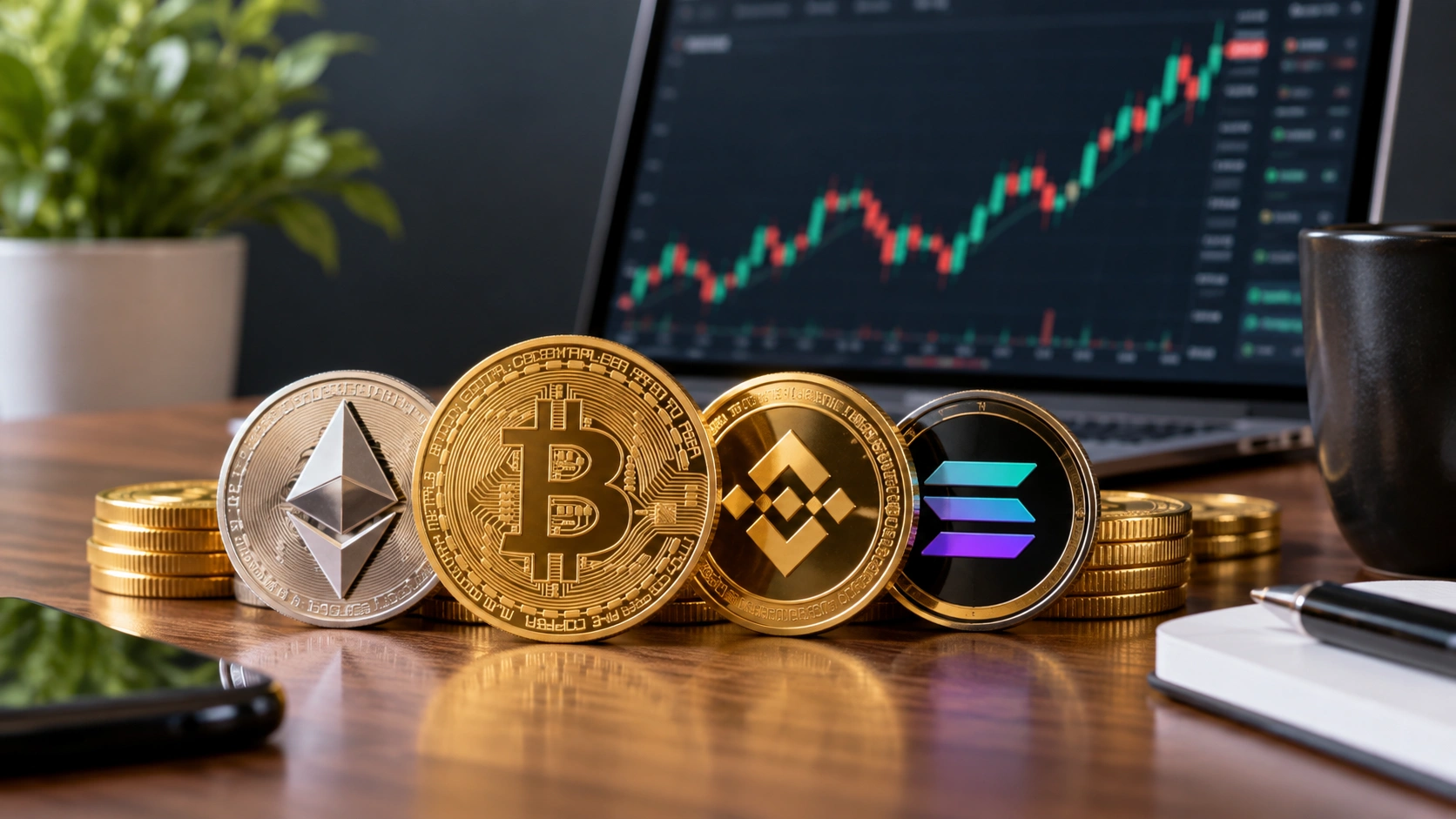
Finding the best crypto to buy can be difficult when thousands of digital assets compete for investors’ attention. Some cryptocurrencies focus on digital payments, while others support blockchain applications, decentralized finance, or financial services. A popular coin is not automatically a suitable investment. Your financial goals, budget, and ability to handle losses should guide your decision.
Bitcoin and Ethereum are common starting points for cryptocurrency research, but other projects may also deserve attention. This guide explains how to compare leading digital assets, understand their differences, and approach cryptocurrency investing responsibly. Whether you are a beginner or an experienced investor, careful research can help you make more informed decisions.
What Makes the Best Crypto to Buy?
The best crypto to buy should offer more than an attractive price chart or popularity on social media. Investors should examine a cryptocurrency’s purpose, technology, development activity, and adoption. A project with a clear use case may deserve more attention than a token that depends mainly on speculation. Understanding how a network works can also help you recognize potential weaknesses before investing.
Market capitalization, trading volume, and circulating supply provide useful information when comparing digital assets. A cryptocurrency priced at $0.10 is not necessarily cheaper than one priced at $100. The total number of coins in circulation affects the project’s overall valuation. Investors should also consider liquidity, because a market with limited trading activity can make buying or selling more difficult.
Why Research Matters
A cryptocurrency may have impressive technology without becoming a successful investment. Demand, competition, security, regulation, and developer activity can influence its long-term prospects. Investors should ask whether a project solves a meaningful problem and whether users have genuine reasons to use its network. These questions can help separate useful blockchain projects from temporary market trends.
Reading official project documentation is a practical starting point for research. Investors can also review development updates, network activity, and information about token supply. Reliable financial resources and cryptocurrency market data can provide additional context. No single source can predict future returns, but combining several sources may help investors make better-informed decisions.
Bitcoin: A Leading Cryptocurrency to Research
Bitcoin is often the first cryptocurrency people consider because of its long operating history and widespread recognition. Its network operates without a central authority, and its maximum supply is limited to 21 million coins. These features have helped Bitcoin become a major digital asset and an important part of cryptocurrency market discussions.
Many investors research Bitcoin as a long-term digital asset rather than a traditional company investment. Its value depends on market demand, adoption, investor confidence, and broader financial conditions. Bitcoin does not pay dividends or generate company profits in the usual sense. Its price can rise or fall significantly, making it important to understand the risks before purchasing.
Bitcoin’s Strengths and Risks
Bitcoin has several characteristics that make it worth studying. It has an established network, broad market recognition, and availability across many cryptocurrency exchanges. Its large market also generally provides greater liquidity than smaller digital assets. The limited maximum supply gives Bitcoin a different economic structure from currencies that can be issued without a predetermined limit.
These advantages do not make Bitcoin risk-free. The cryptocurrency has experienced major price declines, and future returns remain uncertain. Changes in economic conditions, investor sentiment, regulation, and institutional demand can affect its price. Anyone considering Bitcoin should avoid treating past performance as a guarantee and should invest only an amount they can afford to lose.
Ethereum: A Cryptocurrency for Blockchain Applications
Ethereum is another major digital asset worth researching because its network supports smart contracts and decentralized applications. Developers can use Ethereum to create financial services, digital marketplaces, games, and other blockchain-based products. This gives Ethereum a broader technological role than cryptocurrencies designed mainly for transferring or holding value. For more: DeFi Crypto: A Beginner’s Guide to Decentralized Finance
Ether is Ethereum’s native cryptocurrency and helps pay transaction fees across the network. Its investment prospects depend partly on demand for blockchain applications and continued developer adoption. Ethereum also faces competition from other networks that offer different approaches to speed, cost, and scalability. Investors should study both the technology and the factors that influence demand for Ether.
Ethereum’s Investment Considerations
Ethereum offers exposure to a large blockchain ecosystem, but useful technology does not guarantee that Ether’s price will increase. Network activity, transaction costs, technical improvements, competition, and market sentiment can all influence its performance. A successful technology project can still experience substantial investment losses.
Investors researching Ethereum should examine how people use its network and whether developers continue building applications on it. It is also useful to understand transaction fees and changes to the network’s technology. These details provide a more balanced picture than a simple price chart and can help investors evaluate Ethereum according to their own goals.
Solana and Other Cryptocurrencies Worth Watching
Solana is frequently included in discussions about the best crypto to buy because it focuses on efficient blockchain transactions and supports decentralized applications. Its ecosystem includes projects connected to finance, digital collectibles, and other blockchain services. Solana may interest investors who want exposure to networks beyond Bitcoin and Ethereum.
However, Solana also carries meaningful risks. Its price can experience sharp movements, and its long-term prospects depend on adoption, competition, network reliability, and continued development. Investors should examine actual network activity instead of assuming that rapid price increases prove lasting value. A cryptocurrency with growth potential can also experience large losses.
Other Major Digital Assets
BNB and XRP are two additional cryptocurrencies that investors may research. BNB is closely associated with the BNB Chain ecosystem, while XRP is commonly studied in connection with blockchain-based payment and settlement use cases. Their different designs mean that investors should evaluate each project independently.
Stablecoins deserve separate attention because they aim to maintain a relatively stable value, often by referencing a fiat currency. They can help users move funds within crypto markets, but they are not identical to growth-oriented cryptocurrencies. Investors should understand how a stablecoin maintains its value, what supports it, and what risks affect its issuer.
How to Choose the Best Crypto to Buy
Your investment objective should guide your cryptocurrency research. Someone interested in long-term digital assets may begin by studying Bitcoin, while someone interested in blockchain applications may explore Ethereum or Solana. Other investors may prefer payment-focused projects or stablecoins. The right choice depends on what you want your investment to achieve.
Your financial circumstances matter just as much as the project. Money needed for rent, emergencies, education, or essential expenses should not go into highly volatile investments. Before buying, consider how much of your savings you can reasonably expose to risk. A cryptocurrency investment should fit within your wider financial plan rather than replace emergency savings.
Questions to Ask Before Buying
A useful research process begins with a few practical questions. What problem does the cryptocurrency solve? How does its technology work? Who uses the network, and why? What are its circulating supply and market capitalization? What risks could affect its future? These questions can help you understand an asset before committing money.
It is also important to consider liquidity, fees, and security. A cryptocurrency may appear attractive but become difficult to sell during periods of low trading activity. Investors should understand the costs of buying, holding, and transferring digital assets. Comparing these details can help you choose a project that matches your financial circumstances.
Crypto Investment Strategies for Beginners
Dollar-cost averaging is one strategy beginners may consider when investing gradually. Instead of buying an entire planned amount at once, an investor purchases smaller amounts at regular intervals. This approach can reduce the risk of making one large purchase immediately before a price decline. However, it does not guarantee profits or eliminate market losses.
Another approach is to diversify across different assets. Some investors combine cryptocurrency exposure with traditional investments such as cash savings, bonds, or stocks. Within cryptocurrency, holding more than one asset may reduce dependence on a single project. However, many digital assets can decline together during market-wide sell-offs, so diversification does not remove overall investment risk.
Avoiding Common Investment Mistakes
One common mistake is buying a cryptocurrency simply because its price has risen quickly. Strong past performance can attract attention, but it does not prove that an asset remains undervalued. Another mistake is choosing a token because its unit price looks cheap. Market capitalization and supply provide a better way to understand its overall valuation.
Security mistakes can also cause serious losses. Investors should protect their accounts, use strong authentication, and verify wallet addresses before transferring funds. Be cautious with unsolicited investment offers, fake giveaways, and promises of guaranteed returns. Cryptocurrency transactions may be difficult or impossible to reverse, so careful handling of funds is essential.
Understanding Crypto Market Risks
Cryptocurrency prices can change rapidly because the market responds to many influences. Interest rates, inflation expectations, regulation, technological developments, and investor sentiment can all affect demand. News about a major network or financial institution may also influence several cryptocurrencies at the same time.
Volatility is especially important for beginners. A digital asset can lose a large percentage of its value during a short period, even when its underlying technology continues to develop. Smaller cryptocurrencies may face additional risks from limited liquidity, concentrated ownership, or weak development activity. Investors should prepare for possible losses rather than assume that a popular coin will continue rising.
Managing Risk Responsibly
Risk management begins with investing only money you can afford to lose. It also involves deciding how much of your overall financial resources should be exposed to cryptocurrency. A diversified financial plan can help prevent one market decline from creating a serious financial problem.
Investors should also understand fees, taxes, and security practices before trading. Exchange fees, withdrawal costs, and network charges can affect returns, particularly when making frequent transactions. Local tax rules vary, so anyone with significant trading activity should consider professional advice. Careful planning is more useful than trying to predict every short-term price movement.
Comparing Major Cryptocurrencies
The following table provides a simple starting point for comparing several widely researched digital assets.
| Cryptocurrency | Main Purpose | Key Feature | Main Risk |
|---|---|---|---|
| Bitcoin | Digital asset | Limited maximum supply | High price volatility |
| Ethereum | Smart-contract platform | Programmable blockchain | Competition and network costs |
| Solana | Blockchain applications | Focus on transaction efficiency | Higher volatility and technical risks |
| BNB | Blockchain ecosystem | Utility across BNB Chain services | Ecosystem and regulatory risks |
| XRP | Payment-focused blockchain asset | Transfer and settlement use cases | Regulatory and market risks |
The best crypto to buy for one investor may not suit another. Someone looking for an established digital asset may begin with Bitcoin, while someone interested in blockchain applications may research Ethereum or Solana. Investors exploring other projects should examine their specific use cases and risks instead of assuming that every major cryptocurrency has the same investment profile.
Frequently Asked Questions
What is the best crypto to buy for beginners?
Bitcoin and Ethereum are common starting points for research because they are established and widely recognized. Beginners should still study their risks and invest only money they can afford to lose.
Is Bitcoin better than Ethereum?
Neither cryptocurrency is automatically better for every investor. Bitcoin is commonly researched as a digital asset, while Ethereum supports smart contracts and blockchain applications. Your goals and risk tolerance should guide the comparison.
Should I buy crypto when prices are falling?
A price decline does not automatically mean that a cryptocurrency is undervalued. Study the reason for the decline, the project’s fundamentals, and your ability to tolerate further losses before buying.
How much money should a beginner invest in crypto?
There is no universal amount. Consider your income, emergency savings, financial obligations, and ability to withstand losses. A qualified financial professional can help you assess your circumstances.
Can I lose all my money in cryptocurrency?
Yes. A cryptocurrency can lose most or all of its value, and investors can also lose funds through fraud, security breaches, or mistakes. Research and strong security practices can reduce some risks but cannot eliminate them.
Conclusion
The best crypto to buy depends on your financial goals, risk tolerance, and understanding of digital assets. Bitcoin, Ethereum, and Solana are important cryptocurrencies to research, but each has a different purpose and risk profile. Other projects may also deserve attention when their technology and use cases match your interests.
Before making a purchase, study the project, compare alternatives, and decide how much money you can afford to lose. A patient, informed approach is generally more useful than chasing sudden price movements or relying on promises of guaranteed returns. Continue learning through reliable cryptocurrency resources and make decisions that fit your own financial circumstances.
1 Comment