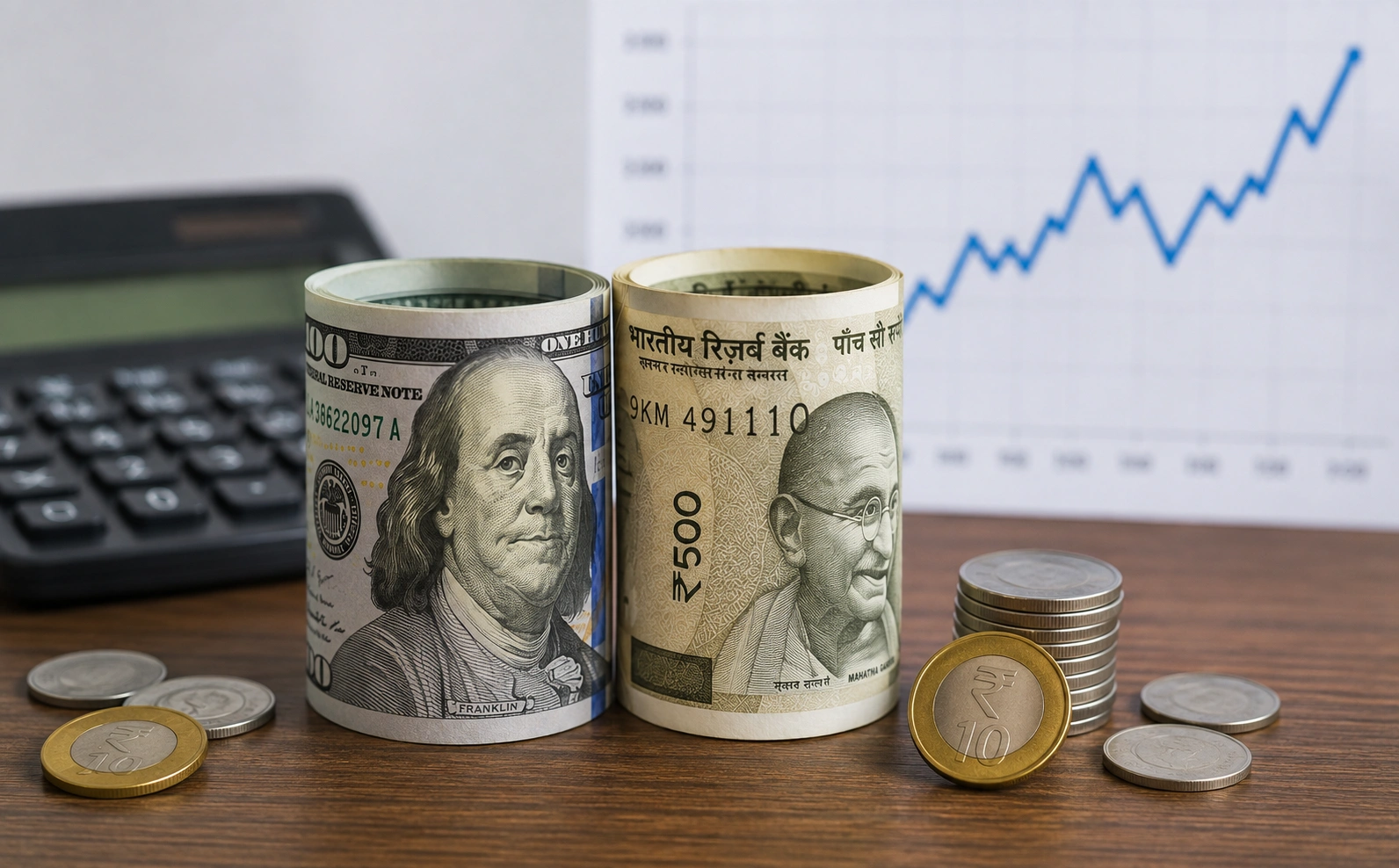
The USD/INR exchange rate shows how many Indian rupees are needed to buy one US dollar. It is one of the most watched currency pairs because the US dollar and Indian rupee play important roles in global trade, investment, travel, and international payments. The rate changes throughout the trading day as demand, interest rates, inflation, economic data, and global market conditions shift. Understanding these movements can help individuals and businesses make better decisions when sending money abroad, importing goods, traveling, or managing investments. This guide explains the key factors behind USD/INR movements in simple terms.
What Is the USD/INR Exchange Rate?
The USD/INR exchange rate represents the value of the US dollar compared with the Indian rupee. If USD/INR is quoted at 88, for example, it means one US dollar is worth approximately 88 Indian rupees at that particular market rate. A higher USD/INR generally means the rupee has weakened against the dollar, while a lower figure generally indicates that the rupee has strengthened. The rate you see on a financial website may differ from the rate offered by a bank or money-transfer provider because retail transactions can include spreads and fees.
For someone exchanging currencies, the difference between the market rate and the final transaction rate can be important. Suppose a person needs to convert $1,000 into Indian rupees. Even a small difference in the exchange rate can change the final amount received by hundreds or thousands of rupees. This is why checking both the current market rate and the provider’s actual conversion rate is useful. Readers comparing international payment options can also explore an internal guide to currency conversion fees to understand how hidden costs may affect the transaction.
What Factors Affect USD/INR?
Several economic and financial factors influence the USD/INR exchange rate. Interest rates are particularly important because investors often move money toward currencies that offer attractive risk-adjusted returns. Decisions by the US Federal Reserve and the Reserve Bank of India can therefore influence the dollar and rupee. Inflation, economic growth, employment figures, government policies, foreign investment, and trade conditions can also affect currency demand. When investors become more cautious about emerging markets, pressure on the Indian rupee can increase, potentially pushing USD/INR higher.
Global events can also produce sudden currency movements. Oil prices are especially relevant to India because changes in energy costs can influence the country’s import bill and demand for foreign currency. Strong US economic data can sometimes support the dollar, while improving Indian growth prospects may support the rupee. Political developments, geopolitical tensions, changes in capital flows, and shifts in global investor sentiment can add further volatility. Anyone studying currency markets may benefit from reading a forex market basics guide before trying to interpret short-term exchange-rate movements.
Why Does the USD/INR Rate Change Every Day?
Currency markets operate continuously across major financial centers, so exchange rates can change whenever new information reaches traders and investors. A stronger-than-expected economic report, an unexpected central-bank announcement, or a major geopolitical development can quickly alter expectations. Traders constantly reassess whether the dollar or rupee is likely to become more valuable relative to the other currency. As these expectations change, buying and selling pressure can move USD/INR in either direction. For more: Best Stock to Buy Right Now: Top Picks for 2026
Not every movement represents a major change in the underlying economy. Short-term fluctuations can occur because of trading activity, market positioning, liquidity conditions, or temporary reactions to news. This is particularly important for beginners who may see the exchange rate move sharply and assume a major economic event has occurred. A better approach is to consider the broader trend alongside daily changes. Looking at economic calendars and longer-term charts can provide more useful context than focusing on a single exchange-rate movement.
How to Check the Current USD/INR Exchange Rate
The most useful starting point is a reliable financial data source that displays a current or near-real-time market rate. However, users should understand that the displayed rate may be an indicative market price rather than the exact amount they will receive when exchanging money. Banks, payment platforms, remittance services, and currency exchanges may apply their own spreads or service charges. Comparing the final amount received is therefore often more useful than comparing headline rates alone.
For example, imagine two services both advertise a rate close to the same USD/INR market level. One provider may charge a visible transfer fee but offer a tighter exchange-rate spread, while another may advertise no fee but provide a less favorable conversion rate. The second option is not necessarily cheaper. A simple comparison of the total rupees received after all charges can reveal the better deal. For larger transfers, users should also review an internal international money transfer checklist before completing the transaction.
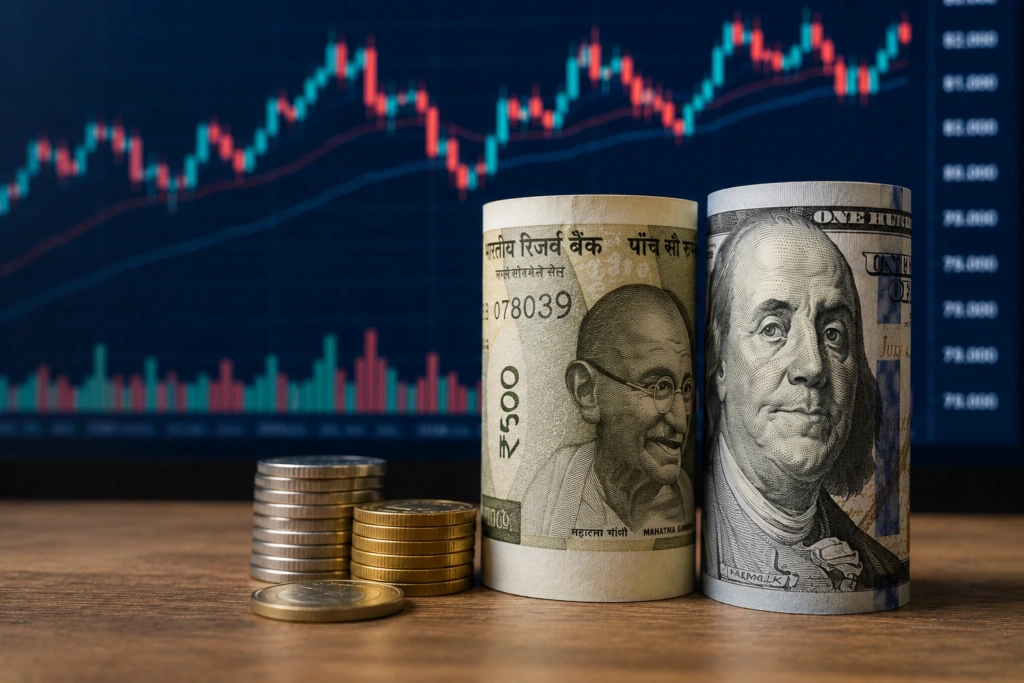
USD/INR for Travelers and International Payments
The USD/INR exchange rate matters to travelers because it affects the cost of spending money between the United States and India. Someone traveling from India to the United States may need more rupees when the dollar becomes stronger. Similarly, an Indian student or professional receiving money from the United States may receive more rupees when the dollar’s value rises against the rupee, assuming other transaction costs remain unchanged.
Businesses also monitor the exchange rate closely. Indian companies importing products priced in dollars may face higher costs when USD/INR rises. Exporters, on the other hand, can experience different effects because their dollar earnings may convert into more rupees. Companies with substantial foreign-currency exposure often use financial planning and, in some cases, hedging strategies to manage this uncertainty. Individual users generally do not need sophisticated strategies, but understanding the relationship between exchange rates and transaction timing can help them make more informed decisions.
USD/INR and Investment Decisions
Currency movements can influence international investments because returns are affected by both the performance of an asset and changes in exchange rates. An Indian investor holding US stocks, for instance, is exposed to USD/INR movements in addition to the performance of the stocks themselves. If the dollar strengthens against the rupee, the currency conversion can increase the rupee value of dollar-denominated holdings. If the rupee strengthens, the opposite effect can occur.
This does not mean investors should buy or sell assets simply because USD/INR has moved in one direction. Exchange rates are difficult to predict consistently, and short-term currency movements can be highly uncertain. Investors should consider their investment horizon, risk tolerance, diversification, and overall financial objectives. A useful international investing guide can help explain currency exposure before adding foreign assets to a portfolio. For long-term investors, focusing on a disciplined strategy is usually more practical than trying to predict every daily currency movement.
USD/INR Trends and Long-Term Analysis
Long-term USD/INR analysis requires more than looking at today’s exchange rate. Investors and businesses often examine inflation differences, interest-rate trends, economic growth, trade balances, foreign-exchange reserves, capital flows, and global demand for the dollar. These factors can interact in complicated ways, meaning there is rarely one single reason behind a long-term currency trend. Historical charts can help identify broad patterns, but past movements should not be treated as a reliable prediction of future performance.
A practical way to study the pair is to separate short-term noise from longer-term economic trends. Someone exchanging money for an upcoming expense may care more about the rate available today than a five-year forecast. A multinational company may focus on projected currency exposure over several quarters. Meanwhile, an investor may care about the combined effect of currency changes and asset returns over many years. Matching the analysis to the actual financial goal makes USD/INR information much more useful.
How to Get a Better USD/INR Conversion
Getting a favorable currency conversion is not simply about finding the highest or lowest quoted rate. The final cost depends on the exchange rate, provider spread, transfer fee, payment method, and sometimes the amount being transferred. Comparing providers using the final amount received can make the decision clearer. For larger transactions, checking rates from multiple reputable providers before sending money can potentially reduce unnecessary conversion costs.
Timing can also matter, although predicting the perfect exchange rate is extremely difficult. If a payment is essential and has a fixed deadline, waiting solely for a better rate can introduce additional risk. For recurring payments, some people spread transactions over time instead of trying to identify a perfect day. Businesses may use professional hedging methods when appropriate. Individuals should keep their approach simple, verify all charges, and avoid services that promise guaranteed currency profits or effortless returns.
FAQ
What is the USD/INR exchange rate?
The USD/INR exchange rate shows the value of one US dollar in Indian rupees. It changes based on market conditions, economic data, interest rates, and currency demand.
Why does USD/INR increase?
USD/INR can rise when the dollar strengthens, the rupee weakens, or demand for dollars increases. Interest rates, oil prices, capital flows, and global risk sentiment can all contribute.
Where can I check the current USD/INR rate?
You can check a current market quotation through reputable financial-data platforms, banks, or currency services. Always compare the actual transaction rate and fees before exchanging money.
Is a higher USD/INR good for India?
The effect is mixed. A weaker rupee can make imports more expensive but may benefit some exporters because their dollar earnings convert into more rupees.
Can I predict USD/INR accurately?
No method can reliably predict every currency movement. Economic indicators and market trends can provide useful context, but unexpected events can cause rapid changes.
Conclusion
The USD/INR exchange rate is influenced by interest rates, inflation, economic growth, oil prices, global investor sentiment, trade flows, and many other factors. Its importance extends beyond financial markets because it affects travelers, businesses, students, international payments, and investors. Instead of focusing only on daily movements, compare reliable market information with the actual rate and fees available for your transaction. Whether you are exchanging a small amount or managing regular international payments, understanding the factors behind USD/INR can help you make more informed financial decisions. Continue exploring related currency and investing guides to strengthen your financial knowledge.