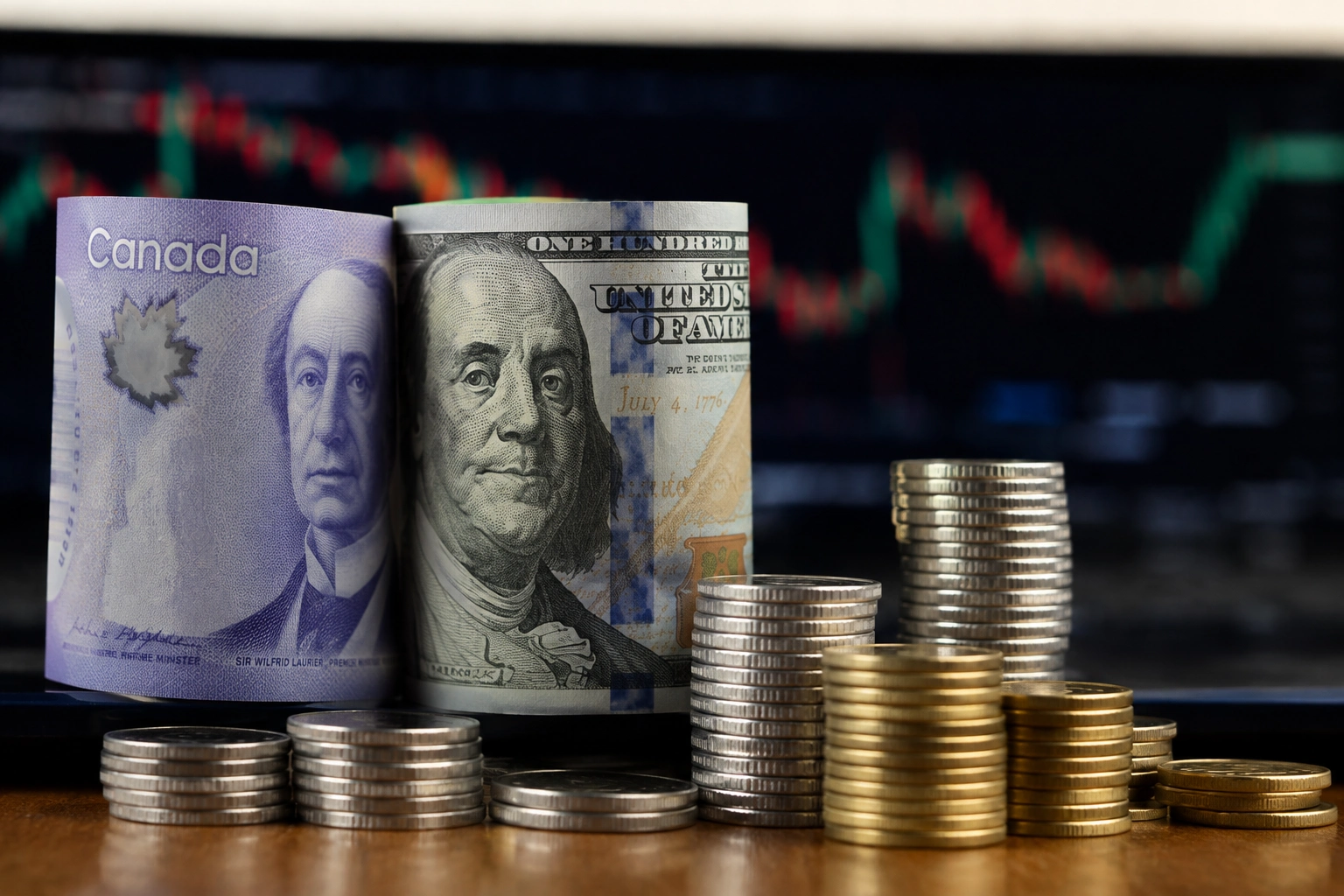
Understanding CAD to USD conversion is useful for travelers, online shoppers, businesses, investors, and anyone sending money between Canada and the United States. CAD refers to the Canadian dollar, while USD means the United States dollar. The exchange rate tells you how many US dollars you can receive for one Canadian dollar.
Currency values change regularly because of economic conditions, interest rates, inflation, trade activity, and market demand. This means the amount you receive can be different from one day to another. Knowing how the conversion works helps you estimate costs, compare prices, and make better decisions when exchanging money.
What Does CAD to USD Mean?
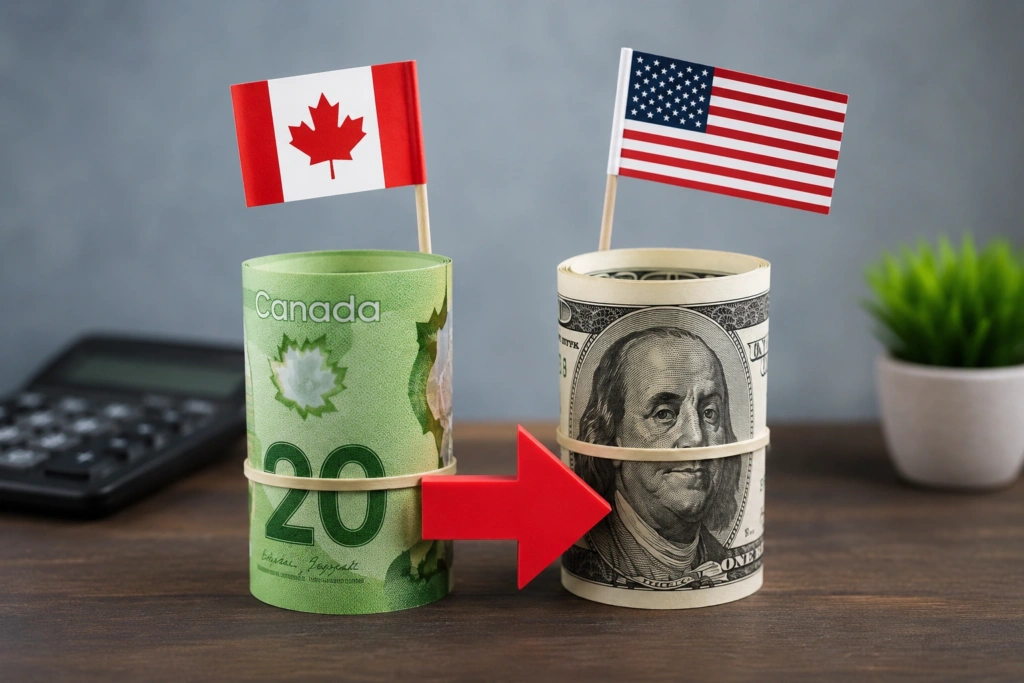
CAD to USD describes the process of converting Canadian dollars into US dollars. CAD is the official currency of Canada, and USD is the official currency of the United States. When you see an exchange rate such as 1 CAD = 0.73 USD, it means one Canadian dollar is worth approximately 73 US cents at that particular rate.
The exchange rate is not fixed. It moves throughout the foreign exchange market as buyers and sellers trade currencies. Banks, currency exchanges, payment providers, and financial platforms may also offer slightly different rates. For this reason, the rate shown by a currency converter may not be exactly the amount you receive after fees or service charges.
How the Conversion Works
The basic calculation is simple. Multiply the amount of Canadian dollars by the current CAD-to-USD exchange rate. For example, if the rate is 1 CAD = 0.73 USD, then CAD 100 would equal approximately USD 73 before any fees or additional charges.
The same method works for larger or smaller amounts. CAD 500 at a rate of 0.73 would equal about USD 365, while CAD 1,000 would equal about USD 730. These figures are examples rather than guaranteed current rates because currency markets change constantly.
Why Does the CAD to USD Rate Change?
The CAD to USD exchange rate changes because currencies respond to economic and financial conditions. Interest rates are an important factor because higher rates can attract investment and increase demand for a currency. Inflation, employment data, economic growth, and central bank decisions can also influence currency values.
Oil and other commodity prices can be particularly relevant to the Canadian dollar because Canada is a major natural-resource producer. Meanwhile, the US dollar is widely used in international trade and finance. Political developments, global market confidence, and economic uncertainty can therefore affect the relationship between the Canadian and US dollars.
Economic Data and Central Banks
The Bank of Canada and the US Federal Reserve influence their respective currencies through monetary policy. Decisions involving interest rates, inflation, and economic support can change expectations among investors and traders. Those expectations may lead to movements in the exchange rate.
Economic reports also matter. Investors often watch employment figures, inflation reports, consumer spending, and economic growth statistics. When new data changes expectations about future monetary policy, currency markets can react quickly. This is one reason the exchange rate you see in the morning may differ later in the day.
How to Convert CAD to USD
Converting Canadian dollars into US dollars requires the Canadian amount and the applicable exchange rate. The general formula is CAD amount × CAD-to-USD exchange rate = USD amount. If you have CAD 250 and the rate is 0.73, the calculation is 250 × 0.73, giving approximately USD 182.50. For more: Tracy Morgan Net Worth: Career, Earnings and Wealth
For everyday calculations, an online currency converter can make the process faster. However, it is important to understand whether the displayed rate is a mid-market rate or the actual rate offered by a bank or payment provider. The final amount may be lower because of transaction fees, conversion margins, or other charges.
Example of a Currency Conversion
Imagine you are planning a trip to the United States and have CAD 1,500 available for spending. If the exchange rate is 0.73 USD per Canadian dollar, the estimated conversion would be USD 1,095 before fees. If the rate changes to 0.70, the same CAD 1,500 would convert to USD 1,050.
This example shows why timing can matter when exchanging larger amounts. A small movement in the exchange rate can make a noticeable difference when the transaction is substantial. For smaller everyday purchases, however, the difference may be relatively minor.
CAD to USD for Travelers
Travelers often need to understand CAD to USD rates before visiting the United States. Knowing the approximate value of Canadian money can make it easier to create a travel budget, compare hotel prices, estimate restaurant costs, and understand card transactions.
It is also worth checking how your bank or card provider handles foreign transactions. Some cards charge foreign transaction fees, while others may use a currency conversion rate that differs from the rate shown on a public currency converter. Checking these costs before traveling can help prevent surprises on your statement.
Cash, Cards, and ATMs
Canadian travelers can use US dollars obtained through banks, currency exchanges, or ATMs. However, the total cost depends on the exchange rate and applicable fees. An ATM may charge a withdrawal fee, while the card issuer may apply additional foreign transaction charges.
When paying by card, you may sometimes be offered a choice between paying in Canadian dollars or US dollars. This is known as dynamic currency conversion. Comparing the available options and understanding your card’s terms can help you avoid unnecessary conversion costs.
CAD to USD for Online Shopping
Online shopping has made currency conversion relevant even when you never physically cross the border. A Canadian customer may purchase products priced in USD from a US-based website, while a US customer may encounter Canadian-dollar prices when shopping from Canada.
The advertised product price is not always the final amount charged. Shipping costs, taxes, payment-processing fees, and currency conversion charges can affect the total. Before completing an international purchase, calculate the approximate USD or CAD value and review the final checkout amount.
Comparing International Prices
Suppose a US website lists an item for USD 200. A Canadian shopper can estimate the Canadian cost by dividing the US price by the current CAD-to-USD rate. If 1 CAD equals 0.73 USD, USD 200 would be approximately CAD 273.97 before taxes and other costs.
This approach makes price comparisons easier. However, the final credit-card charge may differ because the card issuer uses its own conversion rate and may add a foreign transaction fee. For expensive purchases, checking the complete cost rather than only the advertised exchange rate is especially important.
CAD to USD for Businesses
Businesses that operate between Canada and the United States frequently deal with currency conversion. Canadian companies may invoice American customers in USD, while Canadian businesses purchasing goods from US suppliers may need to convert CAD into USD.
Exchange-rate movements can influence profit margins, operating expenses, and international contracts. Companies with regular cross-border transactions may therefore monitor currency markets closely. Some businesses also use hedging strategies to reduce the financial impact of unfavorable exchange-rate movements.
Managing Currency Costs
A business should consider more than the headline exchange rate when planning an international payment. Transfer fees, bank spreads, payment-provider charges, and settlement timing can all affect the final amount received.
Keeping accurate records can also make currency management easier. Businesses can track the exchange rate used for each transaction, compare provider costs, and include reasonable currency assumptions in budgets. For larger transactions, professional financial advice may be appropriate.
How to Get a Better CAD to USD Conversion
Getting a favorable CAD to USD conversion is usually about comparing the total cost rather than simply choosing the provider advertising the highest rate. Banks, exchange services, card companies, and money-transfer platforms may apply different margins and fees.
Before exchanging money, compare the amount you will actually receive in USD after all charges. A provider with a slightly less attractive advertised rate could sometimes be cheaper overall if its fees are lower. This is especially important for large transfers, where small differences can add up.
What to Check Before Exchanging Money
Before making a conversion, check the current market rate and then compare it with the rate offered by your chosen provider. Look for additional fees, minimum charges, withdrawal costs, and international transaction fees.
You should also consider timing when the transaction is flexible. Currency markets can move unpredictably, so there is no guaranteed way to identify the perfect moment. For important financial decisions, relying on current information and understanding the risks is more useful than trying to predict every short-term movement.
CAD to USD and Historical Exchange Rates
Looking at historical CAD to USD rates can help you understand how currencies have moved over time. Historical data can show periods when the Canadian dollar strengthened or weakened against the US dollar and can provide useful context for long-term planning.
However, past performance does not guarantee future exchange rates. Economic conditions, monetary policy, commodity markets, and global events can change quickly. Historical charts are therefore best used for context rather than as a precise prediction of where the exchange rate will go next.
Why Historical Data Matters
Historical rates can be useful when reviewing international business performance, evaluating travel expenses, or understanding changes in purchasing power. For example, a company comparing revenue across several years may need to account for exchange-rate differences before drawing conclusions.
When reviewing historical information, always check the date and rate type. Daily market rates, monthly averages, bank rates, and consumer conversion rates can produce different figures. Using the correct data for your purpose makes financial comparisons more meaningful.
Frequently Asked Questions
What is CAD to USD?
CAD to USD is the exchange rate or conversion between Canadian dollars and US dollars. It shows how much USD can be obtained for a given amount of CAD.
How do I convert CAD to USD?
Multiply the Canadian-dollar amount by the current CAD-to-USD exchange rate. For example, CAD 100 multiplied by an assumed rate of 0.73 equals USD 73.
Why does the CAD to USD rate change?
The rate changes because of interest rates, inflation, economic data, commodity prices, market demand, and global economic conditions.
Is the currency converter rate the rate I will receive?
Not always. Banks and payment providers may add conversion margins or fees, so the final amount can differ from the displayed market rate.
Is it better to exchange CAD for USD at a bank?
It depends on the bank’s exchange rate and fees. Compare the total amount you receive with other available providers before making a larger conversion.
Conclusion
Understanding CAD to USD conversion makes international spending, travel, shopping, and business transactions easier to manage. The basic calculation is straightforward, but the actual amount received can depend on the current market rate, provider fees, and conversion margins.
For the most accurate estimate, always check a current exchange rate before completing a transaction and compare the total cost offered by different providers. Whether you are converting a small amount for a trip or managing a larger international payment, a little preparation can help you make a more informed currency decision.