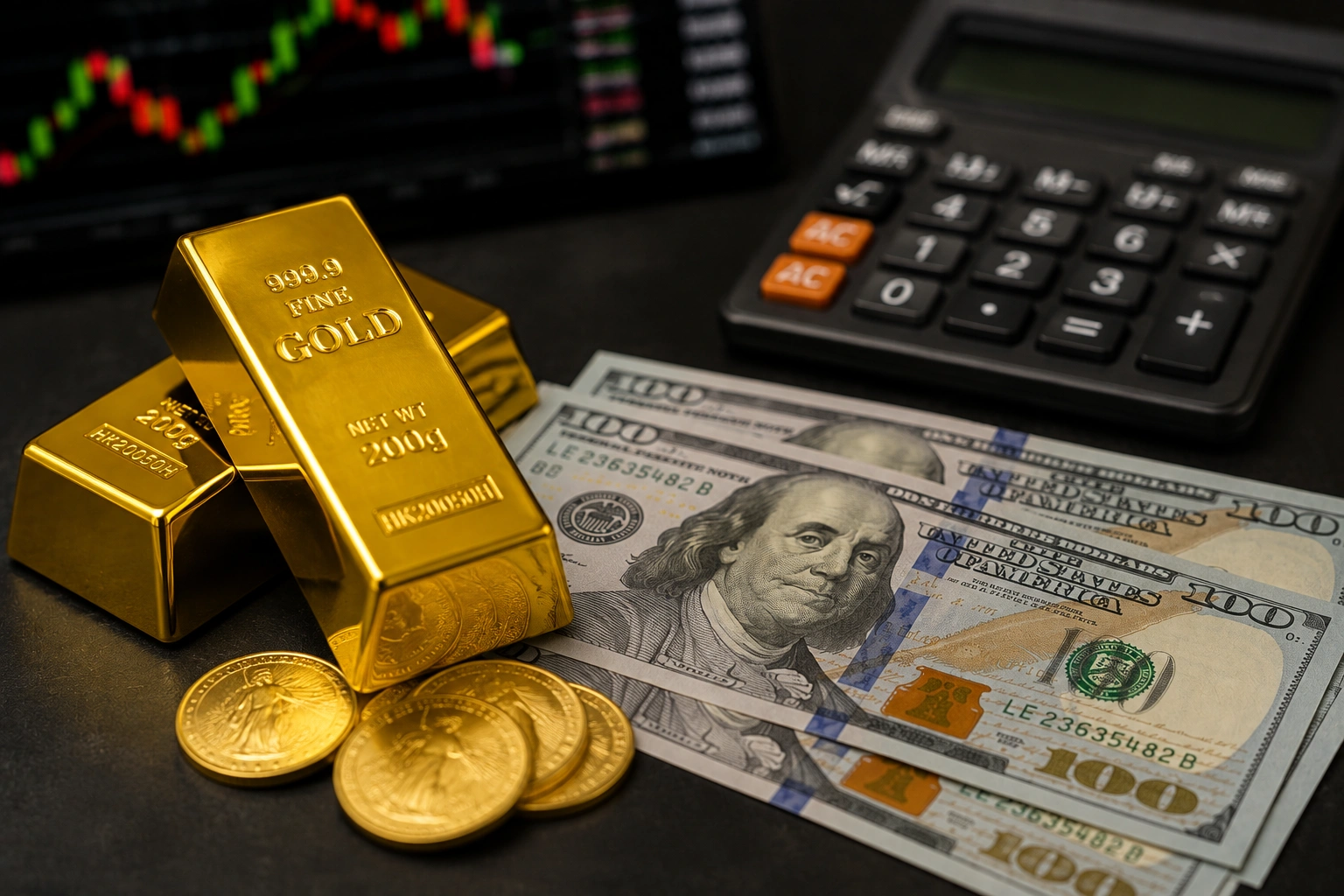
Gold to USD describes the value of gold measured in U.S. dollars. It is commonly represented by the market symbol XAU/USD and is one of the most closely watched precious-metals prices worldwide. Investors, traders, central banks, jewelers, and consumers use it to track the international value of gold and understand how the metal is performing against the dollar.
On September 1, 2026, spot gold was trading around $4,430 per troy ounce, with live market quotes varying throughout the session. Because gold trades continuously across global markets, its price can change quickly. Understanding the quotation, conversion method, and factors behind price movements can make gold-price information much easier to interpret.
What Does Gold to USD Mean?
Gold to USD shows how much one troy ounce of gold is worth in U.S. dollars. In financial markets, gold is usually quoted as XAU/USD, where XAU represents one troy ounce of gold and USD represents the U.S. dollar. Therefore, if the quotation is $4,430, one troy ounce of gold has a market value of approximately $4,430 before considering dealer premiums, taxes, commissions, or other costs.
This quotation is primarily used for investment-grade and market-priced gold rather than the final retail price of jewelry. A gold dealer may charge more than the spot price when selling physical coins or bars because the product includes manufacturing, distribution, storage, and dealer costs. Likewise, someone selling physical gold may receive less than the quoted spot value. This distinction is important when comparing a live gold to USD price with the price offered by a jewelry store or bullion dealer.
What Is the Current Gold to USD Price?
The international gold market remains at historically elevated levels in 2026. On September 1, live market data showed spot gold around $4,430 per troy ounce, although prices were moving during the trading session. Kitco reported a spot bid of $4,430.20 at 1:08 New York time, while Reuters reported spot gold at $4,428.54 earlier in the day. These small differences are normal because prices change constantly and providers update at slightly different moments.
Recent historical data also shows how quickly the market can move. Gold was above $4,600 per ounce in late August before falling back toward the $4,400 area. This is why a single price should not be treated as permanent. Anyone checking gold to USD for a purchase, sale, or investment should look at a current live quotation and confirm the exact time and market source before acting.
How to Convert Gold to USD
Converting gold into U.S. dollars is straightforward when you know the weight and purity. International gold prices are normally quoted per troy ounce, not per ordinary household ounce. One troy ounce contains approximately 31.1035 grams. Therefore, if gold is trading at $4,430 per troy ounce, dividing that figure by 31.1035 gives a spot value of roughly $142.42 per gram for pure 24-karat gold.
The basic calculation is:
Gold weight in troy ounces × gold price per ounce = approximate USD value
For example, one-half troy ounce at $4,430 would have a theoretical spot value of about $2,215. A 10-gram piece would be worth approximately $1,424 at the same pure-gold spot price. Actual transactions can differ because of purity, dealer premiums, bid-ask spreads, and other costs. An internal guide on how gold prices are calculated can provide additional context for readers comparing different weights and forms of gold.
Gold Price Per Gram and Per Ounce
Gold buyers often see prices quoted in grams, especially when purchasing jewelry or smaller bullion products. Professional markets, however, commonly use the troy ounce. This can create confusion when comparing international gold prices with local retail prices. Converting between units makes comparisons easier and helps buyers understand whether a quoted price is reasonable.
For example, a live spot price around $4,430 per troy ounce works out to approximately $142.43 per gram for 24-karat gold. Kitco’s live calculator showed a similar figure, listing $4,430.20 per ounce and about $142.43 per gram. The price of lower-purity gold is naturally lower on a pure-metal basis. An 18-karat item contains less pure gold than a 24-karat item, so its raw gold value is lower even though the jewelry itself may sell for much more because of craftsmanship and retail costs.
What Moves Gold to USD Prices?
Several major forces influence gold’s dollar price. Interest rates and U.S. Treasury yields are particularly important because gold does not pay interest or dividends. When yields rise, holding a non-yielding asset can become relatively less attractive. When real yields decline or investors expect easier monetary conditions, gold can become more appealing. Expectations about Federal Reserve policy therefore receive significant attention from gold traders. For more: USD to COP: Live Rate, Conversion & Key Factors
The U.S. dollar itself also matters. Because international gold is commonly priced in dollars, changes in the dollar’s value can influence demand for the metal among investors using other currencies. Inflation expectations, economic uncertainty, central-bank purchases, geopolitical tensions, and investor demand can also affect prices. On September 1, Reuters reported that gold was under pressure as investors assessed Middle East tensions and awaited U.S. labor-market data that could influence Federal Reserve rate expectations.
Gold to USD and the U.S. Dollar
Gold and the U.S. dollar often have an inverse relationship, although it is not a rule that works in every market environment. When the dollar becomes stronger, gold can become more expensive for buyers using other currencies, potentially reducing demand. Conversely, a weaker dollar can make dollar-priced gold relatively cheaper internationally and may provide support for its price.
However, investors should avoid assuming that every dollar movement will produce an opposite gold movement. Gold is affected by many factors simultaneously. Safe-haven demand, central-bank buying, inflation expectations, bond yields, and geopolitical developments can sometimes overpower the normal currency relationship. Recent market conditions demonstrate this complexity, with gold facing pressure from higher yields and potential U.S. rate increases while still receiving support from broader concerns about fiscal and geopolitical risks.
Gold to USD for Investors
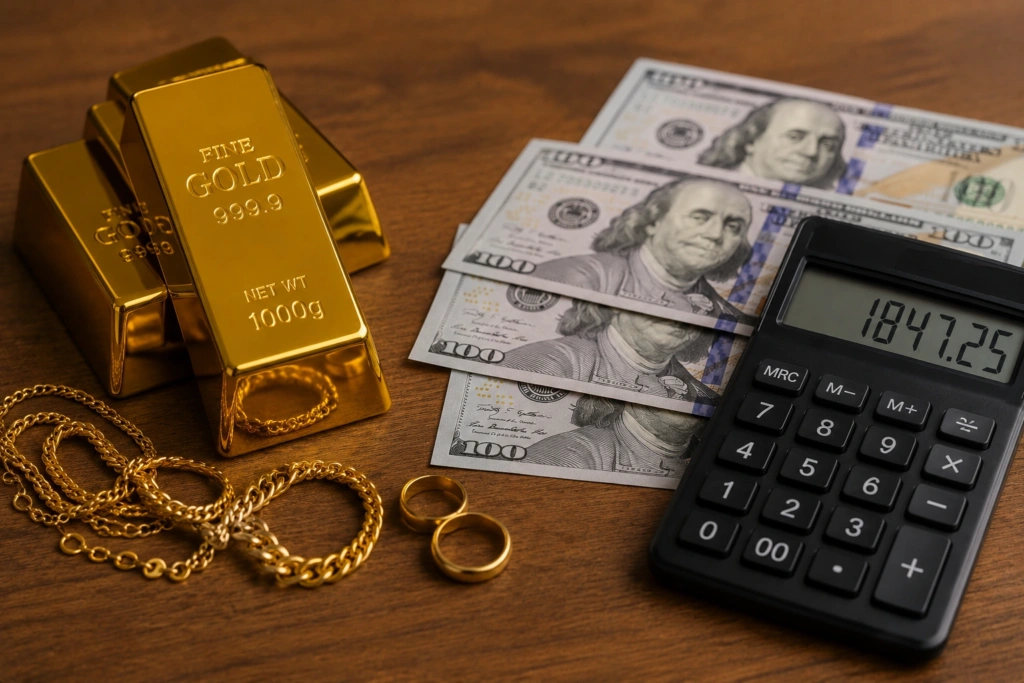
Investors use the international gold price as a benchmark when evaluating physical bullion, exchange-traded products, futures, mining companies, and other gold-related assets. Watching the spot market helps investors understand the underlying value of the metal before considering the additional costs or characteristics of a particular investment.
Still, owning gold through different products can produce very different results. Physical coins and bars involve premiums, storage, insurance, and potentially selling costs. Gold mining stocks depend not only on the gold price but also on operating costs, management decisions, production levels, and broader equity-market conditions. An investor researching this area may benefit from reading an internal guide to gold investment options before deciding which form of exposure fits their objectives and risk tolerance.
Gold to USD and Global Economic Conditions
Gold is often viewed as a store of value and a potential hedge during periods of economic or financial uncertainty. When investors become concerned about inflation, geopolitical instability, financial stress, or currency risks, demand for gold can increase. Central banks have also remained an important source of demand, making their purchasing behavior relevant to the longer-term market outlook.
At the same time, gold is not guaranteed to rise whenever uncertainty increases. Higher interest rates and rising bond yields can create pressure even when geopolitical risks remain elevated. In early September 2026, for example, rising energy prices and inflation concerns were contributing to higher government bond yields, creating a challenging environment for non-yielding assets such as gold. Understanding this balance between safe-haven demand and interest-rate pressure is essential when analyzing the broader gold to USD market.
Gold to USD vs. Local Gold Prices
The international gold price is only one part of the price consumers see in their local market. Local gold prices depend on the international spot price, the local currency exchange rate, taxes, premiums, transportation costs, and dealer margins. This means the same global gold price can produce very different local prices in countries using different currencies.
For example, Pakistan’s gold market closely follows international bullion prices while also responding to changes in the USD/PKR exchange rate. On September 1, 2026, FXStreet reported a Pakistan gold price of about PKR 461,380 per tola, while noting that local prices can differ slightly from its reference calculation. Readers comparing international and domestic prices should therefore check both the gold to USD rate and their local currency exchange rate rather than expecting the two prices to match directly.
How to Follow Gold to USD Effectively
Following gold prices does not require watching every market movement. A better approach is to monitor the spot price, understand the daily range, and pay attention to major economic events that can influence expectations. Federal Reserve decisions, U.S. inflation data, employment reports, Treasury yields, and major geopolitical developments are particularly relevant.
When researching gold, it is useful to compare several pieces of information rather than focusing on a single number. Investors can review:
- Current spot gold price
- Daily and weekly percentage changes
- U.S. dollar strength
- Treasury yields and interest-rate expectations
- Inflation and employment data
- Central-bank gold demand
- Major geopolitical developments
This broader approach provides more context than simply asking whether gold is going up or down. A live gold price chart can show the immediate trend, while fundamental research can help explain why the market is moving.
Frequently Asked Questions
What does gold to USD mean?
Gold to USD shows the value of gold in U.S. dollars, normally quoted as the price of one troy ounce of gold.
How much is one gram of gold in USD?
The exact amount changes with the spot market. Around a $4,430-per-ounce gold price, one gram of pure gold is worth roughly $142.43 before premiums and other costs.
Why does the gold price change every day?
Gold changes because of interest rates, Treasury yields, inflation expectations, dollar movements, central-bank demand, investor sentiment, and geopolitical events.
Is gold priced by a normal ounce?
No. International bullion markets generally use the troy ounce, which contains about 31.1035 grams.
Is the spot gold price the same as the price at a jewelry store?
No. Jewelry prices can include craftsmanship, design, taxes, retailer margins, and other costs in addition to the underlying gold value.
Conclusion
The gold to USD price is one of the most important benchmarks for understanding the international gold market. It shows the dollar value of gold and provides a reference for investors, traders, bullion buyers, and businesses around the world. As of September 1, 2026, gold was trading around the $4,400-per-troy-ounce area, although the exact live price changes throughout the day.
Gold prices are influenced by much more than supply and demand for physical metal. Federal Reserve policy, Treasury yields, the U.S. dollar, inflation expectations, central-bank purchases, and geopolitical risks can all affect the market. For the most accurate picture, check a live gold quotation and consider the wider economic context before making a purchase or investment decision.